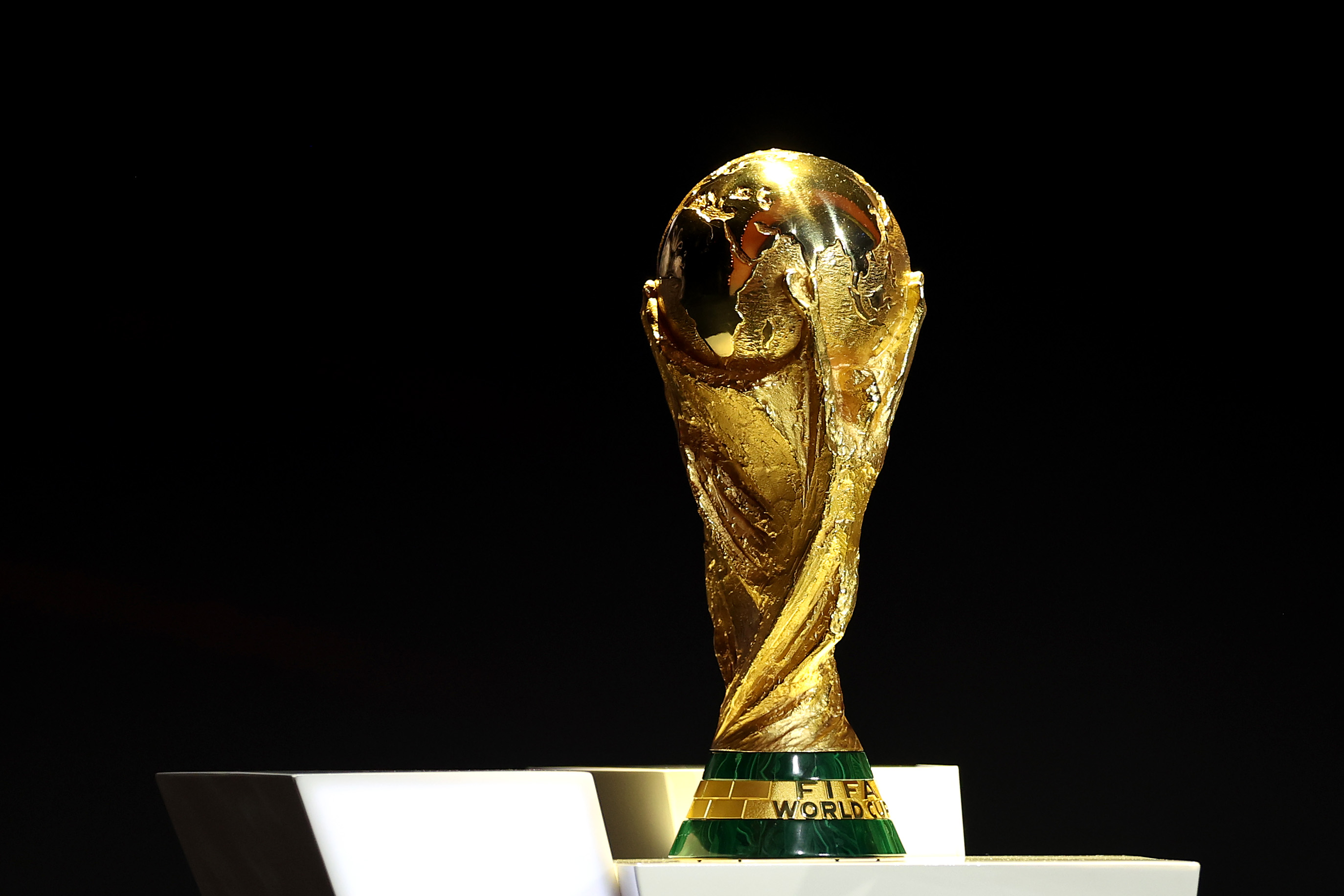
The World Cup 2026 will be the biggest World Cup ever, with 48 teams taking part – 16 more than at each of the last seven editions of the tournaments.
And that expansion means a change to the way the World Cup works compared to what fans will have become accustomed to since 1998, when the tournament grew from 24 teams to 32.
Fear not, though – LiveScore is here to guide you through the new format for the World Cup 2026!
How Does the New World Cup Format Work?
While the last seven World Cups have begun with eight groups of four teams, there will be 12 groups of four teams this time around to accommodate the extra 16 participants.
As ever, the top two from each group will qualify for the knockout stage – and that’s where there’s another notable change for 2026: the traditional last 16 will be preceded by a last 32, a whole extra round of World Cup action. In order to make up that number, the 24 sides finishing first and second in their respective groups will be joined by the eight best third-placed finishers.
Previously, the first knockout round of the World Cup pitted a group winner against a group runner-up in each tie; with the eight best third-placed sides advancing on this occasion, it’s not quite as straightforward.
Eight of the 12 group winners will play one of those best third-placed sides in the last 32, but the other four will face a (on paper) tougher draw against a group runner-up. The remaining four ties will pit two runners-up against each other.
Unfortunately for those eager to fill in their wallcharts in as timely a fashion as possible, the presence of the third-placed finishers in the last 32 means it’s not as easy to plot your country’s path to the final as it would have been at the last World Cup. The ranking of third-placed teams won’t be fully known until the conclusion of the group stage.
Thankfully, from the last 32 onwards, the World Cup 2026 will have a much more familiar feel, with the bracket for all subsequent rounds already determined. The last 32 is followed by the last 16 then the quarter-finals, the semi-finals and the final – with the two losing semi-finalists going into the dreaded third place play-off.
Who Could England Play in the Last 32?
If England win their group (Group L), they could play one of 20 teams in the last 32 – a third-placed side from Group E, H, I, J or K. Those groups are as follows:
Group E Germany, Curacao, Ivory Coast and Ecuador
Group H Spain, Cape Verde, Saudi Arabia and Uruguay
Group I France, Senegal, Iraq and Norway
Group J Argentina, Algeria, Austria and Jordan
Group K Portugal, DR Congo, Uzbekistan and Colombia
However, if England finish second in their group, they will play the runners-up from Group K. If England finish third in their group, they will play the winners of Group K.
Who Could Scotland Play in the Last 32?
If Scotland win their group (Group C), they will play the runners-up of Group F (Netherlands, Japan, Sweden or Tunisia). If Scotland finish second in their group, they will play the winners of Group F.
And if Scotland finish third in their group, they could play the winners of Group A, E or I – which are as follows:
Group A Mexico, South Africa, South Korea and Czech Republic
Group E Germany, Curacao, Ivory Coast and Ecuador
Group I France, Senegal, Iraq and Norway
Next, see World Cup 2026 Stadiums: All You Need to Know About Every World Cup Venue