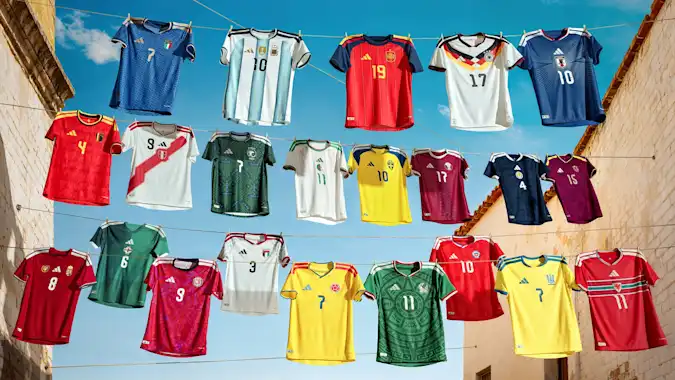
The 2026 World Cup is just around the corner and excitement is starting to build worldwide, with this summer’s instalment set to be the biggest ever. 48 teams will compete in North America, with the tournament also the first to have matches spread across three host nations: USA, Mexico, and Canada. With a mixture of historic footballing nations, classic underdog teams, and some countries that feature in their first World Cup, this summer’s tournament has all the makings of a classic.
Here we look in depth at some of the teams that have a good chance of playing deep in to the tournament and at a couple of sides that could spring a surprise.
Mexico
A lot has been said about the USA’s chances of success at the World Cup, with many of their fans boisterously confident that they can be successful, but Mexico have gone under the radar in the run up to the tournament. After a difficult few years, they seem to have put their previous struggles behind them and can certainly have a better crack at it this time around, with popular manager Javi Aguirre at the helm for his third World Cup, having formerly been in charge for both 2002 and 2010 World Cup campaigns. They do have a tough job getting out of Group A, as they face Czechia, South Africa, and South Korea, but hosting teams in the Azteca will help.
El Tri play two of their three group stage games at the Azteca in Mexico City and this will certainly give them an advantage, the stadium sitting 2,200m above sea level. Mexico also have some of the most passionate supporters in national football, and they will look to take advantage of their group stage matches at home. This tournament will almost certainly be the last outing for legendary goalkeeper Guillermo Ochoa, who has featured for Mexico since 2005, the 40-year-old could well start for his beloved national team for one more tournament.
Aguerre has a pragmatic approach to management which has worked well in the past, setting his team up in a 4-3-3 system with an emphasis on being difficult to break down and fast in transition. Edson Alvarez will be a key player for them in a midfield pivot position and Raul Jimenez has had an excellent Premier League season for Fulham and he will be relied on to do the damage up front. Mexico have had plenty of false dawns and missed opportunities over recent years, but home advantage, a passionate fan base, and a united team under Javi Aguirre could give them a chance of good run in the competition, with potential for them to make it the furthest out the host nations.
Argentina
Current holders Argentina will fancy their chances to secure a fourth World Cup victory this summer, a win in North America would also make them only the third team to achieve victories in back-to-back World Cups. Following a dominant qualifying campaign which saw them win their group with12 wins from 18 matches, manager Lionel Scaloni will be looking to secure a fourth consecutive major tournament victory, having won the Copa America in 2021 and 2024. They face Algeria, Austria, and Jordan in Group J and will want to start well and take their qualifying form into the tournament.
Argentina will need world class goalkeeper Emiliano Martinez to play a big role for the team as he did in 2022, and Scaloni will also rely on aging defensive duo Nicolas Tagliafico and Nicolas Otamendi to go again at the back, both having featured in numerous major tournaments for La Albiceleste over the years. Premier League names Lisandro Martinez and Cristian Romero will be given a chance to regain their form in defense, both having had tough seasons for their club in terms of form and fitness. Enzo Fernandez and Alexis Mac Allister will look to provide attacking spark in the engine room, with Atletico Madrid trio Nico Gonzalez, Thiago Almada, and Guiliano Simeone competing for minutes in the wide areas.
Atletico’s Julian Alvarez and Inter’s Lautaro Martinez will be a key duo for Argentina going forward, leading the press and being trusted to take big moments in front of goal. Nico Paz has had a standout season in Serie A with Como, almost single handedly dragging them to Champions League qualification, and the 21-year-old has been selected for his first major tournament, a great opportunity for him to grab the headlines and seal a big move for himself ahead of next season.
The 2026 World Cup will almost certainly be the last for one of the greats of the game, Lionel Messi. The magician was unplayable in Argentina’s 2022 win and could show glimpses of Messi has played, but he always seems to get himself up for these occasions and his penalties and free kicks will be a big asset for Scaloni’s side, as well as his leadership on the pitch. Argentina should at least reach the semi final stage and certainly have enough to go even further, but this tournament will be a tougher test for an ageing unit, four years on from their win in Qatar.
Germany
Since taking over as Germany head coach in 2023, Julian Nagelsmann has had the tough task of overseeing a transition from what was seen as its ‘golden generation’. The four-time former champions have had disappointing runouts in the last two World Cups, with successive group stage exits in 2018 and 2022, but this tournament presents a chance for Germany to solidify themselves as a powerhouse once again. Nagelsmann’s side qualified for the World Cup by winning their group, sealing their involvement in North America with a 6-0 victory over Slovakia. They are in Group E alongside Ivory Coast, Ecuador, and World Cup debutants Curacao.
The fear for Germany will not be that they won’t score goals, as they have an exciting array of attacking options, but there will be an internal concern that they could leak goals at the other end. Lack of depth and tested partnerships at centre half and inexperience at full-back could potentially be an achilles heel for Germany. They will have legendary goalkeeper Manuel Neuer between the sticks, the 41-year-old having come out of retirement to feature for his country once more at this summer’s World Cup, his presence will give more comfort to those in front of him.
In his stint as Germany manager, Nagelsmann has handed debuts to the likes of Maximillian Bier, Denis Undav, and Jamie Leweling and they have all been superb in the Bundesliga this season, the trio having all been chosen for their first World Cup. The presence of some experienced veterans will be essential and Nagelsmann has selected a handful of players that have featured in multiple major tournaments for Germany. Joshua Kimmich’s leadership and versatility will be essential, with Bayern teammates Leon Goretzka and Jonathan Tah also likely forming the core of German team.
Florian Wirtz and Nick Woltemade will both look to put individual frustrations behind them as they have both flattered to deceive at their new clubs this season, but both have shown glimpses for the national team and will play roles in Nagelsmann’s high pressing system. Kai Havertz and Leroy Sane are established forwards, both having already won domestic silverware with their clubs this season, but a new star could shine for Germany in Bayern Munich’s Lennart Karl. The exciting young prospect burst on to the scene with ten goal contributions in the league this season and the 18-year-old will travel to his first World Cup full of confidence. Germany have an excellent squad and a real opportunity to have a great World Cup, a mixture of experienced veterans and young starlets should enable them to reach at least the quarter final stage and they could go even further.
Spain
Spain are certainly one to look out for at this year’s World Cup as they will be out to win back-to-back major tournaments following their Euro victory in 2024. La Roja have been placed in Group H alongside Saudi Arabia, Uruguay, and Cape Verde. Manager Luis De La Fuente guided Spain to victory in the 2024 Euros after being appointed in 2023 and he has opted to stick with a lot of the players that did the business for him previously. A big aspect of his managerial philosophy is bedding in young players and this was certainly the case for Spain’s Euro win, an approach which will serve them well into two years on.
Many of these young stars have risen through the ranks at Barcelona’s academy: La Masia, including Pedri and Gavi. While eight players who won the league with Barcelona have been selected by De La Fuente, Spain’s squad doesn’t include a single Real Madrid player for the first time ever in a major tournament. Spain’s backline will feature centre half pairing will likely start at the back in front of Arsenal’s David Raya, who will surely play ahead of Unai Simon, the latter struggling for form. Raya’s club teammates Martin Zubimendi and Mikel Merino will play a part for Spain in midfield alongside Manchester City’s Rodri, who has worked his way back into form ahead of the World Cup.
One of Barca’s stars, Lamine Yamal, was a standout player for Spain at the 2024 Euros and he will have an opportunity to dazzle us again with his fast feet and technical brilliance, but the young star missed the tail end of the La Liga season with a hamstring injury and will likely be eased in throughout the group stage. Mikel Oyarzabal is a lesser appreciated player and maybe isn’t as flashy as other big name players, but he has already scored huge goals for his national side and has been excellent in qualification and in La Liga for Real Sociedad. Where the Spanish squad may lack slightly in experience and physicality, they make up for this with bags of pace and energy in attack and an elite midfield. There is a good chance that they can reach the final and win the tournament, but the World Cup can throw up some unexpected results and La Roja will want to avoid any disappointments in the group stage to keep confidence high.
Scotland
For the first time since 1998, Scotland finally make their long-awaited return to the World Cup this month after qualifying with a 4-2 win over Denmark in November. The Tartan Army will need to use the experiences that they have gained throughout qualifying to help them through a tricky group, as they face Morocco, Haiti, and Brazil in Group C. Manager Steve Clarke has shown loyalty to the core players that helped Scotland qualify for the World Cup and his team will look to continue in the same vein. Their most important fixture could be their first match, a huge tie against Haiti giving Clarke’s side a chance to set themselves up for success in the group stage with a big win.
Clarke has switched between 4-5-1 and 5-3-2 formations throughout qualification depending on the opposition and Scotland will likely allow for their opposition to have more of the ball during matches, setting up to frustrate teams and with set pieces an important weapon throughout their qualifying campaign. This will be a tool that Clarke’s side will need to utilise to give them the best chance of progressing to the knockout stage, Andy Robertson’s dead ball delivery will be key to Scotland’s success and his experience will be essential at the back. Craig Gordon, Grant Hanley, and Kenny McLean all have probably had their best days in football behind them, but they will form key pillars in the defensive unit and they will all need to be at the top of their game in order to stop the likes of Brahim Diaz, Neymar, and Raphinha having any joy against them in group stage ties.
Scotland’s engine room will be crucial for them throughout the tournament, with a reliance on wok rate and John McGinn will look to provide a spark going forward. Scott McTominay has scored some big goals in the past for the Tartan Army and he will be called upon to play the most minutes, having had a strong Serie A campaign for Napoli this season. Clarke hasn’t yet settled on a reliable striker partnership up front, with a changing cast of names selected in the forward positions over the last few years, but this tournament provides an opportunity for George Hirst, Che Adams, Ross Stewart, and Lydon Dykes to all earn a place they compete for a starting position. Lawrence Shankland has also forced his way into the striker picture after a flawless campaign for Hearts, notching 16 league goals this season in the SPFL and he could provide something different going forward. If they can make it past the group stage, the sky is the limit for Steve Clarke’s Scotland and a deep run in to the tournament could be possible with discipline and hard work.
World Cup begins on June 11th!