
The views and opinions expressed in this article are those of the author and do not necessarily reflect the official editorial policy or position of LiveScore.
Three managers down before Valentine’s Day. If stability is the bedrock of Premier League survival, then Nottingham Forest are building on sand.
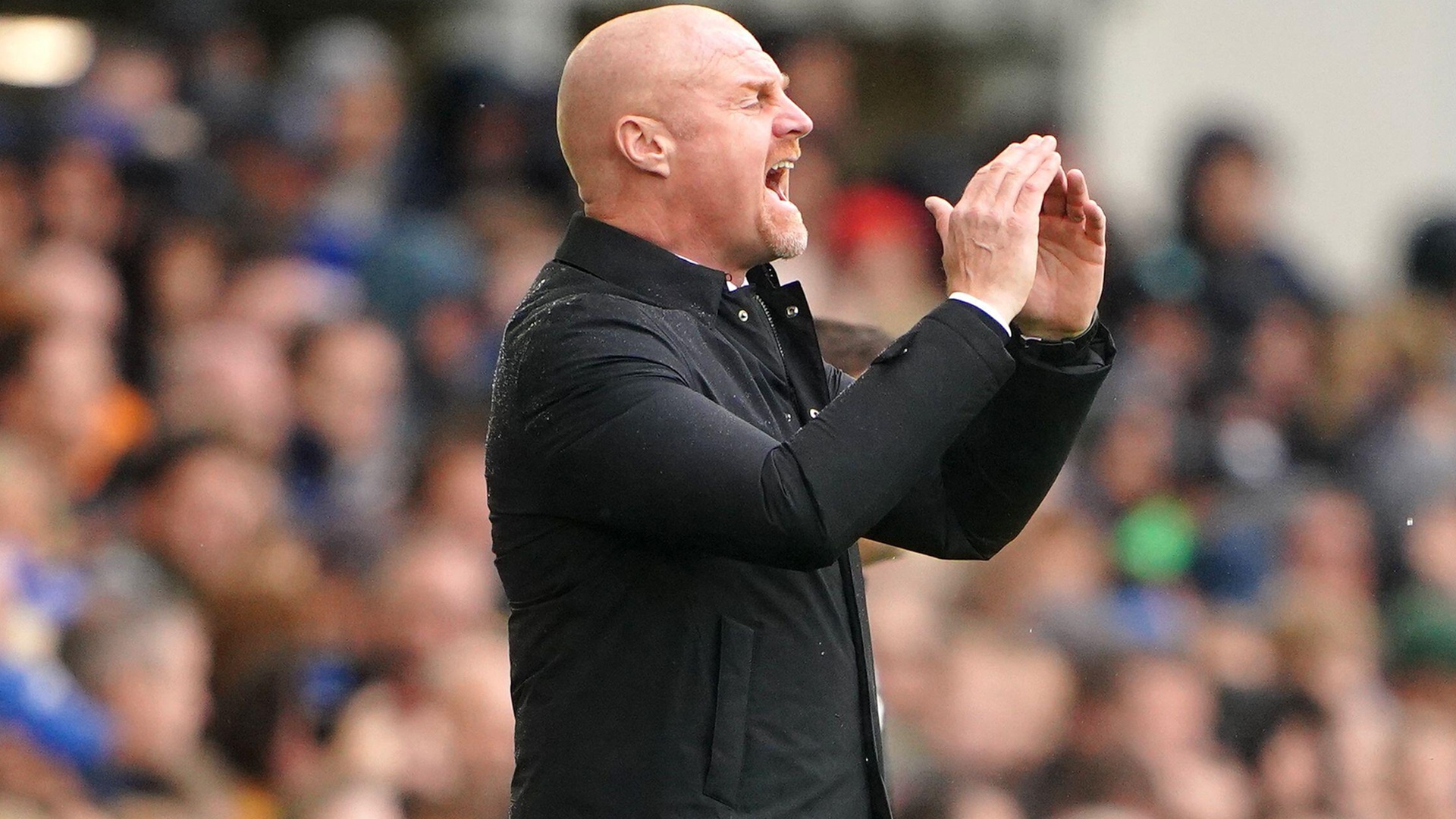
Sean Dyche has become the latest casualty of a turbulent 2025-26 campaign, dismissed after just 114 days in charge following a goalless draw with Wolves. The decision means Forest have now parted ways with Nuno Espírito Santo, Ange Postecoglou and Dyche in a single season, a managerial churn that reads less like strategic recalibration and more like institutional restlessness.
At their current rate, one new manager every 60 days, boss number five may well arrive before the daffodils bloom.
Where Forest Stand: A Season Unravelling
Forest sit perilously close to the relegation zone, hovering just three points above the bottom three after a run of form that has drained belief from the City Ground. Goals have dried up, confidence has fractured, and performances have oscillated between timid and frantic.
Under Dyche, the intention was clear: tighten the defence, restore discipline, and grind out points. Instead, Forest have become trapped between identities. They do not press with cohesion, nor do they defend with the compact resilience Dyche’s Burnley sides once embodied. The Wolves stalemate, sterile, anxious, short on invention, felt like a team paralysed by fear of making the mistake that would seal its manager’s fate. Despite 35 attempts, Forest were held to a blank.
Forest’s underlying numbers tell the story of a side struggling at both ends. They are among the league’s lowest scorers while conceding at a rate that betrays structural confusion. Expected goals created has dipped sharply since autumn; defensive errors leading to shots remain stubbornly high.
The mood around the City Ground is not anger so much as exhaustion. Each reset has come with promises of clarity, only for the fog to thicken further. Supporters have watched tactical philosophies swing wildly: from possession-heavy build-up to high-octane aggression to back-to-basics pragmatism. None have stuck.
Relegation battles require emotional ballast. Forest instead feel seasick.
Evangelos Marinakis: The Owner in a Hurry
At the centre of this storm stands Evangelos Marinakis.
Evangelos Marinakis is not a passive owner. The Greek shipping magnate, who also controls Olympiakos, operates with urgency and visible ambition. He has invested heavily in the playing squad, backed recruitment drives and shown a willingness, perhaps eagerness , to act decisively when results falter.
For Marinakis, stagnation is intolerable. Forest’s return to the Premier League was not meant to be a fleeting cameo. The club’s recruitment model has often resembled controlled chaos: dozens of signings across windows, a belief that volume increases the probability of finding gems. It has delivered moments of quality but also instability.
Marinakis is known to be emotionally invested. He attends matches, reacts demonstratively, and expects progress. That intensity filters downward. Managers understand that patience is conditional. A poor run is not merely a dip; it is a verdict pending.
In isolation, ambition is admirable. In excess, it becomes combustible. Forest’s season now feels less like a long campaign and more like a series of short-term experiments conducted under bright lights.
Three Managers, Three Visions, One Outcome. Nuno Espírito Santo: Promise That Soured
Nuno Espírito Santo began the season tasked with consolidating Forest’s Premier League status. Known for his structured defensive shape and counter-attacking efficiency, Nuno attempted to stabilise a squad that had too often looked chaotic in transition.
Early performances suggested incremental progress. Forest were organised, compact, and capable of striking quickly through wide channels. Yet goals remained scarce. The team’s attacking patterns became predictable, reliant on moments rather than sustained pressure. A run of defeats against mid-table rivals eroded goodwill.
Crucially, the football felt reactive at a time when supporters craved boldness. Marinakis, impatient with stagnation, concluded that Nuno’s ceiling was survival rather than growth. The axe fell before autumn had properly settled. In truth, Nuno’s sacking felt less about crisis and more about ambition misaligned with caution. It seemed his relationship with Marinakis soured after an on-field confrontation in front of the cameras in September. A public spat with a passionate owner can never go down well.
Ange Postecoglou: Fire Without Foundation
Ange Postecoglou arrived as ideological contrast. If Nuno represented restraint, Ange embodied adventure. High defensive lines, relentless pressing, full-backs inverting into midfield meant that Forest suddenly played with daring.
For a brief spell, the City Ground crackled. Victories came with drama. There were goals, risks, and moments that hinted at transformation. But Postecoglou’s system demands precision and trust. Defensive frailties soon surfaced. Opponents exploited space behind the line; transitions became Forest’s undoing.
Results were frankly terrible. The team looked clueless, the change was to drastic. Marinakis, facing mounting pressure as the table tightened, lost faith in the volatility. Ange’s tenure lasted barely long enough for patterns to settle. His dismissal felt premature yet inevitable, a romance curtailed by fear of relegation. Just 39 days in charge, with zero victories registered, perhaps Marinakis had no choice here.
Sean Dyche: Pragmatism That Never Took Root
Sean Dyche was appointed as a corrective measure. Experience. Authority. Simplicity. Dyche’s mandate was survival.
Training sessions reportedly sharpened defensive drills. The messaging was clear: fewer risks, more structure. Yet Forest struggled to internalise the blueprint. The squad, assembled with technical profiles in mind, did not naturally morph into a Dyche side. Build-up play slowed; attacking thrust diminished.
The goalless draw with Wolves encapsulated the impasse. Solid enough at the back, blunt up front. A team playing not to lose rather than to win. For Marinakis, stagnation equalled regression. After 114 days, Dyche joined the growing list of former Forest managers this season.
Three philosophies. Three resets. The same uncertainty.
Who Next? Vítor Pereira and the Search for Coherence
Attention now turns to Vítor Pereira.
Vítor Pereira has been heavily linked with the vacancy, with reports suggesting advanced talks following Dyche’s late-night dismissal. Pereira is a coach of varied experience, titles in Portugal, spells in China, Turkey and beyond, known for tactical flexibility and a capacity to organise sides without stripping them of attacking intent.
His potential appointment would signal another pivot. Not as conservative as Dyche, not as ideologically rigid as Postecoglou, Pereira offers pragmatism laced with technical emphasis. Whether that balance can be achieved mid-season, amid relegation anxiety, is another matter.
The Cost of Constant Change
There is a seductive logic to managerial change. When results dip, replace the voice. When confidence fades, refresh the message. Yet evidence across the Premier League era suggests the benefits of mid-season upheaval are often overstated. The “new manager bounce” often produces a short spike in effort rather than sustained structural improvement.
For Nottingham Forest, the cost is not only tactical but financial. Sacking a manager in the Premier League is rarely a clean break. Compensation clauses, backroom staff settlements and contractual pay-offs accumulate quickly. Nuno Espírito Santo’s dismissal required a settlement understood to be worth several million pounds. Ange Postecoglou’s short-lived tenure also came with a contractual payout, including compensation for his coaching staff. Sean Dyche, appointed on a multi-year deal, will likewise command a significant severance package despite lasting just 114 days.
Conservatively, Forest may have committed well into eight figures across managerial payouts this season alone. That is money diverted from recruitment, infrastructure or wage flexibility. In a relegation battle, financial margins matter as much as tactical ones.
Beyond the balance sheet lies the performance cost. Each new appointment has meant tactical recalibration. Defensive lines have shifted; pressing systems have been installed and dismantled. Passing networks fragment during transition periods. Cohesion metrics typically decline before stabilising, time Forest have not afforded anyone.
The psychological erosion is subtler but real. Authority becomes temporary. Players adapt by protecting themselves rather than committing fully to a philosophy that may expire within months.
Constant change feels decisive. In reality, it is expensive, in money, clarity and trust
The Premier League’s Impatience Economy
Forest’s volatility does not exist in isolation. It is a product of the Premier League’s impatience economy, a competition where financial gravity compresses timelines and magnifies risk.
The gap between finishing 17th and 18th is no longer simply sporting; it is existential. Relegation strips tens of millions from revenue streams. Broadcast distributions, sponsorship bonuses and player wage structures hinge on survival. In such an environment, owners are incentivised to act quickly, even pre-emptively. The cost of waiting can appear greater than the cost of change.
Layered onto this is the relentless velocity of modern discourse. Social media accelerates crisis. A poor performance is dissected instantly, narratives harden overnight, and pressure compounds before training resumes. Owners operate not only within financial constraints but within digital scrutiny.
Clubs increasingly resemble short-term projects rather than long-term builds. Data dashboards track performance weekly; expectations adjust accordingly. When progress stalls, the managerial position becomes the most visible lever to pull.
Forest’s churn, then, is symptomatic rather than anomalous. Across Europe’s elite leagues, average managerial tenure continues to shrink. Patience has become a luxury item.
Yet there remains a paradox. The most stable clubs, those with coherent sporting structures and clearly defined identities, are often the ones best equipped to withstand downturns. In chasing immediate correction, teams sometimes sacrifice the very stability that would insulate them.
Forest are navigating this modern tension in its rawest form: ambition colliding with the unforgiving economics of the Premier League age.
Where this leaves Forest
Forest’s squad is not devoid of talent. There are players capable of vertical passing, pace in wide areas, and athleticism in midfield. The challenge is forging identity from fragments. Pereira’s task, should he accept it, will be less about reinvention and more about synthesis.
The wider question lingers: can coherence exist when time is rationed? Managers require oxygen, the space to imprint ideas, absorb setbacks, and build trust. Forest have instead become a laboratory of short-term solutions.
There is still time to steady the course. The table remains compressed; a sequence of wins can transform narrative. But constant upheaval risks eroding the very foundations required to mount that surge.
For supporters, the fear is not merely relegation. It is drift. A sense that Forest are reacting rather than planning, extinguishing fires without addressing the sparks.
Three managers gone. A fourth incoming. The City Ground waits, hopeful yet wary, as the wheel turns once more.