LiveScore's World Cup 2026 Team of the Tournament: Victorious Spain stars dominate ultimate XI
 Tom Hancock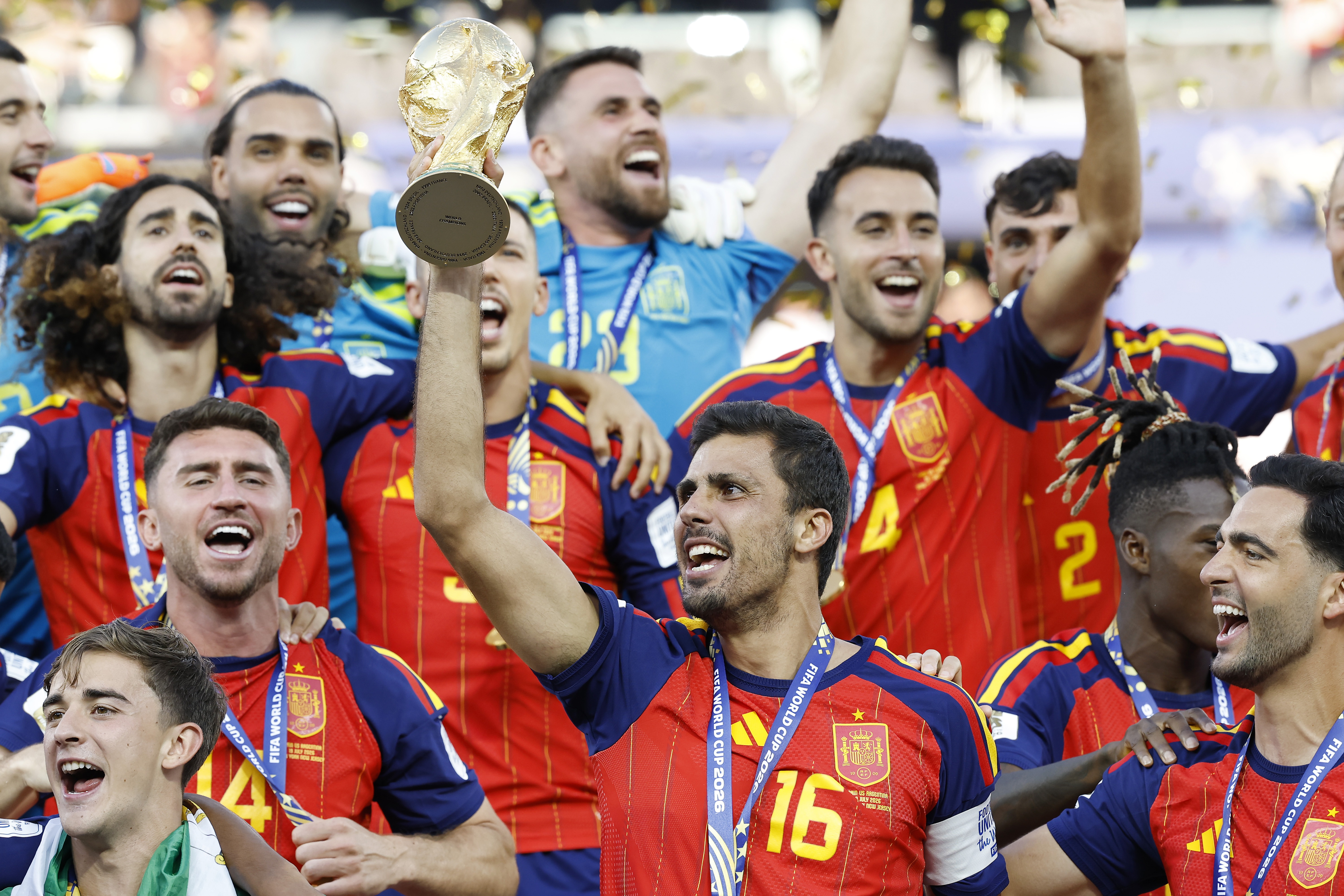

Spain have won the biggest-ever World Cup and, as ever, the tournament witnessed some outstanding individual showings. Here, we’ve put together the best of the best in our Team of the Tournament.
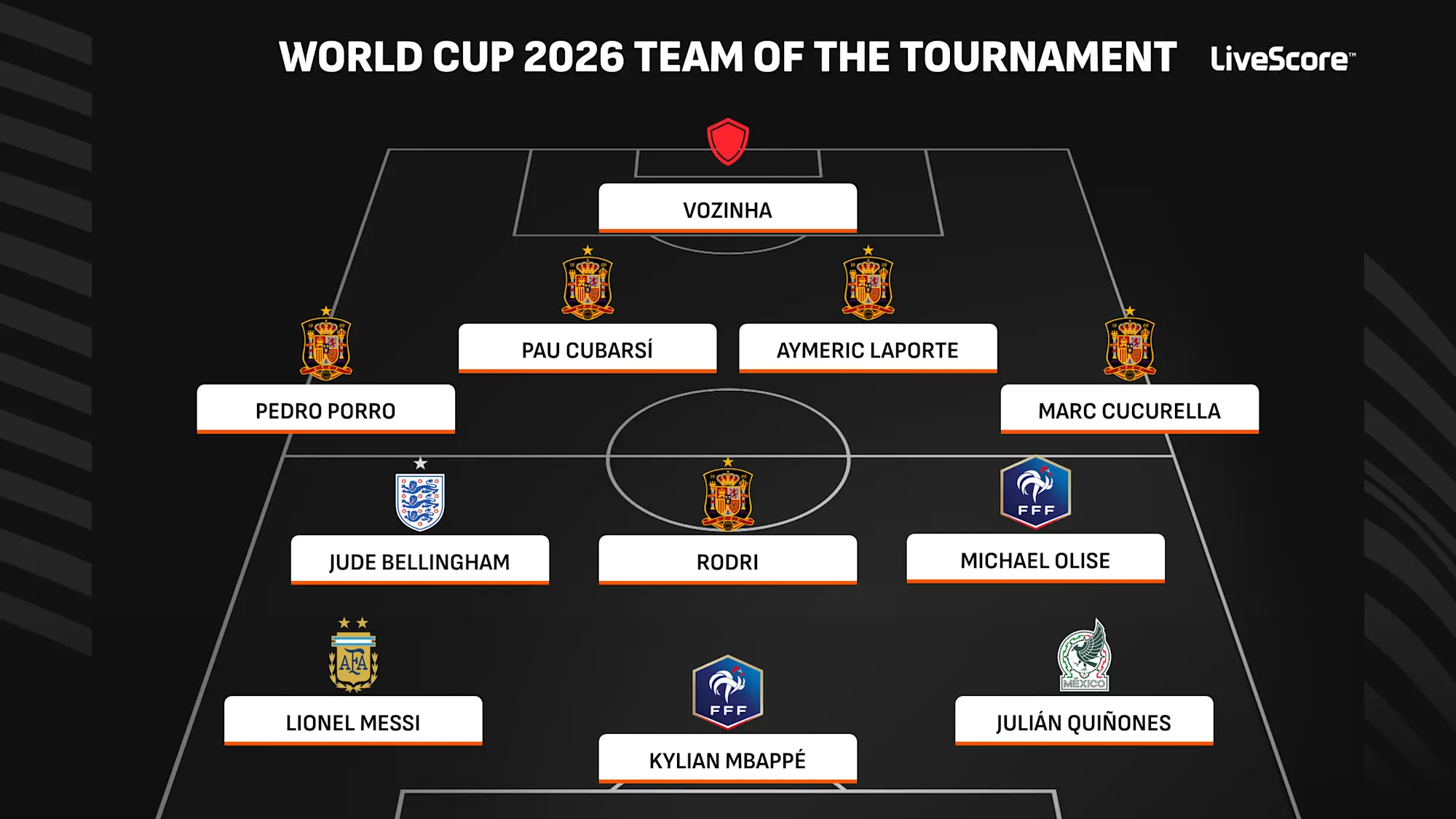
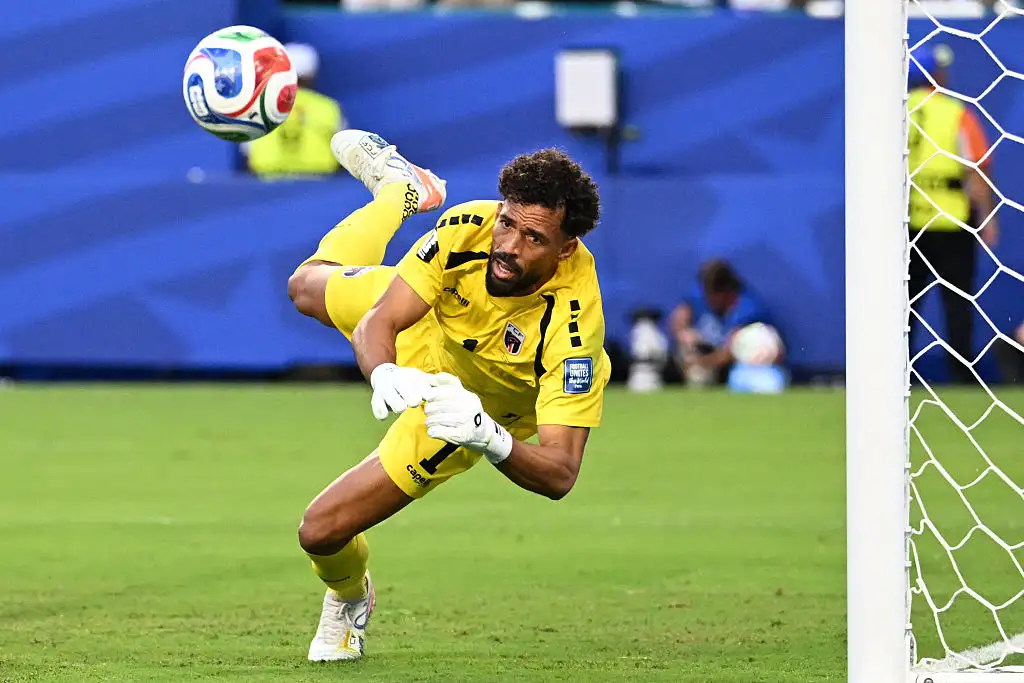
Goalkeeper: Vozinha (Cape Verde)
While World Cup-winning Spanish number one Unai Simon claimed the Golden Glove for the most clean sheets, the 2026 tournament will surely be remembered for one goalkeeper above all others: Vozinha, the heroic veteran between the sticks for script-flipping debutants Cape Verde.
Man of the match in Cape Verde’s shock 0-0 draw with Spain in their opening game – making seven saves on the day – the 40-year-old produced more shot-stopping magic as the Blue Sharks pushed holders and eventual runners-up Argentina all the way in the last 32.
A little-known quantity before this World Cup, Vozinha – who tallied 0.9 Goals Prevented across his four appearances – saw his Instagram following surge from around 50,000 to over 22 million. That’s the power of the World Cup.
Right-back: Pedro Porro (Spain)
In helping Spain to their second world crown, Pedro Porro ensured Tottenham became the first Premier League club to supply a World Cup winner at three straight editions of the competition.
And the 26-year-old played some of the best football of his career as La Roja pretty much completely shut down everyone who came at them, facing a mere 10 shots on target in their eight matches.
An unused substitute for two of his country’s three group games, Porro truly came to the fore in the knockout stage, making the right-back spot his own and scoring twice en route to the final: against Austria in the last 32 and France in the semi-finals. Only two full-backs (Morocco’s Achraf Hakimi and Portugal’s Nuno Mendes) created more chances than the consistently probing Porro throughout the tournament.
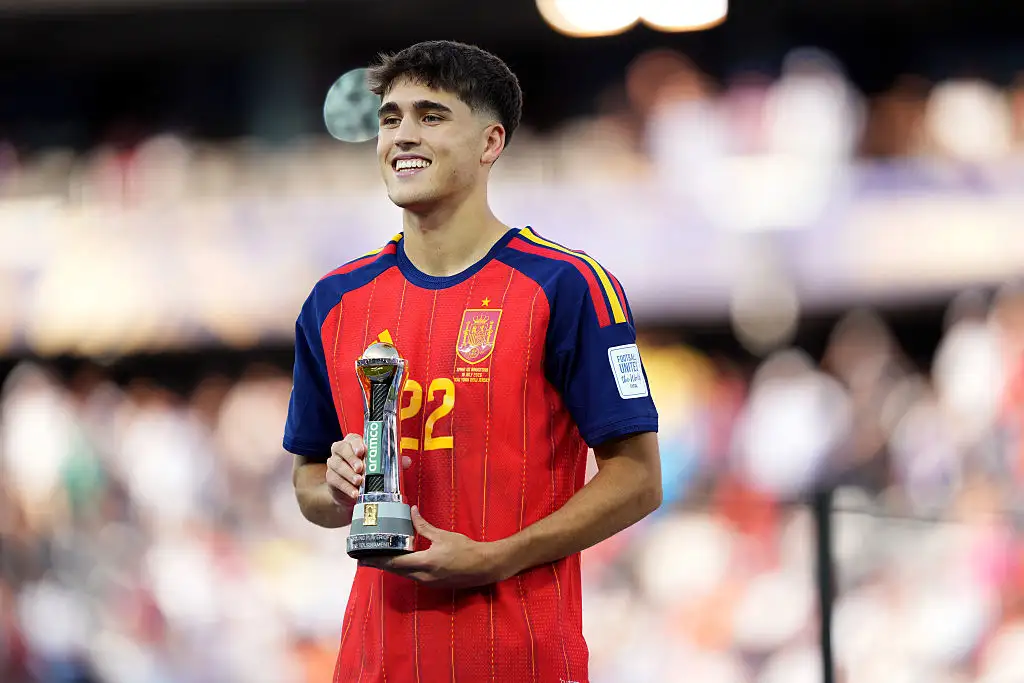
Centre-back: Pau Cubarsi (Spain)
Okay, we’re going to include the entire Spanish back four for their unparalleled stinginess which saw them concede one goal all tournament and made La Roja just the fourth team in World Cup history to go through an entire finals without trailing for a single second.
Honoured with FIFA’s Young Player Award – previously won by the likes of Kylian Mbappe, Franz Beckenbauer and Pele – Pau Cubarsi’s confidence in and out of position belied his 19 years.
The Barcelona starlet didn’t miss a minute of his first senior international tournament as he set himself up for greatness, becoming the seventh-youngest player ever to lift the World Cup.
Centre-back: Aymeric Laporte (Spain)
Thirteen years his centre-back partner’s senior, Aymeric Laporte might be beyond his prime now, but the Athletic Bilbao man proved his class time and time again en route to glory.
Still an exceptional reader of the game, Laporte averaged 1.9 interceptions per 90, the joint fifth-most of any centre-back at this World Cup. He’d missed only one minute of Spain’s campaign until being substituted in extra time of the final.
And to think this is a player who might have won the World Cup with a different country, having been called up by France during qualification for the 2018 tournament they won. But he opted to represent Spain at senior level and his patience has paid dividends.
Left-back: Marc Cucurella (Spain)
For the first time ever, Spain started a World Cup without a single Real Madrid player in their squad. Marc Cucurella ended the tournament as one, mirroring full-back counterpart Porro’s performances.
The former Chelsea man didn’t miss a single minute as he helped Spain build on their Euro 2024 triumph – and like Porro, he finished up with two goal contributions, registering two assists for Mikel Oyarzabal in the 3-0 last-16 win over Austria.
A suitably accurate passer of the ball for the possession-fond side he plays in, Cucurella has pledged to celebrate Spain’s success by getting a tattoo of manager Luis de la Fuente.
Defensive midfield: Rodri (Spain)
The 2024 Ballon d’Or winner scooped another major individual accolade as he went home with the Golden Ball for player of the tournament, having become the latest Spanish star to captain La Roja to a major title.
Quite possibly the best midfielder on the planet right now, Rodri routinely proved his prowess as an elite pivot, playing an integral part in Spain’s near absolute blunting of their opponents.
After battling back from a serious knee injury in 2024, the Manchester City great admitted he was in a state of shock after lifting the trophy. “I just want the new generations to see my example as an opportunity,” he said. “When you go down, you can rise again. This is my philosophy for my entire life.”
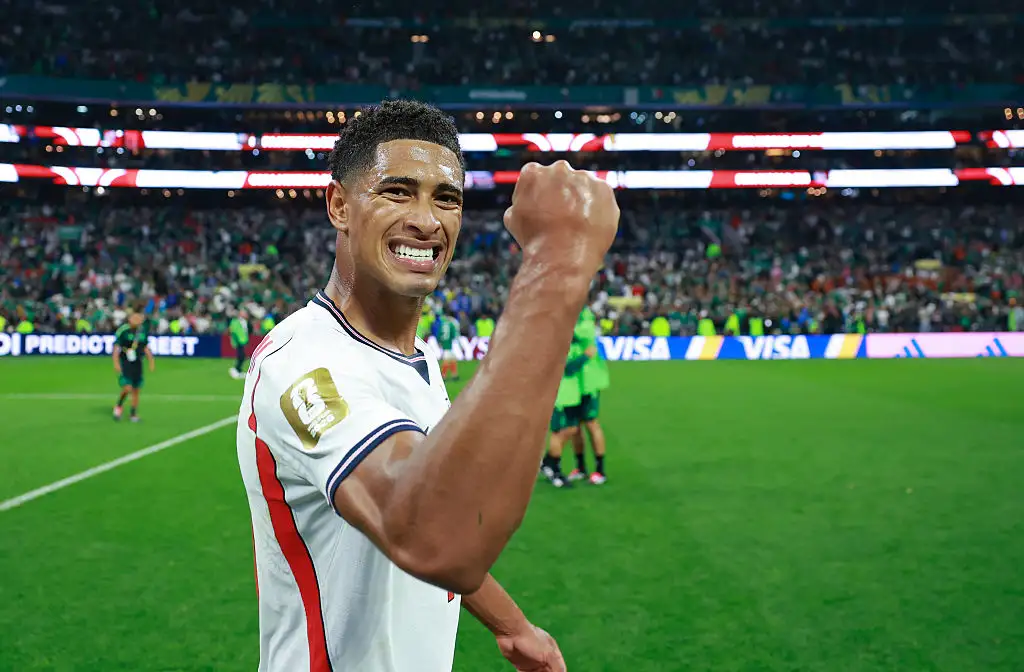
Attacking midfield: Jude Bellingham (England)
It wasn’t to be for England, but Jude Bellingham showed once more why he’ll be the man to lead the Three Lions in their enduring mission to end 60-plus years of hurt – and probably inherit the captain’s armband from Harry Kane.
With seven goals – the last in the crazy 6-4 victory over France to clinch third place – Bellingham became the top-scoring English player in a single edition of the World Cup.
His quickfire brace against Mexico at the Azteca will live long in the memory – and the best part as far England are concerned is he’s still only 23. There’s plenty of time to bring it home yet…
Attacking midfield: Michael Olise (France)
France’s creator-in-chief built on his superb club season for Bayern Munich to help propel Les Bleus into their third straight World Cup semi-final, finishing with a tournament-high three assists – at least three more than any other player.
Simply a joy to watch with the ball at his feet, the 24-year-old emphatically underlined his reputation as one of the best players in the world at his debut World Cup, fashioning 18 goalscoring chances overall (only Lionel Messi carved out more).
A first World Cup goal eluded Olise, but it’s obvious he’ll be at the forefront of any French challenge at the next tournament in four years’ time.
Right wing: Lionel Messi (Argentina)
The tears after losing the final to Spain suggest this was Messi’s last World Cup – and while he was unable to captain Argentina to retaining their crown, the eight-time Ballon d’Or winner, if this was his World Cup swansong, went out exactly as we’d expect.
Dragging Argentina through potentially tournament-ending situations time and time again, the 39-year-old notched at least one goal contribution in every game up to the semi-finals, finishing with 12 goals and assists combined.
Briefly the World Cup’s all-time leading scorer after finding the net against Austria, Messi crossed off yet another career achievement by hitting a hat-trick in Argentina’s opening 3-0 win over Algeria – and later set up both goals as he inspired his country from 1-0 down late on to beat England 2-1 in the semis.
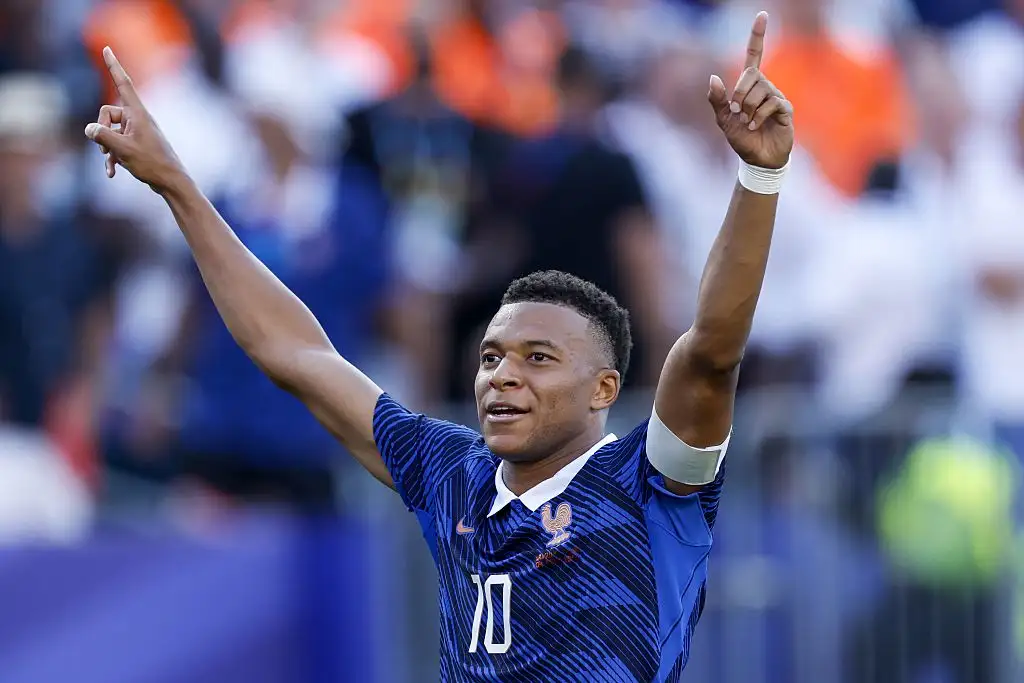
Centre-forward: Kylian Mbappe (France)
We might never see the like of it again, and the thrilling battle for World Cup goalscoring supremacy culminated in individual victory for Kylian Mbappe, France’s skipper and spearhead of a star-studded attack.
Now the record World Cup scorer with 22 goals – one more than Messi – at an average of exactly one per game, Mbappe made more history by becoming the first two-time Golden Boot winner, retaining the award he won in Qatar four years ago.
And given, scarily, he’s still only 27, think how much more there is to come from the man who’s become one of the world’s most formidable centre-forwards – and who became the first player to score 10 goals at a single World Cup since German icon Gerd Muller back in 1970.
Left wing: Julian Quinones (Mexico)
Arguably the standout performer from any of the three host nations, Julian Quinones could be a wanted man this summer.
The 29-year-old speedster, currently playing his club football for Al-Qadsiah in Saudi Arabia, sparked Mexico’s campaign into life with the first goal of the tournament and went on to find the net three more times, enjoying his finest outing in El Tri’s 2-0 last-32 victory over Ecuador.
Also on the scoresheet in the thrilling but agonising 3-2 defeat to England in the following round, Quinones marked himself out as Mexico’s main man – having switched allegiance from Colombia three years ago.