Yesterday marked the conclusion of the 2026 NBA Summer League in Las Vegas, where 450 young players tried to show that they have what it takes to earn a National Basketball Association roster spot. The Golden State Warriors defeated the Memphis Grizzlies 94-90 to claim the 2026 NBA Summer League title. At the end of the day, though, winning the Summer League Championship is fairly inconsequential. It's far more important for teams and fans to watch their young players so that they can gauge how they might perform at the next level. With that in mind, let's identify who flourished and flopped during the NBA Summer League play.
Winners
Guard, Brayden Burries. Milwaukee Bucks.
After completing a blockbuster trade that sent franchise superstar Giannis Antetokounmpo to the Miami Heat, the Bucks began a full-fledged rebuilding process. Though that is still the case, the rebuild got a nice shot in the arm via the addition of shooting guard Brayden Burries, who looked like one of the best players during the 2026 NBA Summer League. The 20-year-old former Arizona Wildcat averaged 23.5 points per game, which was good for fifth amongst all players who participated in Summer League action. He also demonstrated excellent efficiency by making half of his field goal attempts. The young man even showed he has a clutch gene by making a game-winning shot against the Philadelphia 76ers. The Bucks will never be able to replace or replicate the production they got from Giannis. However, the emergence of Brayden Burries during the Summer League will lessen the blow of losing the franchise GOAT earlier in the off-season. Between Tyler Herro and Burries, Milwaukee has one of the most exciting young shooting guard duos in the NBA.
Guard, Meleek Thomas. Cleveland Cavaliers.
It was no secret that Meleek Thomas was one of the more offensively mature players taken during the 2026 Draft Class, but I don't believe anybody expected him to be this good already. The 19-year-old led all players in Summer League scoring with an astounding 27.3 points per game. The Arkansas product was lights out from beyond the arc, making 43.8% of his three-pointers. He averaged 3.5 rebounds and 3.8 assists per game while only turning the ball over six times in four contests. He was so prolific offensively that his 24-point outing to close out Summer League play actually brought his scoring average down! We also have to mention his defensive performance, which was not bad considering he averaged two steals per game. Obviously, Summer League success does not always translate to the NBA, but if this is an indication of things to come, then Meleek Thomas was an absolute steal for the Cavaliers with the 34th overall pick in the 2026 NBA Draft.
Guard, Bruce Thornton. Houston Rockets.
As the top pick in the second round of the 2026 NBA Draft, there was a reasonable expectation that Bruce Thornton would provide meaningful minutes for the Rockets right away. Though we still need to see how he will fare during the regular season, he lived up to the hype in the Summer League with good numbers across the board in Vegas. Thornton, who is Ohio State's all-time leader in points scored (2,164), averaged 18.6 points per game in five contests, which ranked 22nd amongst all Summer League players. He showed a knack for hitting deep shots by making 40.6% of his three-point attempts. Thornton also made solid contributions elsewhere by cleaning up the glass (4.6 rebounds per game) and dishing out dimes (4.4 assists per game). It would've been nice to see him demonstrate more overall efficiency from the field after he made just 39.1% of his total shot attempts, but the Rockets should be more than pleased if Bruce Thornton emerges as a reliable three-and-D player who can make up for the potential losses of Amen Thompson and Fred VanVleet if they choose to leave the team in free agency next off-season.
Forward, Allen Graves. Toronto Raptors.
Allen Graves was one of the most fascinating players taken in the 2026 NBA Draft. Though the kid was not setting the world on fire with his statistical output in college, his efficiency metrics and overall versatility were off the charts, which would explain why he ended up going to the Toronto Raptors with the 19th overall pick. There was expected to be an adjustment period as Graves, who played for Santa Clara, adapted to NBA-level competition. But the soon-to-be 20-year-old exceeded expectations during Summer League play. After putting up underwhelming numbers during his lone season of college basketball, Graves improved in every significant statistical category during his four Summer League games. In college, he averaged 11.8 points, 6.5 rebounds, and 1.8 assists per game. Graves upped his production by averaging 16.8 points, 6.8 rebounds, and three assists in four Summer League games. He also hit 50% of his three-pointers and 51% of his field goal attempts overall. It would be unfair to expect Allen Graves to be this effective during the 2026-27 campaign, but - right now - he looks worthy of being a first-round pick, and he should be able to play up to NBA-level competition when the regular season begins.
Forward, Yaxel Lendeborg. Golden State Warriors.
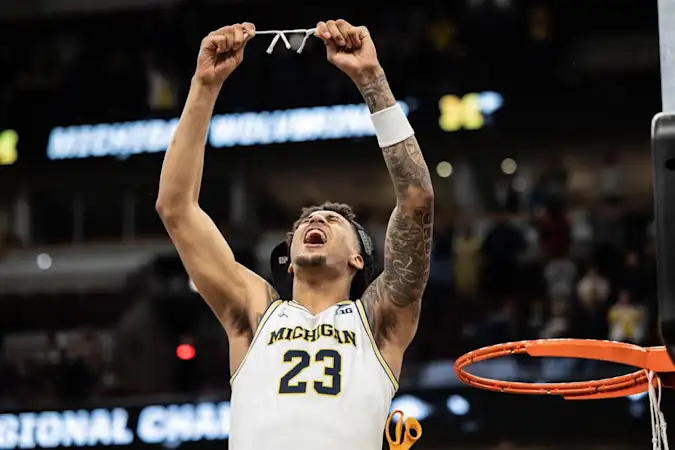
As an older player, former Michigan Wolverine Yaxel Lendeborg might not have the highest ceiling of guys taken in the 2026 NBA Draft, but he will still be expected to contribute immediately to a Golden State squad that is in win-now mode. When given the chance to show that he would be a good NBA player, Lendeborg did not disappoint. He had an impressive stat line of 14.8 points, 6.8 rebounds, four assists, and 1.5 steals per game while shooting 45.9% from the field. And, when the lights shone the brightest, Yaxel Lendeborg did what he has always done and rose to the occasion. In the 2026 NBA Summer League Championship Game, he led all players with 21 points to go along with 10 rebounds and two steals. That propelled the Warriors to a victory and earned Lendeborg the game's MVP award. He had more points and rebounds than the number-three overall pick, Cameron Boozer, which is impressive considering Boozer is viewed as the best power forward prospect in the 2026 NBA Draft. Yaxel Lendeborg looks ready to provide significant minutes to a Warriors squad that will be trying to win a championship.
Forward, Koa Peat. Phoenix Suns.
Koa Peat made me and many other NBA analysts look foolish. He proved that it doesn't matter what you do during the Scouting Combine if you can elevate your performance when actually playing the game. During the 2025-26 college basketball season, Peat was averaging 14.1 points, 5.6 rebounds, and 2.6 assists per game while knocking down 52.8% of his field goal attempts. In four Summer League matchups, he exhibited a better knack for scoring by averaging 16.8 points per game on 51% shooting. On top of that, he was good for 4.8 rebounds, 2.3 assists, and 1.5 steals per game, which are still pretty good numbers against guys who are desperately trying to earn an NBA roster spot. As the 13th-youngest player taken in the 2026 NBA Draft, Peat still has a way to go before he is ready to contribute meaningfully on a night-in, night-out basis. However, the 19-year-old forward showed executives that his performance during the Scouting Combine was a fluke and that he's worthy of playing for an NBA team.
Losers
Guard, Darius Acuff Jr. Sacramento Kings.
If you ignore efficiency numbers, Darius Acuff Jr. wasn't bad during the NBA Summer League. He was tied for 17th in scoring with 19 points per game. Plus, he averaged 5.3 assists, a steal, and a block in each of the four contests he played. But when we look at the whole picture, we see a guy who struggled to take care of the ball and make shots at a high clip. Acuff only connected on 36.5% of his field goal attempts, which was well below the 46.7% mark he put up in the NCAA Tournament. He was even worse from deep, making just 26.4% of his shots from beyond the arc, which is concerning since he averaged the 34th-most three-point attempts per game amongst Summer League participants (6.3). Acuff also averaged the second-most turnovers per game of any Summer League player (4.7). Between the turnovers, the low shooting percentages, and a +/- rating of -11 (the 14th-worst mark amongst all players), Darius Acuff Jr. did not live up to the hype he earned going into the 2026 NBA Draft.
Guard, Ebuka Okorie. Detroit Pistons.
He turned 19 years old a little over three months ago, so it's appropriate to assume that there would be a little bit of a learning curve for Okorie as he adjusts to NBA competition. However, Ebuka Okorie was woefully inefficient, especially after such a promising year at Stanford. As a freshman, he was tied for sixth in the nation in scoring (23.2 points per game) while making 46.5% of his shots and 35.4% of his three-pointers. Okorie didn't come close to putting up those numbers during Summer League play. In five games, he averaged 18.6 points and 2.6 turnovers per game. Those aren't the worst stats we’ve ever seen, but his shooting efficiency left a lot to be desired. Okorie only made 36.4% of his field goal attempts and was an appalling 17.4% from beyond the arc even though he averaged 4.6 three-point attempts per game. For a guy who was drafted to ensure that the Pistons' offense doesn't take too much of a nose-dive when Cade Cunningham is resting, Ebuka Okorie did not look like a guy who was worth the 17th overall pick in the 2026 NBA Draft.
Guard, Braden Smith. Indiana Pacers.
To some people, it might not be fair to call Braden Smith a loser following his Summer League performance. After all, he is the only second-rounder who appeared on this list. But, considering he was the lone player the Pacers selected in the 2026 NBA Draft, there’s an expectation that he will be able to give Indy some meaningful minutes off the bench. Granted, Smith is the NCAA's all-time leader in assists with 1,103 in his career, and he showed an ability to dish the ball out, averaging the fourth-most assists per game during Summer League play (7.0). The problem was everything else he was asked to do offensively. The former Purdue Boilermaker only scored 27 total points despite averaging 26.8 minutes per game. We also have to mention his atrocious shooting splits (26.5% from the field and 29.4% from beyond the arc). These numbers are troubling when you remember he was 43.6% from the field and 38.5% from three during his four-year college career. He clearly will be a good passer, but in the NBA, you need to be able to put up points if you're not a defensive stalwart, and Braden Smith struggled to do just that during NBA Summer League action.
Forward, Joshua Jefferson. Brooklyn Nets.
I was never a huge Joshua Jefferson fan, as proven by the fact that I didn't have him going in the first round of the 2026 NBA Draft. However, the Brooklyn Nets felt differently, which is why they selected Jefferson with the 28th overall pick last month. Going into the draft, there were some concerns about his shooting ability, but there was also a belief that Jefferson could fix these issues with time and practice. Unfortunately, the fears that analysts had about his offensive capabilities came to fruition during the Summer League, when Jefferson averaged 7.3 points per game in three contests, which is the third-lowest mark of any first-round pick from the 2026 NBA Draft. His shooting splits were also terrible, with a 33% field goal rate and an abysmal 12.5% success rate from deep. After the 2026 NBA Draft, I was skeptical about the decision for the Nets to take Joshua Jefferson, but after the putrid performances he had in California and Las Vegas, there should be serious concerns about what Jefferson's role will be in Brooklyn. This kid is nowhere close to being a number-one or number-two small forward.
Guard/Forward, Dailyn Swain. Chicago Bulls.
Similar to Joshua Jefferson, Dailyn Swain came into the 2026 NBA Draft as an unfinished offensive product. There was no question that the kid has a penchant for defense. During the Summer League, he averaged five rebounds and 0.8 steals per game. However, Swain's offensive deficiencies were undeniable over the last three weeks. Despite playing in four matchups and averaging 28 minutes per game (33rd amongst all Summer League participants), he averaged only 4.3 points and one made field goal per contest, which were both the lowest marks by 2026 first-round draft picks. He shot a horrendous 12.9% from the field, which was the fifth-lowest percentage of any player who made at least one basket during Summer League play. Defense is obviously important, but if you're one of the most offensively inept players in the Summer League, there are legitimate reasons to be worried about how many minutes Dailyn Swain will be able to give the Bulls every night. Unless Swain turns into Dennis Rodman, which seems very unlikely, this already looks like a bad pick by the Bulls.
Center, Ryan Kalkbrenner. Charlotte Hornets.
We finish things off with the only player on our list who was not a 2026 NBA Draft pick, Charlotte Hornets center Ryan Kalkbrenner. After going in the 2025 Draft, the 7'1" Creighton product was solid in his rookie season, averaging 7.6 points and 5.5 rebounds per game as Charlotte's backup center. After the kid logged over 1,479 regular-season minutes last year, it wasn’t far-fetched to think he would be able to put up good numbers against Summer Leaguers, some of whom might not even make an NBA roster. Unfortunately, that was far from the case. Kalkbrenner was held to just 5.3 points and 4.7 field goal attempts per game, while making less than 60% of his shots. You would hope that the guy would shoot the ball more against a lower level of competition, but that didn't happen. He only averaged 0.5 more shot attempts per game than he did during the 2025-26 regular season. He even struggled crashing the glass after he averaged just 4.7 rebounds per game. When you factor in the stellar production from 2026 first-round pick Hannes Steinbach - who averaged 15.8 points and 9.2 rebounds per game (fifth-most amongst Summer League participants) - Kalkbrenner blew his chance to cement himself as one of Charlotte's top centers. And with Naz Reid now in the mix, Ryan Kalkbrenner will probably move further down the depth chart.