Atlanta Hawks: A
#8: Guard, Kingston Flemings (Houston)
#23: Forward/Center, Zuby Ejiofor (St. John’s)
#52: Center, Henri Veesaar (UNC)
This will be an incredibly important draft for the new-look Atlanta Hawks as they continue to solidify their identity as a defense-first team. Not only did the Hawks address all their major needs, but the three players they added also had first-round grades. Flemings won't be an immediate starter since they have CJ McCollum still playing at a high level, but he will eventually become the starting point guard in the ATL. Zuby Ejiofor is another strong defender who can play anywhere in the frontcourt. And Henri Veesaar with the 52nd overall pick might be the steal of the draft because I had Veesaar going 18th overall! He’s a natural center who will get meaningful minutes from the jump. He will become the long-term starter at the five-spot if he can keep up his offensive development.
Boston Celtics: A-
#27: Forward/Center, Chris Cenac Jr. (Houston)
#40: Forward, Dillon Mitchell (St John’s)
The C's needed to add more frontcourt depth, and they did just that during the 2026 NBA Draft. I graded Chris Cenac Jr. as a top-20 pick, so Boston landing him at the 27th spot is a steal. He has fantastic size and length and is only 19 years old, but it'll take some time for him to come into his own as an NBA-level player. Regardless, there is a world where he could be the number-three or maybe even number-two center in the lineup when the playoffs start. Cenac will be an important part of Boston's plans in the short term and in the future. Dillon Mitchell was also a solid pick. He might not be a polished offensive product, but he will fill in nicely on the defensive end when Jayson Tatum needs some rest.
Brooklyn Nets: C+
#6: Guard, Mikel Brown Jr. (Louisville)
#28: Forward, Joshua Jefferson (Iowa State)
#43: Forward, Tyler Bilodeau (UCLA)
The Nets' picks weren't necessarily bad, but I wouldn't have selected the players they chose in the first round. With Keaton Wagler off the board, Darius Acuff Jr. felt like a more promising prospect with the star potential Brooklyn needs to put fans in the seats. Instead, they took Brown, who’s great but is also a 19-year-old with a bad back. It’s very rare for NBA players to have long and successful careers if they deal with back injuries at such a young age. I don't hate the Joshua Jefferson pick. I would even go so far as to say it was a decent choice. However, the Nets just made a trade for Julius Randle, who will obviously be the long-term starting power forward. That means Jefferson is going to have to play at the three-spot, which is already manned by Michael Porter Jr. So, where does Jefferson fit in with Brooklyn's plans? These were not home run picks, which is what they needed to be after NYC showed that it's a Knicks-first city.
Charlotte Hornets: A+
#14: Center, Hannes Steinbach (Washington)
#18: Guard, Christian Anderson (Texas Tech)
The Hornets had two objectives going into this draft: find a starting center and add backcourt depth. They accomplished both of those goals. Steinbach is a perfect fit for Charlotte since they averaged the second-most three-point attempts per game last season (43.3). After leading the nation in rebounds, Steinbach will be able to clean up the glass and give the Hornets plenty of second-chance scoring opportunities. Charlotte also thinks quite highly of Christian Anderson. They wouldn't have traded away LaMelo Ball if they didn't think Anderson could be their point guard of the future. Both Anderson and Steinbach will be Opening Night starters for a team that is hoping to make a playoff push in the Eastern Conference. Adding two starters to your lineup is an easy way to ensure a high draft grade.
Chicago Bulls: A
#4: Forward/Center: Caleb Wilson (UNC)
#15: Guard/Forward, Dailyn Swain (Texas)
Up until this year, the Bulls have been stuck in purgatory and perpetually mediocre for more than a decade. After making front office and coaching changes, there’s a full-on rebuild taking place in Chicago. Caleb Wilson will be the face of the rebuild. Not only will he be the Opening Night starter at the four spot, but there's a chance that he ends up having a better career than number-three overall pick Cameron Boozer. I believe Wilson has a slightly higher upside than Boozer. Either way, he will be the face of the franchise for years to come. Plus, the Dailyn Swain pick shows that new head coach Tiago Splitter will emphasize defense during his tenure. Swain is athletic, looks the part of a wing, and already has a good defensive profile. He does leave a little something to be desired offensively, though, which knocks Chicago's grade down to an A from an A+.
Cleveland Cavaliers: B-
#34: Guard, Meleek Thomas (Arkansas)
There are certain things that I love and hate about this pick. I love that the Cavs were able to get Thomas early in the second round since I had a first-round grade on the kid. More importantly, Meleek Thomas fits Cleveland's backcourt mold. He's an offense-first guard who shot 41.6% from beyond the arc at Arkansas last season. He’ll provide valuable minutes in relief of James Harden and Donovan Mitchell. That said, do the Cavaliers need ANOTHER three-point-reliant guard/forward? Now, they have Harden, Mitchell, Max Strus, Sam Merrill, Jaylon Tyson, Dean Wade, AND Meleek Thomas. The Cavaliers need efficient scoring, not another guy jacking up threes. It might've been better to see them go after a more defensive-minded wing after they finished ninth out of 16 teams in playoff defense (111 points per game allowed).
Dallas Mavericks: B-
#9: Forward/Center, Morez Johnson Jr. (Michigan)
#25: Guard, Sergio De Larrea (Spain)
#48: Forward, Tobi Lawal (Virginia Tech)
#56: Guard/Forward, Vsevolod Ishchenko (Russia)
The Morez Johnson Jr. pick could've been seen from a mile away. After all, new Mavs head coach Dusty May recruited him away from Illinois to play for Michigan last year. MJJ shows a lot of promise at just 20 years old and also fills an immediate demand in Dallas for frontcourt depth. The rest of the guys the Mavericks picked are low-risk, high-reward players. De Larrea is a highly-touted playmaker who could be Kyrie Irving's eventual successor. At the same time, Tobi Lawal and Vsevolod Ishchenko are very talented but raw players who still need time to come into their own before they can go up against NBA-level competition nightly. I like all of the picks they made, but I would've preferred if they had gone after another more NBA-ready player who could contribute right away. After Morez Johnson Jr., Dallas took gambles on three boom-or-bust guys.
Denver Nuggets: C
#35: Forward/Center, Trevon Brazile (Arkansas)
#49: Forward, Bryce Hopkins (St. John’s)
The Nuggets probably would've benefitted from staying put in the first round and taking a player who could contribute offensively right away, like Duke's Isaiah Evans or Meleek Thomas. But they decided to trade back and still wound up with guys who play Denver's style of basketball. Hopkins and Brazile can both be solid wing players who provide some scoring off the bench. Unfortunately, the Nuggets' draft grade took a tumble because they made a trade with the San Antonio Spurs, which allowed them to take another center. There are two teams you do not make deals with if you're in the West: the Spurs and the Oklahoma City Thunder. I don't care if the Spurs offer you five second-round picks; it is organizational malpractice to allow them to improve their roster, especially since that is a team you will be in direct competition with for years to come. Is another second-round pick worth it if it means the Spurs can get younger and faster at the five spot? Hell no!
Detroit Pistons: B+
#17: Guard, Ebuka Okorie (Stanford)
#53: Center, Ugonna Onyenso (Virginia)
The Pistons had to come away from this draft with another talented guard who can hurt teams when Cade Cunningham isn't on the floor. At just 18 years old, Ebuka Okorie showed he’s an elite shotmaker by averaging 23.2 points per game, which was tied for sixth in the country. He'll obviously be a rotational point guard, but he has tremendous upside and could even stay on the court as a shooting guard when Cade is on the floor, since he’s decent from beyond the arc. After parting ways with big man Isaiah Stewart, Detroit had to find another guy to play the five-spot, and Onyenso fits the mold. He is an excellent rim protector who will give the Pistons valuable defensive minutes off the bench. Who knows? Maybe he'll overtake Jalen Duren to become the starting center in a few years.
Golden State Warriors: B
#11: Forward, Yaxel Lendeborg (Michigan)
#54: Guard/Forward, Lajae Jones (Florida State)
The Warriors were in a no-win situation during the 2026 NBA Draft. Either draft young, developmental talent and waste the final years of Steph Curry and Jimmy Butler, or take older guys who have limited upside but can contribute right away. Golden State went with the latter. Yaxel Lendeborg will never be an MVP candidate or All-Star, but he should be able to make up for some of Jimmy Butler's lost production as he continues to work his way back from a torn ACL. Lajae Jones has potential as a three-and-D wing, but he'll probably never be a consistent starter for a legitimate championship contender. Still, he shows promise as a key rotational player a year or two down the line.
Houston Rockets: C+
#31: Guard, Bruce Thornton (Ohio State)
The Rockets didn't have a whole lot to work with. They originally had two second-round picks but traded both of those to selections to get the 31st overall pick and the 55th pick. They later parted ways with pick 55 for cash and wound up selecting just one player. Thornton is an experienced guard who has demonstrated an ability to score. They're loaded at the guard spot, but Thornton should play some minutes for the Rockets this season and add some scoring right away, especially with Aaron Holiday and Josh Okogie likely leaving via free agency.
Indiana Pacers: B-
#38: Braden Smith (Purdue)
This is a feel-good story for the state of Indiana and an addition that could help the team this coming season. Smith has been a staple in Indiana's college basketball scene for years after setting the Division I men's basketball all-time assists record at Purdue (1,103). He's short, but that never stopped him from being a dynamic passer. He'll never overtake Tyrese Haliburton, but Smith will likely get a healthy dose of minutes as Haliburton continues to come back from his Achilles injury. He'll probably end up splitting time with T.J. McConnell as the team's backup point guard.
Los Angeles Clippers: A
#5: Guard, Keaton Wagler (Illinois)
#36: Forward/Center, Baba Miller (Cincinnati)
#55: Forward, Nick Martinelli (Northwestern)
#57: Center, Narcisse Ngoy (France)
LA made four really nice picks, getting two developmental players and two guys who can contribute right away. Landing Wagler, who is the best prospect of the second-tier players in the Class of 2026, is a huge get for the Clippers. He can immediately come in and either be a starter at the one spot or the two spot. Also, as the eighth-best scorer in the country last season, Nick Martinelli will definitely get some minutes off the bench. Baba Miller and Nsrcisse Ngoy are both very interesting. They're big men who can give LA an injection of youth in the frontcourt. One of those two guys should see the floor this season.
Los Angeles Lakers: C+
#24: Guard, Cameron Carr (Baylor)
I'm conflicted about this selection because I LOVE Cameron Carr, but the Lakers don't need another wing; they NEED a center. Deandre Ayton averaged fewer than eight points per game against the Oklahoma City Thunder in the 2026 NBA Playoffs. I understand why they went after Carr. He is a fantastic scorer who did wonders for his draft stock at the scouting combine. With the possible departure of LeBron James, that pick is justifiable. But there were centers available at 25 who could've immediately made the Lakers better, like Tarris Reed Jr. or Chris Cenac Jr. The fact that this was their only pick makes this selection even more difficult to comprehend. If any other team had taken Carr, it would've been a slam dunk.
Memphis Grizzlies: A
#3: Forward/Center, Cameron Boozer (Duke)
#21: Forward, Karim López (Mexico)
#32: Guard, Richie Saunders (BYU)
The Grizzlies nailed this draft class. I have long said that Cameron Boozer is arguably the best plug-and-play guy in this draft class. He is guaranteed to average a double-double with any team in the NBA. Plus, Memphis is set at the center spot, so he’ll be able to play his natural position of power forward. Karim López is a high-upside player and the best international prospect in this draft. He obviously needs to continue to develop, but he could be an absolute steal with the 21st overall pick, even if he doesn't reach his full potential. At worst, his length and knack for the game will make him a solid rotational defender this season. Saunders is an older guy at 24, but he offers value as an off-the-bench three-point shooter and maybe a fourth point guard. If they end up finding a trade partner to take Ja Morant, he will definitely see the court this season.
Miami Heat: B
#37: Guard, Ryan Conwell (Louisville)
After the team traded away countless players and draft picks to land Giannis Antetokounmpo, they were left with only one pick in the 2026 NBA Draft. As a result, they took Ryan Conwell, who has four years of college basketball experience after appearing in 138 games. This is a guy who has a limited ceiling long-term, but he should be able to play meaningful minutes right out of the gate as one of the Heat's top guards coming off the bench. According to ESPN, Conwell is currently listed as Miami's third point guard and their second shooting guard. They'll likely add more players through free agency, but they still made a smart selection by taking Conwell in the second round.
Milwaukee Bucks: B+
#10: Guard, Brayden Burries (Arizona)
#13: Forward, Nate Ament (Tennessee)
#60: Forward, Malique Lewis (Australia)
They drafted a guy who can bring something to the team right away while still landing Nate Ament, so that is a big win for this squad. Burries is an "older" freshman who turns 21 in September, but he was a highly touted high school recruit who got better as the season went on at Arizona, where he ended up averaging about 16 points per game. He doesn't have the same upside as the younger guys in this class, but he shows promise and will bring something to Milwaukee right away. Nate Ament is the biggest boom-or-bust player in this draft. Either he will be a career rotational player, or he will emerge as the Bucks' long-term starting power forward. Lastly, Malique Lewis is another long-term project who could spend a year in college before joining the Bucks next off-season. As the last pick in the 2026 NBA Draft, there was little risk in taking him there.
Minnesota Timberwolves: B+
#33: Guard, Isaiah Evans (Duke)
#59: Forward, Trey Kaufman-Renn (Purdue)
Isaiah Evans was graded as a first-round player, so the Timberwolves got a steal by landing him with the 33rd overall pick in the draft. He showed an ability to be a point guard and a shooting guard, which is incredibly valuable since Mike Conley turns 39 before the season begins. Evans adds youth to the backcourt while providing some relief for both Anthony Edwards and LaMelo Ball. He might even overtake Terrancer Shannon Jr. as the fourth-best guard on the team. Trey Kaufman-Renn is also a great pick, even if he might not start the season on the roster. He was an excellent scorer and rebounder over the last two seasons at Purdue, while also averaging almost 22 minutes per contest in 147 college games. In all likelihood, he'll be a G Leaguer before getting a shot at the NBA. When he does make it to the league, he projects to be a rotational forward.
New Orleans Pelicans: C
#58: Guard/Forward, Jaron Pierre Jr. (SMU)
This is not the sexiest choice in the world, but that's to be expected when you only have one selection, and it's the third-to-last pick in the draft. Jaron Pierre Jr. can score well at all three levels, but his offensive skillset doesn't jump off the paper. With five years of collegiate experience and 152 games played, the guy clearly has a knack for basketball. After all, he shot 37.7% from beyond the arc over the last two seasons while averaging 19.7 points per game. At the end of the day, though, he is more than likely to start out in the G League, where he'll refine his offensive skills, before making the jump to the NBA. Again, this isn't a pick that will rock the foundation of the NBA, but there was no way the Pels could've screwed this up, which is good after the Derik Queen fiasco last year.
New York Knicks: C-
#39: Guard, Jack Kayil (Germany)
#47: Guard/Forward, Tyler Nickel (Vanderbilt)
Amazingly, the Knicks had the worst draft of any team in the NBA. But when you end a 53-year championship drought, nobody cares what you do with your second-round draft picks. It's also worth noting that the Knicks added a bunch of future picks, so it was worth it to trade back multiple times. Jordan Clarkson is 34, so Tyler Nickel should be able to fill in for him as a fourth wing option during the regular season, but it would be shocking to see Nickel get meaningful playoff minutes. Jack Kayil is interesting because there's a chance that he might stay in Germany for another year. That makes him feel like a 2027 off-season addition, rather than a 2026 acquisition. Neither one of these guys is going to contribute much to the Knicks this season, so New Yorkers will just have to settle for having a championship team.
Oklahoma City Thunder: A+
#12: Center, Aday Mara (Michigan)
#16: Guard, Bennett Stirtz (Iowa)
#41: Guard, Otega Oweh (Kentucky)
I originally believed that the Thunder would have to trade some picks in order to move up and acquire Mara. However, OKC was able to bide its time and still landed the best center prospect in this Draft. He will make life a little more difficult for the San Antonio Spurs' Victor Wembanyama. It will also make it easier for the Thunder to move on from Chet Holmgren if they do end up going in that direction. Bennett Stirtz should also immediately make a difference in this team's guard rotation. Oweh is a developmental project that the Thunder can afford to take a risk on. At worst, he should be a defensive contributor who averages upwards of seven minutes a night.
Orlando Magic: C+
#51: Forward/Center, Izaiyah Nelson (USF)
Similar to the New Orleans Pelicans, this pick was not going to change the direction of the franchise. Nelson almost averaged a double-double in his lone season of big-time college basketball, putting up 15.9 points and 9.6 rebounds per game at the University of South Florida. He is 6'8" without shoes and has a 9'0" standing reach, which is in line with centers like Cameron Boozer, Hannes Steinbach, and Caleb Wilson. Nelson adds depth to a team that has struggled with injured big men late in the season. He's not going to steal minutes from the Wagner brothers or Paolo Banchero, but if any of those guys go down with injuries, this should prevent the Magic from falling apart. Even if Orlando is fully healthy, Nelson could provide defensive minutes during important regular-season games. He could even get a minute or two in the playoffs.
Philadelphia 76ers: A-
#22: Guard, Labaron Philon Jr. (Alabama)
Even though the 76ers only made one draft pick, they knocked it out of the park. Labaron Philon Jr. could've gone much earlier than this, so Philly got a steal after taking him with the 21st overall pick. Philon has a knack for offense, as proven by the fact that he averaged 22 points per game last season, which was good for 11th in the country. He's only 20 years old and still has a lot of tread on the tires with just 70 college games played. He could come in and immediately be the second point guard on the team or Philly's third shooting guard. As the youth movement continues to grow in Philadelphia, the 76ers bolster their backcourt further with another promising young guard. Philon should average around 15 minutes a night in his first season with the Sixers.
Phoenix Suns: B+
#30: Forward, Koa Peat (Arizona)
Some people hate this pick because Koa Peat's draft stock tanked after a poor performance at the 2026 Scouting Combine. Then again, some analysts think this selection is a steal, considering Peat is not even 20 years old yet still averaged 14 points and 5.6 rebounds per game on an Arizona squad that made the Final Four. My view on Peat is the latter rather than the former. We get too bogged down in scouting measurements and analytics when it’s clear this kid could play basketball at the University of Arizona. He has some work to do on his offensive game, but his raw skills and defensive abilities should allow him to carve out a role on this team. The grade gets bumped up from a B to a B+ because this is also a feel-good story. The Suns took a kid who was born and raised in Arizona and attended college less than two hours from Phoenix. If Peat ends up being a decent player, this will be one of the best stories in the NBA.
Portland Trail Blazers: Incomplete
The Portland Trail Blazers did not make a selection in the 2026 NBA Draft.
Sacramento Kings: A+
#7: Guard, Darius Acuff Jr. (Arkansas)
#29: Forward, Alex Karaban (UConn)
#45: Guard, Emanuel Sharp (Houston)
If you have read any of my mock drafts, you know that I think the world of Darius Acuff Jr. The kid is going to be a star in the NBA and has the stats to back up the claim after averaging almost 30 points per game in the NCAA Tournament. Alex Karaban might not have a high ceiling, but the guy knows how to win, considering he has the most March Madness victories of all time (15). Emanuel Sharp should also contribute as a role player since he's another proven winner with a knack for defense. The Kings might have missed out on a top-four pick, but they still came away from this draft with a better roster.
San Antonio Spurs: A+
#20: Center, Jayden Quaintance (Kentucky)
#26: Forward/Center, Tarris Reed Jr. (UConn)
#42: Guard, Ja’Kobi Gillespie (Tennessee)
#44: Forward, Maliq Brown (Duke)
This team really only needed to worry about addressing the frontcourt, and they did that with two really good first-round picks. Jayden Quaintance has a lot of upside, but he has a nagging knee injury, so San Antonio doubled up at the center spot with Tarris Reed Jr., who averaged a double-double in the 2026 NCAA Tournament. They will both provide a ton of depth for the Spurs, who had four centers on the roster over the age of 30. And - just to be safe - San Antonio added one more big man in Maliq Brown. Meanwhile, Ja'Kobi Gillespie should get some minutes each night as a defensive-minded guard.
Toronto Raptors: B
#19: Forward, Allen Graves (Santa Clara)
#50: Guard, Jaden Bradley (Arizona)
The Raptors were the only team in the league that didn't make a trade in either the first OR the second round of the 2026 NBA Draft, so they were clearly happy with the players who fell to them at picks 19 and 50. Allen Graves is a very interesting project player who didn't wow scouts with stats but demonstrated top-flight efficiency and analytical upside. He’s a work in progress, but Graves should provide some relief for RJ Barrett, Scottie Barnes, and Collin Murray-Boyles. He will bring something to the team off the bench, but Graves is a long-term project. It doesn't matter that Jaden Bradley turns 23 before the season starts; he was the Big 12 Player of the Year in a conference that featured the number-one and number-two overall picks in the 2026 NBA Draft. He will be a nice rotational defender with the potential to become the number three or four guard on this team.
Utah Jazz: A
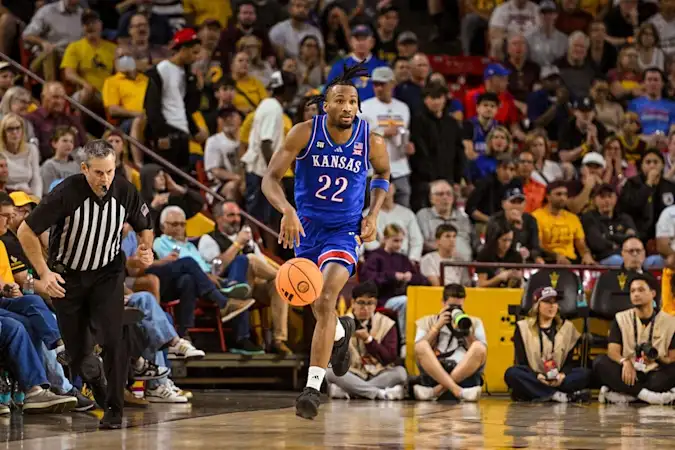
#2: Guard, Darryn Peterson (Kansas)
When you only have one selection in the NBA Draft, and it's the number-two overall pick, you're usually going to end up nailing that choice. Darryn Peterson has the most upside of any player in the Class of 2026. In fact, many people believed he deserved to go first overall more than BYU’s AJ Dybantsa. Had he not been so weird about playing time at Kansas, he would've undoubtedly been taken with the number-one pick. If Darryn Peterson reaches his full potential, he will become not just a perennial All-Star but an eventual MVP winner. This is the type of draft choice that can drastically change the course of a franchise. This isn't an A+ because the Jazz only made one pick, and they could've used more frontcourt depth. Regardless, fans should feel very excited about Darryn Peterson joining the team.
Washington Wizards: A+
#1: Forward, AJ Dybantsa (BYU)
#46: Forward/Center, Felix Okpara (Tennessee)
Like the Utah Jazz, the Wizards received an A simply because they had the number-one overall pick in this draft, which allowed them to take whoever they wanted. AJ Dybantsa went first in the 2026 NBA Draft because he has immense talent, but he also fills a massive hole in the Wizards' starting lineup at the three spot. He should emerge as a team leader since he's already one of the three best players on this squad alongside Anthony Davis and Trae Young. They also made a low-risk, high-reward pick by taking Felix Okpara, which is smart when you remember Anthony Davis' injury history. He might not be the scorer Davis is, but he certainly has a penchant for defense and should help this team down low if AD ends up dealing with any injuries this year.