The NBA has spent years trying to stop teams from losing on purpose. This season, it is bringing out its biggest weapon yet.
What is tanking in the NBA?
“Tanking” is the term used when an NBA team prioritizes its future over winning games now, usually to improve its position in the NBA Draft.
That doesn't necessarily mean players deliberately miss shots. Tanking usually happens at the organizational level. A struggling team might trade away experienced players, give more minutes to youngsters, or become extremely cautious with its stars' workload.
The incentive is simple. The NBA Draft gives weaker teams access to top young talent, while the Draft Lottery determines which teams get the highest picks.
A potential franchise player can transform a team for a decade, making a few extra defeats in March or April look surprisingly valuable.
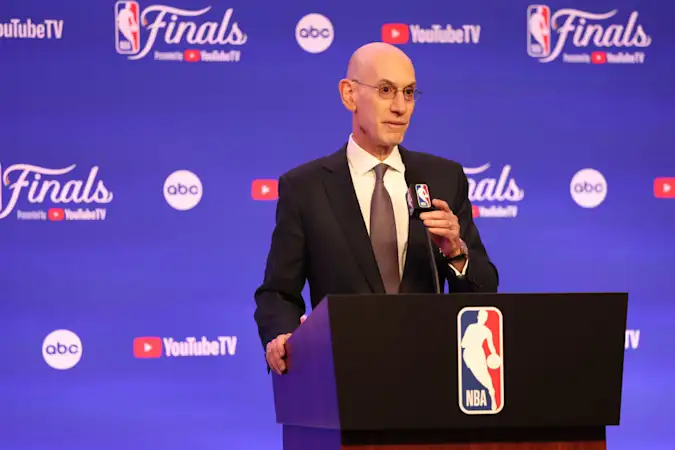
Utah provided one of the most controversial examples last season. The Jazz were fined $500,000 after Lauri Markkanen and Jaren Jackson Jr. were removed before the fourth quarter of two close games despite being available to continue playing. NBA commissioner Adam Silver described the conduct as prioritizing draft position over winning.
What are the new NBA tanking rules?
Beginning with the 2027 NBA Draft, the league is introducing its new 3-2-1 Lottery.
The lottery expands from 14 to 16 teams, but the biggest change concerns the NBA's worst sides.
Under the previous system, the three worst teams each had a 14% chance of landing the No.1 pick.
Now finishing that low actually hurts.
The three worst teams enter what the NBA calls the “draft relegation” zone and receive two lottery balls, giving each a 5.4% chance of winning the first pick.
Teams finishing with the fourth through 10th-worst records receive three balls each and have an 8.1% chance. In other words, finishing fourth from the bottom gives a team better odds of the No.1 pick than finishing dead last.
Play-In teams are involved too. The No.9 and No.10 seeds in each conference receive two balls, while teams losing the No.7 vs No.8 Play-In game receive one.
All 16 lottery positions will now be drawn, not just the first four. Teams are also prevented from receiving the No.1 pick in consecutive drafts or a top-five pick in three consecutive drafts.
The message is clear: being bad can still land you a superstar, but deliberately being the worst team in basketball is no longer the smartest strategy.
Yes, the maths is a little complex, so this table below gives you the breakdown of who gets what, and as you can see, the percentages of landing the number 1 pick has reduced for the top-tankers.
Team Catagory | Lottery Balls Assigned | Chance of No. 1 Pick |
|---|---|---|
Bottom 3 teams | 2 each | 5.4% |
Teams with 4th-10th worst records | 3 each | 8.1% |
No.9 and No.10 seeds in each conference | 2 each | 5.4% |
Teams losing No.7 vs No.8 Play-In game | 1 each | 2.7% |