Tuesday marked the start and completion of the first round of the 2026 NBA Draft. The lives of 30 young men changed forever as their NBA dreams became realities. Now that the first round is in the books, let's briefly evaluate the first 30 picks of the 2026 NBA Draft.
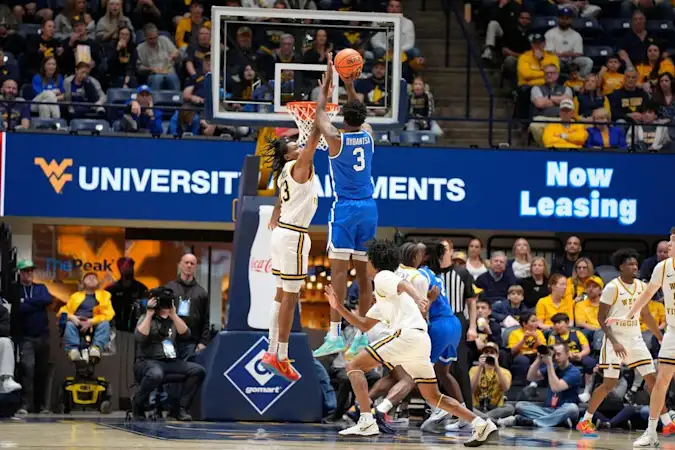
1. Washington Wizards: Forward, AJ Dybantsa. BYU.
This is the right pick for the Wizards. The only other option it seemed they were considering was Darryn Peterson, and that doesn't make sense for their starting lineup. They just signed Trae Young to a long-term deal and used a first-round pick two years ago on Bub Carrington. Dybantsa is a perfect fit for what Washington is building.
2. Utah Jazz: Guard, Darryn Peterson. Kansas.
Even if this isn't the perfect fit, this was the correct pick to make. Darry Peterson has the potential to be the next big NBA superstar. He immediately makes Utah better with impressive skills as a scorer and a ball handler. He has the most upside of any player in this draft class.
3. Memphis Grizzlies: Forward/Center, Cameron Boozer. Duke.
This was a no-brainer, considering there wasn't an elite small forward on the board at this spot. Boozer will come in right away and average a double-double. He’ll also be excellent in the pick-and-roll and create more scoring chances for center Zach Edey, who will thrive as the number-two big man in Memphis.
4. Chicago Bulls: Forward/Center Caleb Wilson. UNC.
With the addition of center Nic Claxton, Caleb Wilson can step in and immediately be Chicago's starting power forward. At 6'9" and 211 lbs., he might need to put on a little bit of muscle to reach his full potential, but that's something he'll easily be able to do with NBA trainers. In the short term, Wilson is an upgrade at the four spot. Long-term, he will be the focal point of the Bulls' franchise.
5. LA Clippers: Guard, Keaton Wagler. Illinois.
The Clippers had their choice of four incredibly promising young point guards, so they couldn't screw up this pick. Wagler led Illinois to the Final Four as a freshman, proving that he's not one to shy away from pressure. He'll need to adapt to being a shooting guard, but as a 39.7% three-point shooter, he should fit in nicely alongside Darius Garland and Kawhi Leonard.
6. Brooklyn Nets: Guard, Mikel Brown Jr. Louisville.
Personally, I was more of a fan of Darius Acuff Jr. in Brooklyn than Mikel Brown, but that's neither here nor there. Brown has star potential, but the Nets took a big risk on him since they used three first-round picks on guards last year. The truth is, though, Brown has more upside than all of those guys combined. If this pick works out, it'll be a home run. But if Brown fails, heads will roll because there were two other very talented guards available when the Nets were picking.
7. Sacramento Kings: Guard, Darius Acuff Jr. Arkansas.
If you were wise enough to read my final mock draft of the 2026 NBA off-season, then you know how highly I view Darius Acuff Jr. This kid has star written all over him after averaging almost 30 points per game during the NCAA Tournament. With Russell Westbrook possibly leaving the team in free agency, there's a clear path forward for Acuff to become the starting point guard in Sacramento. His skill set and scoring abilities will give Kings fans something to be excited about.
8. Atlanta Hawks: Guard, Kingston Flemings. Houston.
This might be the best landing spot for any player who was taken in the top 10. The Hawks are coming off a season in which they were the team that gave the New York Knicks the most trouble in the playoffs. Starting point guard CJ McCollum will not be playing much longer since he turns 35 in September, so Flemings appears to be the obvious succession plan. Before he takes the reins at the one spot, he’ll give Atlanta valuable defensive minutes as a rotational guard on a team with playoff aspirations.
9. Dallas Mavericks: Forward/Center, Morez Johnson Jr. Michigan.
After Dusty May made the leap from Michigan to Dallas, this pick shouldn’t come as much of a surprise. Johnson was the glue that held Michigan together when Yaxel Lendeborg or Aday Mara struggled during the Wolverines' championship run. MJJ will be the third big-man option for Dallas this coming season behind starting power forward P.J. Washington and starting center Dereck Lively. With time, he could become a starter at either one of those spots.
10. Milwaukee Bucks: Guard, Brayden Burries. Arizona.
Burries can be a difference-maker right away in Milwaukee, which is what this team needs after trading Giannis Antetokounmpo. Burries has defensive versatility, and his offensive production improved as the year went on. He’ll likely split time as a point guard and a shooting guard. If the Bucks feel inclined to move on from Tyler Herro at some point during the regular season, Burries will fill in nicely as the team's new starting two guard.
11. Golden State Warriors: Forward, Yaxel Lendeborg. Michigan.
I don't care if he is an "older" draft prospect (23), Lendeborg is exactly what the Warriors need: an experienced player who can contribute immediately. He'll probably open the season as Golden State's starting small forward before Jimmy Butler returns to the lineup. When that happens, he’ll provide scoring and good defense off the bench. Maybe he’ll even be the successor to Draymond Green.
12. Oklahoma City Thunder: Center, Aday Mara. Michigan.
This is a slam dunk selection for the Thunder, considering I thought they would have to trade up in the draft to land Mara. This pick is in direct response to the emergence of Victor Wembanyama. Mara is 7'3" and has a 9'9" standing reach, which is the type of height needed to play defense against Wemby. It's not fair to label him a "Wembanyama stopper," but Mara should make life more difficult for the Spurs' superstar center.
13. Milwaukee Bucks: Forward, Nate Ament. Tennessee.
This feels like a pick that was made by owner Jimmy Haslam, who attended the University of Tennessee. Regardless of how much involvement Haslam had in this selection, this is clearly a reactionary pick to the departure of Giannis. The Bucks probably think they can catch lightning in a bottle twice and believe that Ament can turn into an NBA superstar. I’m not as hopeful, but we need to give the kid a couple of years to develop in order to understand what his ceiling is as an NBA player.
14. Charlotte Hornets: Center, Hannes Steinbach. Washington.
This was another pick that we could see coming from a mile away. Steinbach is the second-best pure center prospect in this draft class, and the Hornets desperately needed to make an upgrade at the five spot. Steinbach's rebounding prowess is exactly what Charlotte needs since he led the nation in that category (11.8 per game). The only way this pick could've been better is if Charlotte landed Aday Mara. Still, this is a great landing spot for Steinbach.
15. Chicago Bulls: Forward, Dailyn Swain. Texas.
This selection shows that the Bulls will prioritize defense under new head coach Tiago Splitter. Swain is not a dynamic scorer, but he has a lot of versatility as a defender and good rebounding skills. Honestly, though, Chicago would've been better suited going after a pure shooting guard, rather than a tweener like Swain. They probably plan on using him rotationally at the two and three spots.
16. Memphis Grizzlies: Guard, Bennett Stirtz. Iowa. (Traded to Oklahoma City Thunder)
This was a really smart trade for the Thunder to make. OKC is obviously under a lot of pressure to win now, so they can't afford to take risks on project players. They need guys who can contribute right away. Considering the Thunder couldn't really rely on anybody else besides Shai Gilgeous-Alexander to score in Game Seven of the Western Conference Finals, they added Stirtz. He can provide offense off the bench and even be a ball handler when SGA is on the floor, which gives the two-time MVP a chance to play at the two spot.
17. Detroit Pistons: Guard, Ebuka Okorie. Stanford.
The Pistons clearly needed to add another player who can be a lead ball handler and an offensive contributor because Cade Cunning hame can’t do it all by himself. Okorie was fantastic offensively in his lone season of college basketball, averaging 23.2 points per game (tied for sixth in the country). He can run the offense when Cunningham isn't on the floor. Okorie could even stay on the floor and provide value as a shooting guard when Cunningham is playing.
18. Charlotte Hornets: Guard, Christian Anderson. Texas Tech.
Anderson fits the Charlotte Hornets' mold. He's a young, skilled point guard who showed a lot of efficiency from beyond the arc, hitting 40% of his three-pointers during his college career. Anderson is a fantastic passer who can help run the offense when LaMelo Ball needs to take a break. Maybe LaMelo should be looking over his shoulder moving forward.
19. Toronto Raptors: Forward, Allen Graves. Santa Clara.
The Raptors were not going to get a starting-caliber point guard or center with the 19th pick in the 2026 NBA Draft, so they took a flyer on Graves, who has boom-or-bust potential. If this pick doesn't work out, it's not that big of a deal because Toronto has Brandon Ingram and Scottie Barnes manning the three and four spots. But if Graves does emerge as an NBA player, he will add excellent depth in the frontcourt and maybe even become a starter. Regardless, this is a nice landing spot for Graves, who can continue to develop without feeling pressured to be a major contributor right away.
20. San Antonio Spurs: Forward/Center, Jayden Quaintance. Kentucky.
There are clear concerns about Quaintance's knee injury, but landing with the Spurs is ideal for the 18-year-old big man. You're not going to be asked to play a lot of minutes when you're backing up Victor Wembanyama. In all likelihood, he'll split time with fellow first-round pick Tarris Reed Jr. as a power forward and backup center, which will be great for Quaintance's development. Teams will be so busy worrying about Wemby that Quaintance will have plenty of opportunities to make easy plays offensively.
21. Memphis Grizzlies: Forward, Karim López. Mexico.
Considering López could've gone in the 15 to 20 range, this could be seen as a steal for Memphis. They managed to land Cameron Boozer, move back twice in the draft, acquire more draft assets, and still end up with López, who is widely viewed as the best international prospect in this class. With two solid small forwards in Taylor Hendricks and Jaylen Wells, López won't be asked to do much right away. He's a long-term project that could become an elite NBA wing player with time and proper coaching.
22. Philadelphia 76ers: Guard, Labaron Philon Jr. Alabama.
For a guy who averaged 22 points per game last season (11th in the country), there was a chance he could've gone before the 22nd pick. There was also the possibility that he could've gone towards the end of the first round, so Philon should be happy he was drafted by Philly. He’ll be a great fit in the guard rotation of Tyrese Maxey, VJ Edgecombe, and Quentin Grimes. Philon will likely see a lot of use as an offensive weapon when Maxey or Edgecombe are on the bench.
23. Atlanta Hawks: Forward/Center, Zuby Ejiofor. St. John’s.
I don't love this pick since I had a late-first-round/early-second-round grade on Ejiafor, but this is a good landing spot for him. Atlanta's identity is its smothering defense, and that's what Ejiafor will provide as a power forward or small-ball center. He does all the things you want to see from an undersized big man. Ejiafor has a high motor and plays at 100 miles per hour when he's on the court. He probably won't see a lot of playoff minutes, but that shouldn't stop him from averaging 10 to 15 minutes per night during the regular season.
24. New York Knicks: Guard, Cameron Carr. Baylor. (Traded to Los Angeles Lakers)
Cameron Carr had the potential to be a lottery pick, so this is a steal for the Lakers, who struggled offensively during the playoffs (102.2 points per game, 12th out of 16). He could become the starting small forward at some point, but will probably begin his career as a backup shooting guard. Though Carr is great, the Lakers are no closer to figuring out their long-standing center issues.
25. Los Angeles Lakers: Guard, Sergio De Larrea. Spain. (Traded to Dallas Mavericks)
This is a long-term move by the Mavericks, who need to be prepared for a future without Kyrie Irving. De Larrea will not play a whole lot this coming season, but getting to learn behind Iriving and going against NBA-level competition will be crucial for his development. If this doesn't work out, then it's not a big deal. However, he could emerge as a starting point guard in two to three years, which would make this a slam-dunk selection for Dallas.
26. Denver Nuggets: Forward/Center, Tarris Reed Jr. UConn. (Traded to San Antonio Spurs)
This is a really, really smart trade for the Spurs. They might have already taken Quaintance, but - as we mentioned previously - there are concerns about his knee injury. If Quaintance cannot contribute right away or needs time to adapt to the NBA, Tarris Reed Jr. should be able to fill in as San Antonio's backup center or starting power forward. After all, the guy averaged a double-double in the NCAA Tournament. I don't understand why the Nuggets would make this trade. Why would you help a young and rising team that you have to directly compete against for years to come?
27. Boston Celtics: Forward/Center, Chris Cenac Jr. Houston.
This is an awesome selection for the Celtics and a fantastic landing spot for Cenac. Boston needed to add another center after Nikola Vučević was underwhelming during the 2026 NBA Playoffs. It's unfair to expect Cenac to be the Opening Night starter, but there is undeniable upside to the 6'11" 19-year-old. This season, he should at least provide defensive minutes and a few rebounds per game as the Celtics' third center.
28. Brooklyn Nets: Forward, Joshua Jefferson. Iowa State.
He has a lot of experience at the college level, so he should be able to contribute in the NBA right away as a rotational piece. Jefferson has good size for a wing player and can be a solid backup for Julius Randle and Michael Porter Jr. There is definitely a world in which Joshua Jefferson plays meaningful minutes for the Brooklyn Nets as the seventh or eighth man in their rotation.
29. Sacramento Kings: Forward, Alex Karaban. UConn.
The Kings are perennial losers who lost 16 games in a row at one point last season. How do you change that culture? You bring in Alex Karaban, the guy who holds the record for most NCAA Tournament wins (15). He's not going to develop into an All-Star, but he has a high floor and should help change the vibes in the locker room.
30. Dallas Mavericks: Forward, Koa Peat. Arizona. (Traded to Phoenix Suns)
Unfortunately, Peat fell this far after an unimpressive performance at the scouting combine, but at least he still got drafted in the first round. He's only 19 years old and showed flashes of brilliance as one of the best players on Arizona's roster. He will probably be the number-three small forward and power forward option in Phoenix, which will allow him to get used to NBA competition and provide some valuable defensive minutes each night.