Why the November Meeting is an important fixture ahead of the Cheltenham Festival
 Joel Pattison
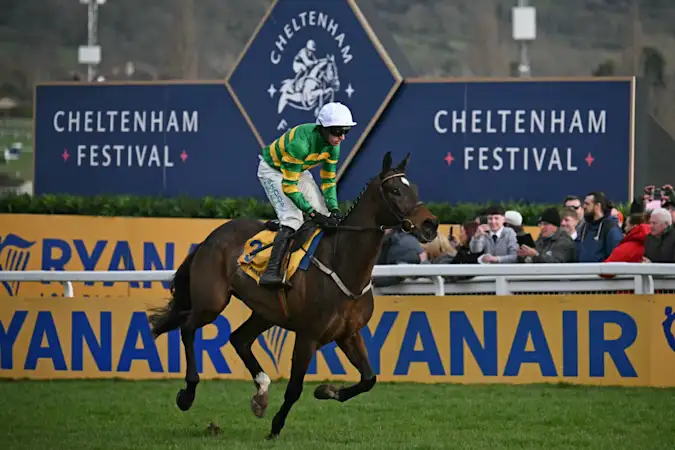
When it comes to jumps racing, it doesn’t get any bigger than the Cheltenham Festival. It’s the sport’s own Olympics, and rightly so, with four days of high-quality action, including 28 races and 14 Grade 1 contests that define the entire season.
But every great event needs its build-up, and the November Meeting acts as the first true test of the new National Hunt season. It’s where punters get their early clues to who might shine on the hallowed turf of Prestbury Park come March.
So, why is the November Meeting more than just an undercard to the Cheltenham Festival itself?
The curtain raiser to the jumps season
While the jumps campaign officially gets underway in October to correlate with the conclusion of the flat season at Ascot’s British Champions Day, to many pundits, trainers and punters alike, the November Meeting is when anticipation really hits fever pitch.
Held over three days on the Old Course, the meeting often brings together the first top-quality fields of the season.
Nicky Henderson has targeted the Shloer Chase as the starting point for fan favourite Jonbon in recent seasons, helping draw a big crowd on the opening day, while elite novices regularly emerge from the likes of the Albert Bartlett Novices’ Hurdle or the Arkle Trial.
It’s basically the first barometer of Festival ambition. Will the seasoned campaigners hit the ground running? Is that exciting hurdler going to make the same impact as a novice chaser? Those are the sorts of things we hope to find out four months out from the big meeting.
A crucial stepping stone in the campaign
It sounds harsh to call a meeting as good as this a stepping stone, given that there are multiple Grade 2 contests, the Paddy Power Gold Cup, and key trials for March scattered across the three days.
However, the reality of modern jumps racing is that all roads now lead to the Cheltenham Festival. The November Meeting, therefore, acts as something of an early-season checkpoint that offers the ideal conditions for those targeting one of the Festival’s major contests in the spring.
It’s no coincidence that the likes of Paul Nicholls, Dan Skelton and even Irish trainer Henry De Bromhead often join Henderson in using the November Meeting to gauge the readiness of their stable stars.
A bold performance can confirm that a horse is on track for a tilt at Festival glory, while a lacklustre showing could send a trainer back to the drawing board. It’s all to play for.
Festival clues in plain sight
While not every race at the November Meeting will provide clues for the Festival in March, several have strong links and serve as springboards.
Shloer Chase (Grade 2): A race we’ve already mentioned, the Shloer Chase attracts experienced chasers, like Jonbon, and many go on to compete in the Queen Mother Champion Chase. Though Jonbon himself is infamously cursed in the Championship race.
Triumph Trial (Grade 2): The Triumph Hurdle hasn’t been won by the English since 2019, but this trial is a great chance to see the home nation’s leading hopes for March. East India Dock scored last November before finishing third in the race itself at the Festival.
Arkle Trial (Grade 2): One of L’Eau du Sud’s four successive wins prior to the Cheltenham Festival came in stunning fashion in this race last year, beating his nearest rival by 11 lengths. The Dan Skelton-trained horse was sent off favourite for the Arkle but came home fourth.
Greatwood Handicap Hurdle (Premier Handicap): The competitive Greatwood Handicap Hurdle hasn’t produced a champion hurdler since Rooster Booster in the early 2000s, but that doesn’t stop winning connections from giving it a go. Last year’s winner, Burdett Road, notably went on to finish second in the Champion Hurdle.
There might not be many recent examples of horses that have shone brightly at Prestbury Park in November and gone on to win on the big stage in March, but it’s certainly a first chance to see some of the top contenders, especially from the English yards, and that can’t be ignored early in the season.
How the November Meeting helps shape the narrative
It’s not just about form lines and future betting angles. The beauty of National Hunt racing, which the flat perhaps doesn’t have, is its storylines. With seasoned veterans returning and exciting novices switching to hurdles or fences, racing fans can’t wait to see their favourite horses back in action.
It’s also the first weekend that jumps racing begins to dominate mainstream headlines again. The crowds are back at Prestbury Park in full voice, the grandstands packed with tweed, the sense of anticipation, and a chance to reignite interest ahead of the Cheltenham Festival itself.
‘Champions: Full Gallop’, often dubbed jumps racing’s own version of Formula 1’s ‘Drive to Survive’, has been excellent at painting the picture of National Hunt racing over the last couple of seasons. Guess where episode one starts? At the November Meeting. That shows just how important this fixture is not just ahead of the Festival, but the entire season.
Key things to look out for at the November Meeting
For racing fans and punters alike, the November Meeting offers several practical lessons that can be used for the rest of the season.
Pay close attention to course form
The Old Course is one of the most challenging jumps arenas on the circuit. Horses that have proven to handle the stiff corners and testing undulations in the past are definitely worth siding with, both here and at the Festival.
Consider horses in need of a run vs those that go well fresh
While this is often a starting point for horses from the top yards, it’s important to check the historical form and not just look out for names like Skelton, Nicholls or Henderson on the racecard. Some horses need to refuel the tank with a first run, while others can win at the first time of asking. One loss in November might not be the be-all and end-all for its chances in the spring.
Look out for eye-catchers, not just winners
Winners steal the headlines, but sometimes the horse that stayed on up the hill for second or third is more telling than the winner. If the going conditions change next time or that eye-catcher is set to be stepped up in trip, you could have yourself a future winner at the Festival.
Be prepared for market reaction
If a horse bolts up in the Triumph or Arkle trials, like East India Dock or L’Eau du Sud did last year, expect the ante-post market to react in an instant. It can be easy to get carried away by a single performance or market reaction, but you must consider the challengers lying in waiting, especially those from the top Irish yards that perhaps haven’t raced yet.
Keep perspective
That leads us nicely to our next point. Form at the November Meeting isn’t always a perfect indicator. Conditions, fitness and a vast array of other things can change in the months leading up to the Cheltenham Festival. The November Meeting is merely the first chapter in a long story.
--
The November Meeting is far more than a starter before the main course in March. It’s the first true taste of Prestbury Park in all its might. In fact, in many ways, this fixture is just the Cheltenham Festival in miniature form.
It has the same challenges, the same amphitheatre, and the same magic, just over fewer days, at a lesser magnitude, and at a different part in the story.
For those serious about National Hunt racing, it’s not just about those four fantastic days in March. It’s about the journey and the build-up to the spring, which starts here in November. You won’t want to miss it.