US Open Analysis
Summary of Tips:
Gold Medal Pick - Tommy Fleetwood 16/1 (10 Places – LiveScoreBet)
Silver Medal Pick - Tyrrell Hatton 30/1 (10 Places – LiveScoreBet)
Bronze Medal Pick - Russell Henley 30/1 (10 Places – LiveScoreBet)
Longshot to Watch - Tom Kim 100/1 (10 Places – LiveScoreBet)
Prop Bet of the Week - Tommy Fleetwood Top-10 SUPER BOOSTED - 3/1 (LiveScoreBet)
*Odds correct when posting

CLAIM OFFER
Introduction & Course Breakdown
Moving on to the third major of the year, the US Open returns to Shinnecock Hills Golf Club, which last hosted the championship in 2018 when Brooks Koepka edged a resurgent Tommy Fleetwood by a single shot to claim his second consecutive title.
Shinnecock is widely regarded as one of the first links-style golf courses in the United States and resembles a traditional Scottish links far more than a typical American layout. A par 70 measuring around 7,400 yards, it is the sixth-longest U.S. Open venue of the last decade. However, when the course plays firm and fast, it can effectively play much shorter, with drives often receiving an additional 30-40 yards of rollout.
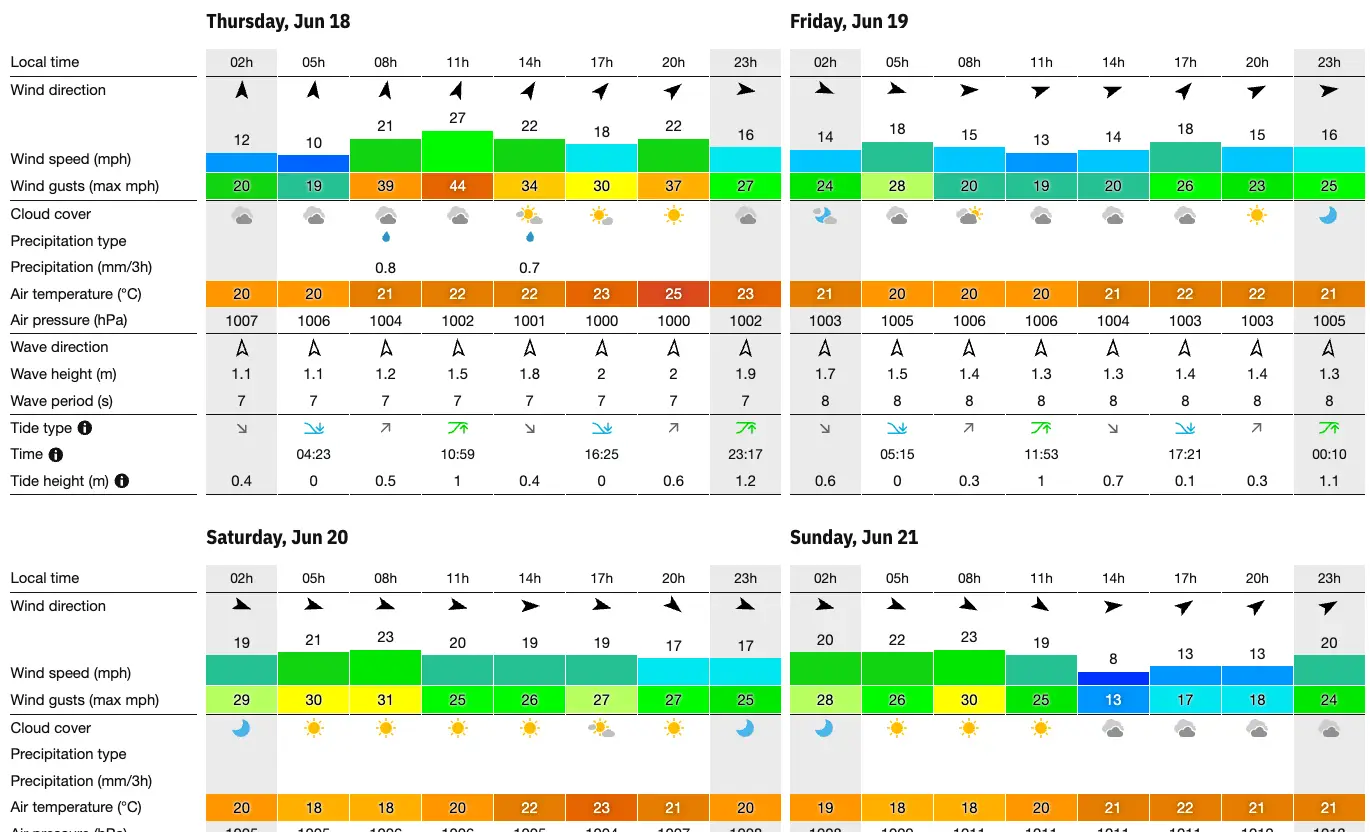
The true defence of Shinnecock is the elements. Like any links-style course, strong winds can increase the difficulty tenfold. The course's average relative score to par sits at +4.73 compared to the PGA Tour average of +0.06, making it one of the toughest venues in major championship golf.
CURRENT WEATHER FORECAST
Driving distance is slightly less important than at many modern US Open venues, with players frequently opting to club down from the tee in order to find the correct positions into challenging pin locations. Driver usage typically sits at just over 60%. Driving accuracy, meanwhile, is significantly higher than the PGA Tour average (+11%pts), aided by fairways that are around +36% wider than average. However, when conditions become firm and fast, balls can easily run through the fairway and into trouble.
While fairways are easier to hit, missing them can be extremely costly. The thick rough surrounding Shinnecock is among the most penal on the US Open rota, with the scoring differential between fairway and rough approximately +34% greater than the PGA Tour norm.
Despite the generous fairway widths, greens are surprisingly difficult to find. Although they average around 7,500sq ft, greens in regulation are roughly -10%pts lower than the PGA Tour average. This is due to the segmented nature of the putting surfaces, where approaches landing in the wrong section can be repelled into collection areas, leaving players with difficult recoveries from tight lies or bunkers. In many cases, players would actually prefer the latter.
Even when players do find the greens, putting remains a stern test. The surfaces feature significant undulation and subtle breaks, making both birdie opportunities and par-saving putts difficult to convert. Patience will be essential if the greens become as quick as they did during the weekend in 2018, three-putts become commonplace and players can even struggle to keep the ball on the putting surface. Famously, during the third round, Phil Mickelson struck a moving ball out of frustration, prompting widespread criticism of the setup and the USGA's handling of conditions.
Last 5 Years Winner Trends

Firstly, looking at trends from the last five US Open winners, recent form appears to be crucial. Every winner had recorded at least one top-10 finish in their previous five starts, with the group averaging two top-10s each. This highlights the importance of arriving at the championship with your game already in good shape, as the US Open rarely offers players the opportunity to play themselves into form.
US Open form, on the other hand, doesn't appear to be a prerequisite for success. Only two of the last five winners had previously recorded a top-10 finish in the championship, although it's worth noting that Bryson DeChambeau already had a US Open title to his name beforehand. Furthermore, all of them had missed at least one US Open cut prior to lifting the trophy, showing that a poor record in the event shouldn't necessarily put you off a player if their current form is strong.
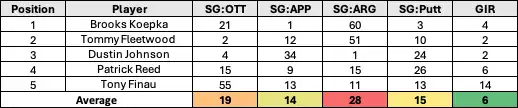
Moving on to the strokes gained rankings of the top-5 finishers from the 2018 edition, one additional metric I've included is GIR ranking for the week. As you can see, this was a crucial factor, with the top-5 averaging a GIR ranking of 6th. Given the difficulty of the green complexes and the challenge of recovering from the tight run-off areas, players could not rely on repeatedly getting up and down throughout the week. This is highlighted by the relatively poor around-the-green rankings of the top-5 finishers, suggesting that even the players who contended struggled to consistently save par after missing greens. The clear takeaway is that finding the putting surfaces was far more important than relying on an elite short game.
Interestingly, the average GIR ranking was significantly better than the average approach ranking, suggesting that simply finding the putting surfaces was more important than constantly firing at flags. With many of the pin positions located on small sections of the greens, a conservative approach that found the correct area often proved more valuable than aggressively chasing birdie opportunities.
That said, when building my predictive model, I would still favour Strokes Gained: Approach over GIR percentage. While GIR highlights what was important during the tournament itself, it is ultimately an outcome-based statistic. Approach play is a far more predictive measure of future performance and is likely to identify players who can consistently find the putting surface at Shinnecock.
Key Stats
Strokes Gained: Approach (Key yardages 150-200)
Total Driving
Bogey Avoidance
3-putt Avoidance
Scrambling from the fairway
Par 4 scoring
Picking the key stats for this US Open test, I've made Strokes Gained: Approach my number one metric. As highlighted by the 2018 championship, the key to success at Shinnecock is finding greens in regulation. While GIR itself is an outcome statistic, approach play is the most predictive measure of a player's ability to consistently hit the correct sections of these challenging greens. Key yardages here are between 150-200 yards with 40% of approaches coming from this range.
Next up is Total Driving, which combines both distance and accuracy. Positioning off the tee will be crucial, with players needing to find the fairway to have any chance of attacking these demanding pin positions. While the fairways are relatively generous, missing them can be extremely costly due to the penal rough and difficult recovery shots.
Third on my list is Bogey Avoidance, a statistic that is important at any US Open venue. With scoring expected to be difficult, players must minimise mistakes and take advantage of the limited birdie opportunities available. On a course where par often feels like a birdie, avoiding dropped shots can be just as valuable as making gains on the field.
My fourth and fifth statistics feed directly into this. First is 3-Putt Avoidance. Due to Shinnecock's large, undulating greens players will frequently face lengthy putts, particularly when taking a conservative approach away from tucked pins. Strong lag putting will therefore be essential to avoid costly mistakes.
The other is Scrambling from Tight Lies. Even the best ball strikers are going to miss greens this week, and when they do, they will often be faced with delicate recovery shots from tightly mown collection areas. The ability to consistently get up and down from these positions could prove crucial over 72 holes.
Finally, I've selected Par 4 Scoring. As a par-70 layout, Shinnecock features twelve par 4s, meaning these holes account for the majority of the scoring opportunities and challenges throughout the week. Players who can consistently outperform the field on the par 4s should give themselves an excellent chance of contending come Sunday.
Stats Model - Top 10
*LIV & DP World Tour players excluded
Scottie Scheffler
Si Woo Kim
Kurt Kitayama
Matt Fitzpatrick
Tommy Fleetwood
Sudarshan Yellamaraju
Cameron Young
Russell Henley
Xander Schauffele
Ludvig Åberg
US Open Tips:
Gold Medal Pick: Tommy Fleetwood 16/1 (10 Places – LiveScoreBet)
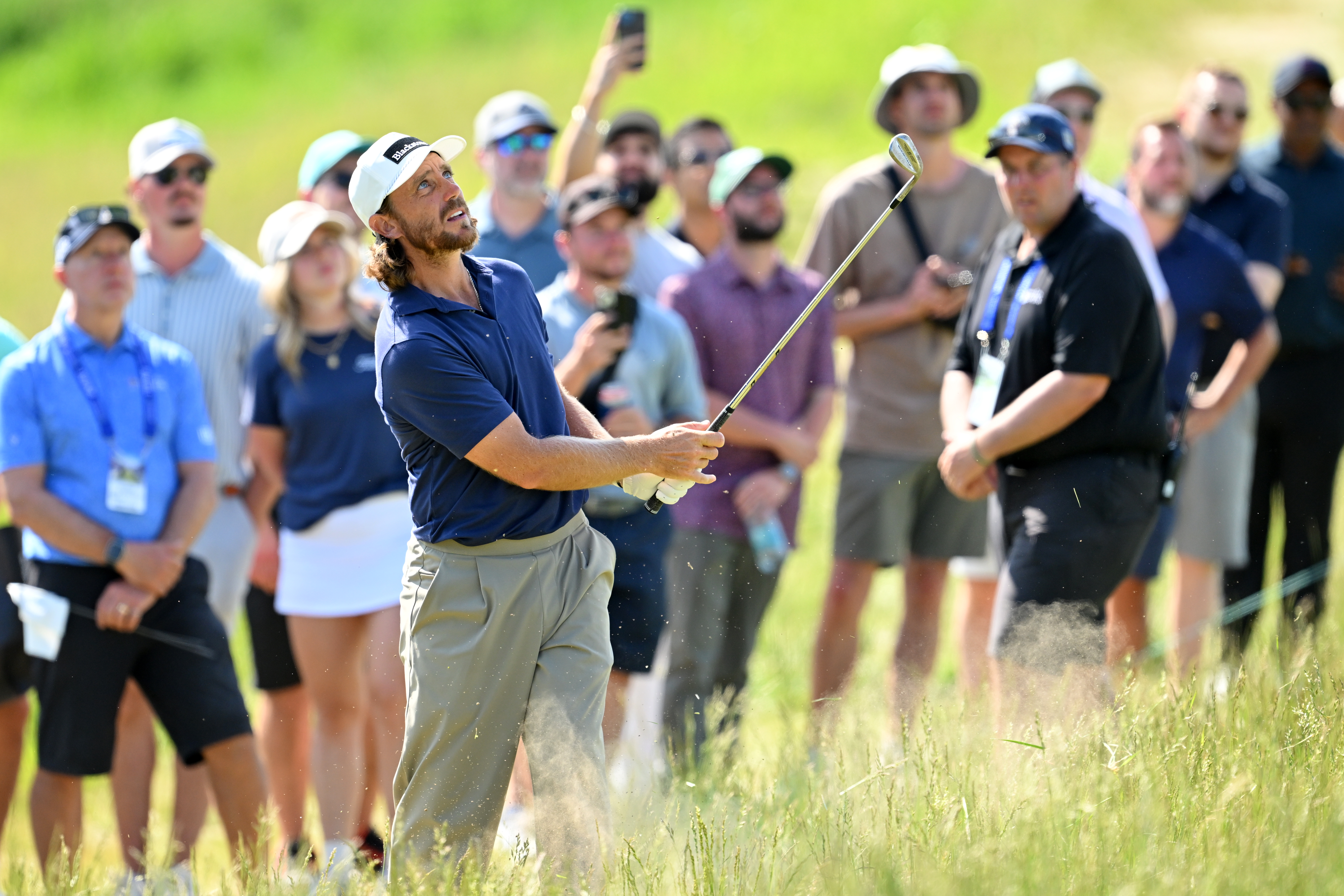
I've only selected Tommy Fleetwood once so far this season, which is very unusual for me, but I think it's about time I came back to him. Fleetwood made a late charge on Sunday the last time the US Open was held at Shinnecock Hills, eventually finishing solo second, just one shot behind Brooks Koepka.
As shown by my stats model, where he ranks 5th overall, this course should suit him perfectly. Of my key metrics, Fleetwood ranks highest for bogey avoidance, sitting 5th on Tour this season, while he is also a strong 11th in 3-putt avoidance. Combined with his ranking of 28th for scrambling from tight lies, he looks well-equipped to minimise mistakes around one of the toughest tests in golf.
His approach play (44th) and total driving (25th) rank slightly lower than some of the other contenders, but both areas have shown significant improvement in recent weeks. That has translated into three top-12 finishes in his last four starts, with his only disappointing result coming at the PGA Championship.
Fleetwood is also widely regarded as one of the best wind players in world golf. If the forecast deteriorates and Shinnecock begins to show its teeth, you certainly won't be worried about him falling down the leaderboard.
Silver Medal Pick: Tyrrell Hatton 30/1 (10 Places – LiveScoreBet)
Hatton is my silver pick for this week and appears to be peaking at exactly the right time, having recently picked up a victory at one of the toughest courses in Europe, Valderrama, on LIV Golf.
Despite not having PGA Tour stats available to analyse, we know the pedigree Hatton possesses. He is an elite driver of the golf ball, has an excellent short game, and thrives when conditions become difficult. His record in links-style and windy conditions is particularly impressive, highlighted by three top-20 finishes in his last four Open Championship appearances.
Furthermore, he seems to have become increasingly comfortable in US majors. Hatton has recorded two top-5 finishes in his last three major starts, including a fourth-place finish at Oakmont, which showcased the patience and resilience required to contend on demanding setups such as Shinnecock.
Finally, having already played well here with a sixth-place finish in 2018, there is plenty of evidence to suggest this course suits his eye. When you combine that course form with his recent results and proven ability to handle tough conditions, I'm confident Hatton has every chance of being in contention once again.
Bronze Medal Pick: Russell Henley 30/1 (10 Places – LiveScoreBet)
Russell Henley is another man in form, having picked up a victory just two starts ago at the Charles Schwab Challenge. He's another player with previous experience at Shinnecock, having finished 25th here in 2018.
Henley ranks 8th in my stats model and excels in some of the key areas required this week. He sits inside the top three on Tour for both bogey avoidance and scrambling from tight lies, two attributes that should prove invaluable around these challenging green complexes. In addition, he ranks 10th in par-4 scoring and, while he is only 51st in Strokes Gained: Approach for the season, he ranks 2nd from 150-175 yards, a crucial range given that approximately 22% of approaches came from this distance in 2018.
When you combine his recent form, strong performances in windy conditions, highlighted by top-10 finishes in each of his last two Open Championship appearances, and a statistical profile that fits the course, it feels like the perfect opportunity for Henley to challenge for his first major championship.
Longshot to Watch: Tom Kim 100/1 (10 Places – LiveScoreBet)
A special shoutout goes to Kurt Kitayama, who would have been my longshot selection this week before his odds were slashed to 50/1.
To try and offer a bit more value, I've instead gone for a forgotten man in Tom Kim to get himself back into contention. Kim sits just outside the top-10 in my stats model, ranking 11th overall. He is currently 20th on Tour in Strokes Gained: Approach, which is somewhat surprising given some of his struggles this season. He also ranks 17th in Par-4 Scoring, 8th in Bogey Avoidance and 23rd in Scrambling from Tight Lies, giving him a profile that should translate well to the demands of Shinnecock.
What I particularly like is that, despite never seriously contending at a US Open, he has never finished worse than 33rd in the championship. Even more encouraging for this test is his record in Open-style conditions. Kim owns a top-5 finish at The Open Championship, along with two top-10s and two further top-20 finishes at the Scottish Open, demonstrating his ability to handle windy, links-style setups.
Finally, there are signs that he may be turning a corner. He has recorded a top-10 and a top-20 finish in his last four starts, and if he can rediscover some of the form that saw him burst onto the PGA Tour scene, there's no reason he can't surprise a few people this week.
Prop Bet of the Week: Tommy Fleetwood Top-10 SUPER BOOSTED - 3/1 (LiveScoreBet)
LiveScoreBet have boosted Tommy Fleetwood to record a top-10 finish this week, and that's exactly where my prop bet of the week is heading.
In addition to the points already mentioned, Fleetwood has an excellent U.S. Open record, with three top-10 finishes to his name, including his runner-up finish at Shinnecock in 2018.
When you combine his recent form, which includes two top-10 finishes in his last five starts, with his proven course history and pedigree in difficult and windy conditions, another top-10 finish feels firmly on the cards this week.
You can access all our latest Golf Odds over on LiveScoreBet.com
Find all Josh's latest Golf Betting Tips over on LiveScore.