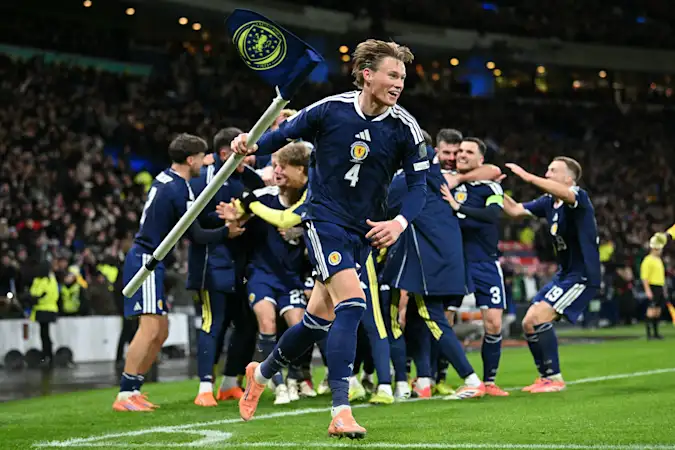
Chants of "No Scotland, No Party" will be heard across World Cup 2026. For Scottish football supporters, the summer of 1998 remains a significant, bittersweet memory. It marks the last time the men's national team competed at a World Cup. The tournament in France was Scotland's eighth finals appearance, but it also signalled the end of a period where qualifying for major competitions was a regular achievement.
The Squad Assembled by Craig Brown
Manager Craig Brown selected a squad that embodied the determined and physical style of British football during that era. It was a group built on experience, with players predominantly from the top divisions in Scotland and England.
The goalkeeping position was held by the veteran Jim Leighton of Aberdeen, who had over 80 caps. His understudies were Neil Sullivan of Wimbledon and Jonathan Gould from Celtic.
The defence was arguably the strongest part of the team. It was led by the colossal captain Colin Hendry of Blackburn Rovers, whose commanding presence was crucial. He was supported by his club-mate Colin Calderwood, the versatile Tom Boyd of Celtic, and the experienced Stewart McKimmie of Aberdeen. Full-backs such as Jackie McNamara (Celtic) and Tosh McKinlay (Celtic) provided width.
In midfield, the squad had a balance of creativity and tenacity. John Collins, then playing in France for AS Monaco, was the main creative force, known for his passing and technical skill. The engine room was powered by hardworking players like Craig Burley and Paul Lambert, both from Celtic, and Scot Gemmill of Nottingham Forest.
The attack was led by the energetic Kevin Gallacher of Blackburn Rovers, whose pace troubled defenders. He was often partnered with the powerful Gordon Durie of Rangers. Other forwards included Darren Jackson and Simon Donnelly, providing different options from the bench. It was a pragmatic and disciplined squad, if perhaps lacking the individual brilliance of the world's elite teams.
The Group Stage Campaign
Scotland was drawn into Group A, facing a formidable challenge against the reigning world champions Brazil, a strong Norwegian side, and a technically skilled Moroccan team.
Match 1: Scotland vs Brazil
The tournament's opening match was a prestigious fixture for Scotland, as they faced Brazil at the newly built Stade de France in Paris. The Brazilians, featuring stars like Ronaldo and Rivaldo, took an early lead after just five minutes through a César Sampaio header from a corner. Scotland, however, did not collapse. They reorganised and grew into the game, and were awarded a penalty late in the first half after Kevin Gallacher was fouled in the box. John Collins stepped up and calmly scored the equaliser. For a large part of the second half, Scotland held their own against the champions, but with 17 minutes remaining, disaster struck. A shot from the Brazilian captain, Cafu, was saved by Jim Leighton but the rebound ricocheted off an unfortunate Tom Boyd and into the net. The 2-1 defeat was difficult to take, but the performance offered hope.
Match 2: Scotland vs Norway
Their second match was against Norway in Bordeaux. This was a tense and physical encounter, with both sides knowing that a loss could end their tournament hopes. Scotland started brightly and took the lead midway through the second half. A long pass from defender David Weir was perfectly met by Craig Burley, who cleverly chipped the ball over the advancing goalkeeper, Frode Grodås. The lead, however, was short-lived. Just a minute after the restart, Norway equalised when a cross found Håvard Flo, whose header gave Leighton no chance. The match finished 1-1, a result that meant Scotland had to win their final game to have any chance of progressing.
Match 3: Scotland vs Morocco
Everything came down to the final group fixture against Morocco in Saint-Étienne. A win for either side would likely be enough to secure a place in the knockout round for the first time in their history. However, Scotland produced their poorest performance of the tournament. Morocco were superior from the start, and their forward Salaheddine Bassir scored the opening goal in the 23rd minute. Abdeljalil Hadda doubled their lead just after half-time, and Bassir added his second late in the game to seal a comprehensive 3-0 victory for the North Africans. Scotland finished bottom of the group with just one point.
The Aftermath and a Long Wait
The disappointment of France '98 was the beginning of a long period of absence from major tournaments for Scotland. For more than two decades, successive qualifying campaigns for both the World Cup and the European Championship ended in failure, often after promising starts.
The long wait finally came to an end when Scotland qualified for Euro 2020. This achievement was celebrated across the nation, as a new generation of supporters were finally able to see their team compete at a major finals. Having since qualified for the 2026 World Cup, there is renewed optimism. The memories of 1998, a blend of pride in the performance against Brazil and the familiar feeling of an early exit, now serve as an important chapter in the nation's football history.