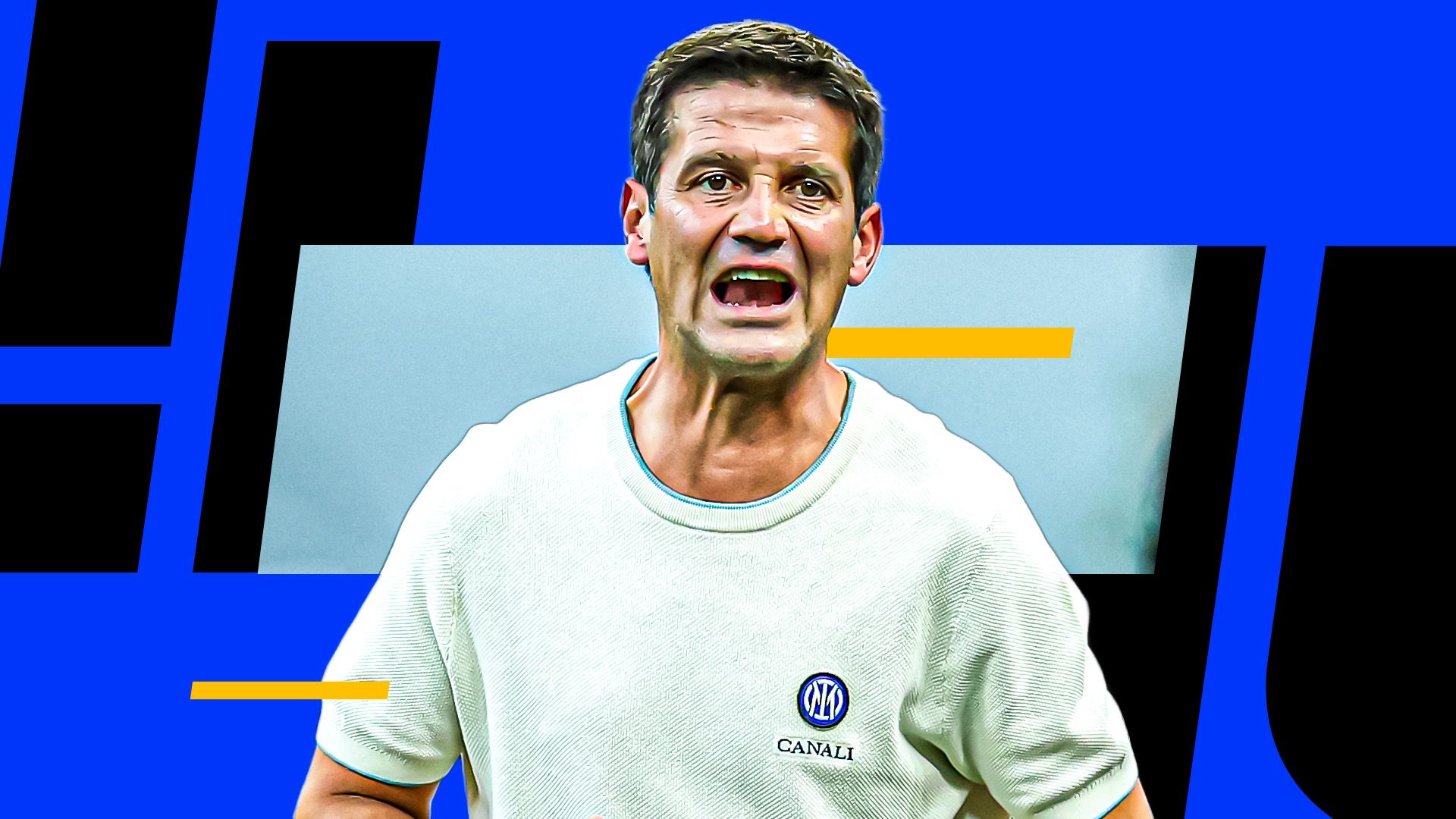

Chivu: "I want to create something lasting at Inter. There is no money or idea that can guarantee winning the Champions League. I did not celebrate after the Treble. Pio Esposito showed courage"
Inter manager Cristian Chivu showed a deeply personal and unfamiliar side of himself in an interview with Futnet, focusing less on the events that put him centre stage on the pitch and more on his emotional state and his work as a coach.
The former defender reflected on many parts of his life, first as a player, then as a coach of young boys, and now as the manager of a club like Inter. He shared anecdotes and curiosities while underlining how he approaches both football and life as a whole.
The relationship with his father
"My father used to send me home on the tram after training. It was his way of providing for me, of giving me values, I think. And at this point in my life I am sure those were things that helped me, because I learned to fend for myself.
I had school in the morning, so I had to take public transport to get to training on time and then I had to go back to school again. Once training was over, even though he had a car available, he never offered me a lift to get me back to school quickly. Sometimes I was late, but I still managed on my own to find ways and solutions to keep to the plans, the schedules and the agreements I had made with him".
I treat the players like sons
"Is it more difficult to be a good father or a good coach? Without doubt a father, because it is a huge responsibility in any case. But you cannot make comparisons, because I treat my players as if they were my children. Obviously there is a difference: they are boys, I have two girls, so the approach changes a little, everything about who I am towards them changes a little.
With my daughters, I have always tried to give them the right values and also the right criticism needed, I believe, for a teenager to understand certain things. More or less it is the same thing I did when I started with the Under-14s. I had 13-year-old adolescents, boys who dreamed of becoming footballers, but they were still young lads, always put in a position to play and not to treat seriously what was their profession, if you can call it a profession at 13 and a half".
Being captain
"Wearing the captain's armband in a dressing room changes a lot and, for those who can truly feel the responsibility that comes with it, I think you also need a certain sensitivity to understand what it means to be the one wearing it.
Add a bit of emotional intelligence to that and I think your self-esteem rises a great deal. Not everyone can feel that responsibility and that emotion in a way that helps you grow. Too much ego can be the counterweight at times, and that is negative. I experienced it myself in the youth sector. I went through it often at certain moments.
Pio Esposito comes to mind: when I gave him responsibility by handing him the armband, he responded brilliantly and behaved like a very sensitive person. He showed it then and he still shows it now."
Pio Esposito
We had the good fortune to work with Pio for quite a long time. He was already with us from the Under-14s, and then we moved him up to the Primavera while he was still two years under age. He had played little because we preferred other players, but he stayed with us. He made the most of what I gave him, and of his own qualities, by playing a few matches in the Youth League. I do not remember whether he had done anything in the league, but the year after that he was already a regular in the first team, despite being under age.
Then he had the courage, because nobody says this, to leave the Primavera and go into a different environment, which was Serie B, in another city, where he had to prove himself and start again from zero against real professionals. And in that first year of his in the Primavera, if I am not mistaken, he scored 17 or 18 goals. The feeling was that the year after, since he was playing under age, he would perhaps have scored 30. And he chose to leave. He could have chosen the easier path. He could have done another year in the Primavera and built his confidence by scoring perhaps 30 or 40 goals, I do not know.
By the second year he exploded, because he scored 17 goals, if I am not mistaken, in Serie B. Then I found him again in the first team more ready, more mature, with the same hunger and the same desire to improve. That is why this is important too."
The "cancelled" celebration after the treble
"I did not celebrate after the Treble? I barely lived it. It was a sigh of relief because of the difficulties of that year. In January I got injured, I ended up in the operating theatre, I had doubts and I did not know whether I could come back and play football again.
I came back quickly, after two and a half months. We reached the final, we won the league, we won the cup and we also won the Champions League. But I was thinking about joining up with the national team because I had that responsibility. I was also the national team captain and I did not want them to see me as someone who had got above himself by then. The national-team manager had given me a few days off, but I said: "No, I am the captain of the team, I have to come like everyone else".
The Champions League
Winning the Champions League is wonderful. I think it is everyone's dream. It is such an important competition that you can feel it. There is a huge difference between a league match and a Champions League one. It does not matter whether it is the group stage or a last-16 tie: there is a huge difference in terms of a player's individual motivation, but also in terms of a team's motivations.
There are difficulties because there is no formula that gives you the certainty that you can win the Champions League. No amount of money can buy you a Champions League, nor can ideas buy it for you. It is the sum of many things that, during the season, reach a certain point, then later on, around March, I think, make you understand where you are. Because saying today who the favourite is, on paper, is easy enough. But who will go all the way and who will make it is not easy to say
Something long-lasting
"I have now reached a point where I think about what comes the next day. I know where I have ended up, I know what my responsibility is, I know what it means to have this great responsibility, but above all I know that I have a responsibility towards my players.
I want to build something that lasts, something that leaves something important in the history of this wonderful club, and I am working towards that. I have mini-goals to achieve in the short term, because I never think all the way to the end.
By starting with small steps, achieving your objectives then allows you to dream bigger. I only want health for myself and for my players. I only want us to keep the same energy and the same intensity in facing certain moments that we all want to improve every day, all of us, myself included. We want to be the best version of ourselves, or the best version of what we were the day before."