


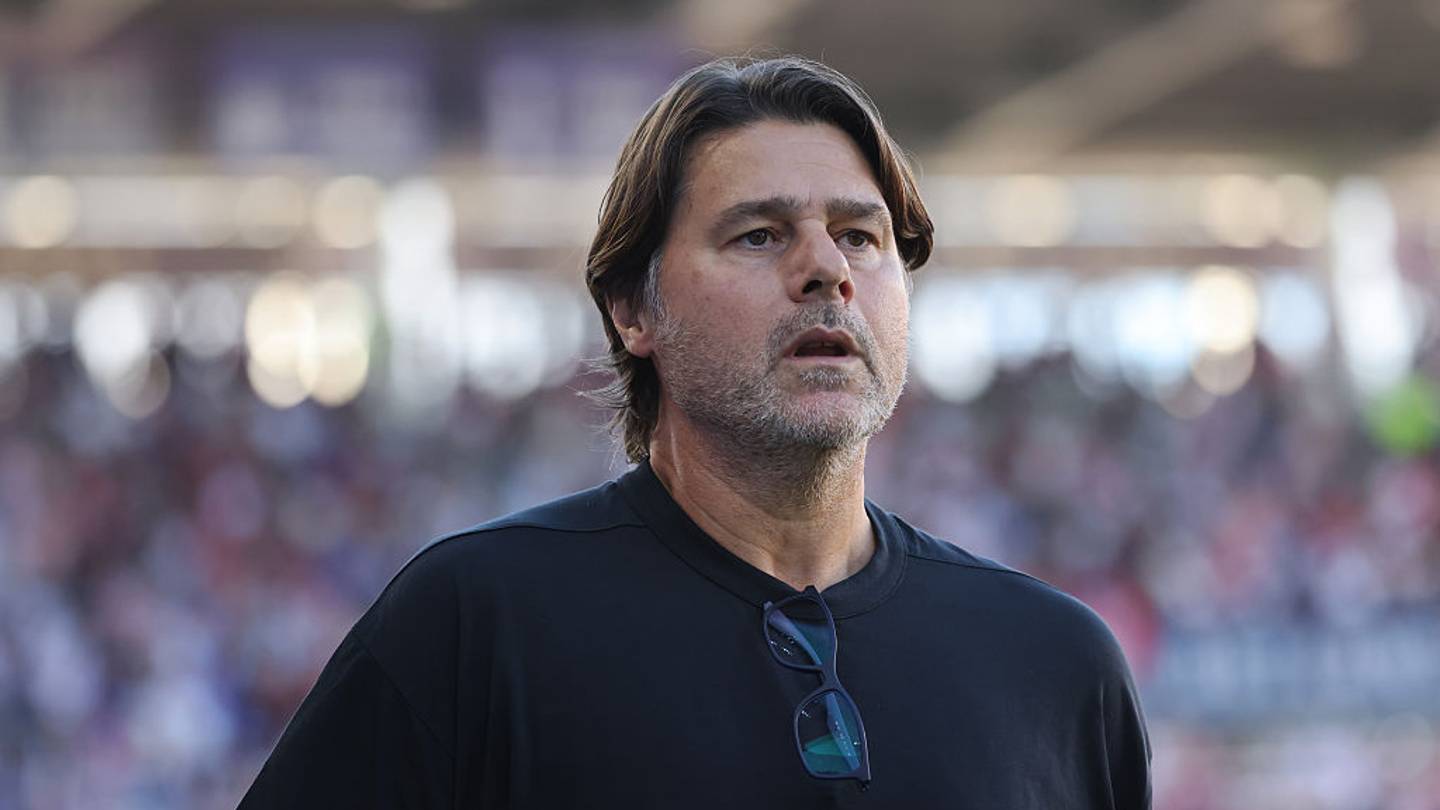

The Brutal Ripple Effects Mauricio Pochettino’s Man Utd Move Would Have on USMNT
“One day, yes because I really like England,” Mauricio Pochettino said when asked in April if he wanted to return to the Premier League. “I think my human profile and coach profile match very well with the Premier League and with the culture, the idea, the idiosyncrasy and the philosophy.”
It was a head-turning statement from the Argentine, who was approaching the end of his contract with the U.S. men’s national team. It also came at a time when his former club Tottenham Hotspur were in desperate need of saving amid a tense relegation battle.
Fast forward four months and Pochettino committed his future to the Stars and Stripes, inking a contract extension through the 2030 World Cup. The 54-year-old’s anticipated return to the English top-flight would have to wait—or so it seemed.
A path back to the Premier League has suddenly emerged for Pochettino, but it’s not taking him to north London. Instead, it ends at Old Trafford, where Michael Carrick is reportedly set be fired before domestic action resumes in two weeks.
Pochettino is an unexpected frontrunner for the Manchester United job, and a release clause in his contract with the USMNT would allow him to abruptly leave U.S. Soccer to take over one of the biggest clubs in the world.
It would be an incredible opportunity for Pochettino to get back to the club level, but it would also leave the Stars and Stripes floundering.
The Timing Is Less Than Ideal
It would have been one thing if Pochettino bid farewell to the USMNT after the 2026 World Cup. The Argentine’s contract had expired, and the team had just crashed out of the tournament in embarrassing fashion against Belgium in the round of 16.
Another manager could have taken his place and started the long journey to the 2030 World Cup. It would have been a big loss for the USMNT, but it would have been understandable if the manager wanted to move on after a rather tumultuous reign over the Stars and Stripes.
But the exact opposite happened. Pochettino pledged his loyalty to the U.S., signed a new contract and got back to work. The former Spurs boss then led his men to a perfect fall window, securing four wins over Chile, Peru, Mexico and Canada during the September-October international break.
The hype, passion and expectations are higher than ever for the USMNT, and the Concacaf Nations League quarterfinals present the next challenge for Pochettino to conquer this November. Except now, when the Americans should be fully focused on a two-legged tie with Haiti, they are having to answer questions about their manager’s future, all while worrying whether he will be here the next day or already on a plane to Manchester.
Should that scenario become a reality and Pochettino calls it quits mid-break or even right after, the USMNT is suddenly left in disarray. Just when the Stars and Stripes were hitting their stride and finding their momentum, they would be abandoned without a true succession plan—or really, any plans—in place.
The only silver lining would be that the change in leadership comes with plenty of time before the 2030 World Cup. But as Pochettino can attest, building a culture takes more than just a few years.
The USMNT’s Identity Takes a Hit
It was a work in progress during the early stages of Pochettino’s time at the helm, but the USMNT finally played with an aggressive, gritty edge—a South American edge, if you will—during the World Cup.
The Stars and Stripes were no longer sitting back and letting other teams complete pass after pass as they looked on with disinterest. Rather, the co-hosts were on the front foot, taking control of games and scoring early goals to apply as much pressure as possible on the visitors.
The team struck an impressive balance of pushing forward when the moment called and digging their heels in when they had to withstand an encouraging surge from their opponents. The players, embolden by home crowds all summer, oozed passion for the full 90 minutes, a stark contrast to their whimpering display at the 2024 Copa América.
The USMNT’s culture only became stronger during the extended fall international break, when Pochettino’s men played like the best version of themselves against formidable opposition. Even with a slew of new players in the fold, the level of compete and intensity never wavered.
Four more years under Pochettino would ensure that identity and play style is as natural as breathing for the USMNT come time for the 2030 World Cup. If the manager now suddenly leaves, a new voice could completely shift culture in the locker room and on the pitch, which is the last thing the team needs amid such a promising run of form.
Starting all over again, with a manager that may or may not rise to the occasion, would be a devastating blow to all the progress made under Pochettino. New tactics, new formations and new standards could set the team back years—and that’s not hyperbole; just look how long it took Pochettino to get the U.S. to this level.
Young Stars and Youth Soccer Will Suffer
As part of his new contract, Pochettino agreed to be heavily involved in the federation’s youth developmental process. It was clear the manager committed to U.S. Soccer, not just the USMNT.
“We are excited by the opportunity to bring all our experience and knowledge to even more areas of U.S. Soccer while helping strengthen the pathways for players, coaches and teams across the federation,” Pochettino said upon signing his new deal in August.
U.S. Soccer CEO and secretary general JT Batson added: “Mauricio and his staff believe in the future of soccer in the United States and our new project allows us to build on progress of the USMNT and the momentum of U.S. Soccer.”
Pochettino already showed his trust in the youth levels during the September-October international break. The manager called up 13 uncapped players for the team’s four fall friendlies, including eight teenagers.
The likes of Cavan Sullivan, Julian Hall and Justin Ellis all shined, so much so that they earned a place on Pochettino’s roster for the November international break as well. The manager made a point to support the up and coming stars, working closely with them and giving them substantial minutes to grow their game, all with the hope of developing the deepest, most competitive squad possible for the 2030 World Cup.
Losing Pochettino would immediately halt that process before it truly even got going, especially at the lower youth levels. It would also potentially open the door for a new manager to come in and overlook the talented yet raw players, and instead favor experienced veterans.
Even if a new leader prioritizes youth development, he might not have the same connection with the next generation of American stars that Pochettino has forged. It would be a massive step back for a team finally planning for the future.


