


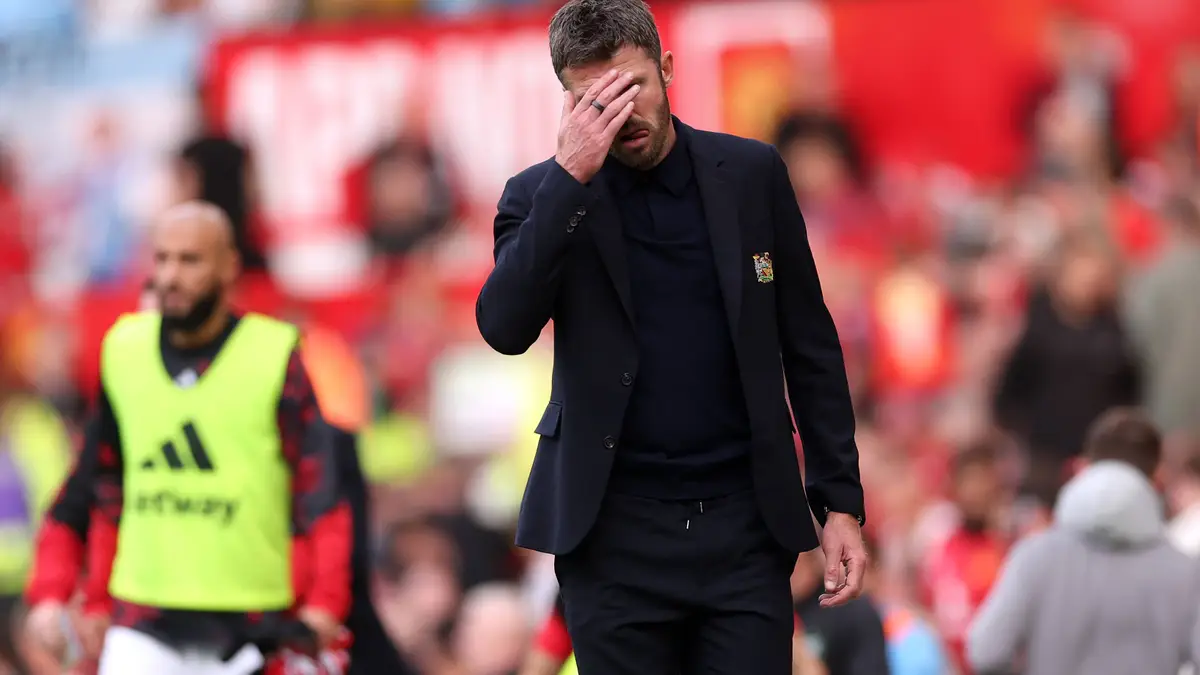

Michael Carrick sacked: How Manchester United's Champions League saviour ended up in the relegation zone
Michael Carrick has been sacked by Manchester United with the club in the Premier League relegation zone, just months after he took them back into the Champions League.
United have won once in 10 Premier League games this season, their worst start to a campaign in 40 years.
Mauricio Pochettino is set to replace him with an agreement reportedly in place with the USMNT coach. Pochettino's appointment will conclude a decade-long admiration for the Argentine at Old Trafford, with the former Tottenham Hotspur and Chelsea coach having been considered - and interviewed - on several occasions previously.
He looks set to return to the Premier League after leading co-hosts USA to the last-16 of the 2026 World Cup in the summer, with United set to pay a substantial fee for his services, after Pochettino signed a new deal after the tournament.
Carrick's fall is all the more striking for how well it began. The 45-year-old took charge in January with United seventh in the Premier League, and his first game was a 2-0 win over Manchester City at Old Trafford.
Announced as interim manager following the decision to sack Ruben Amorim, Carrick oversaw a remarkable upturn that led to Champions League qualification.
From seventh to third
Wins over Arsenal, Fulham and Tottenham followed, giving United four straight Premier League victories for the first time in two years. From his appointment to the end of the season, United won 12 of 17 league games and collected 39 points, more than champions Arsenal managed over the same period.
They finished third, and Carrick was nominated for the Premier League Manager of the Year award.
A move away from the back-three system that had floundered under Amorim helped unlock Bruno Fernandes, whose 21 assists broke the Premier League's single-season record, and earned him both the PFA and FWA Player of the Year prizes.
What had been intended as an interim reign ultimately left United with little choice but to make Carrick's position permanent, as he signed a two-year deal. Such had been his impact, there was arguably a greater risk in not continuing the partnership.
The challenge of building on that momentum proved considerably more difficult. The freedom that had characterised United's resurgence disappeared, while opponents increasingly found ways to exploit the defensive vulnerabilities. The optimism of the spring quickly gave way to familiar frustrations.
The campaign that followed never settled. Heavy defeats to Como and Bournemouth appeared to have sealed Carrick's fate. However, United opted to give the struggling head coach until the international break to turn things around.
Tensions were also emerging behind the scenes. Lisandro Martinez publicly criticised the board, while Fernandes reportedly fell out with Carrick over the manager's tactical approach.
A damaging 2-0 defeat to Chelsea followed, with Martinez's reckless red card compounding United's problems. A wild win over Roma, in which United fought back from 2-0 down, followed, before the chaos of last weekend's 4-4 draw with Aston Villa. United showed spirit to twice fight back from two-goal deficits and earn a point, including scoring twice in second-half stoppage time, but their vulnerabilities confirmed change was needed.
The supporters sang Carrick's name at full time. He remains a popular figure, and United's statement on his dismissal was keen to point out his 'legend' status. Ultimately, however, the club's decision-makers had seen enough. A gamble on a former favourite had soured quickly after the surprise of his interim success story.
Carrick was not the answer. But if Manchester United's decline has told us anything, it's that he wasn't likely the problem either.


