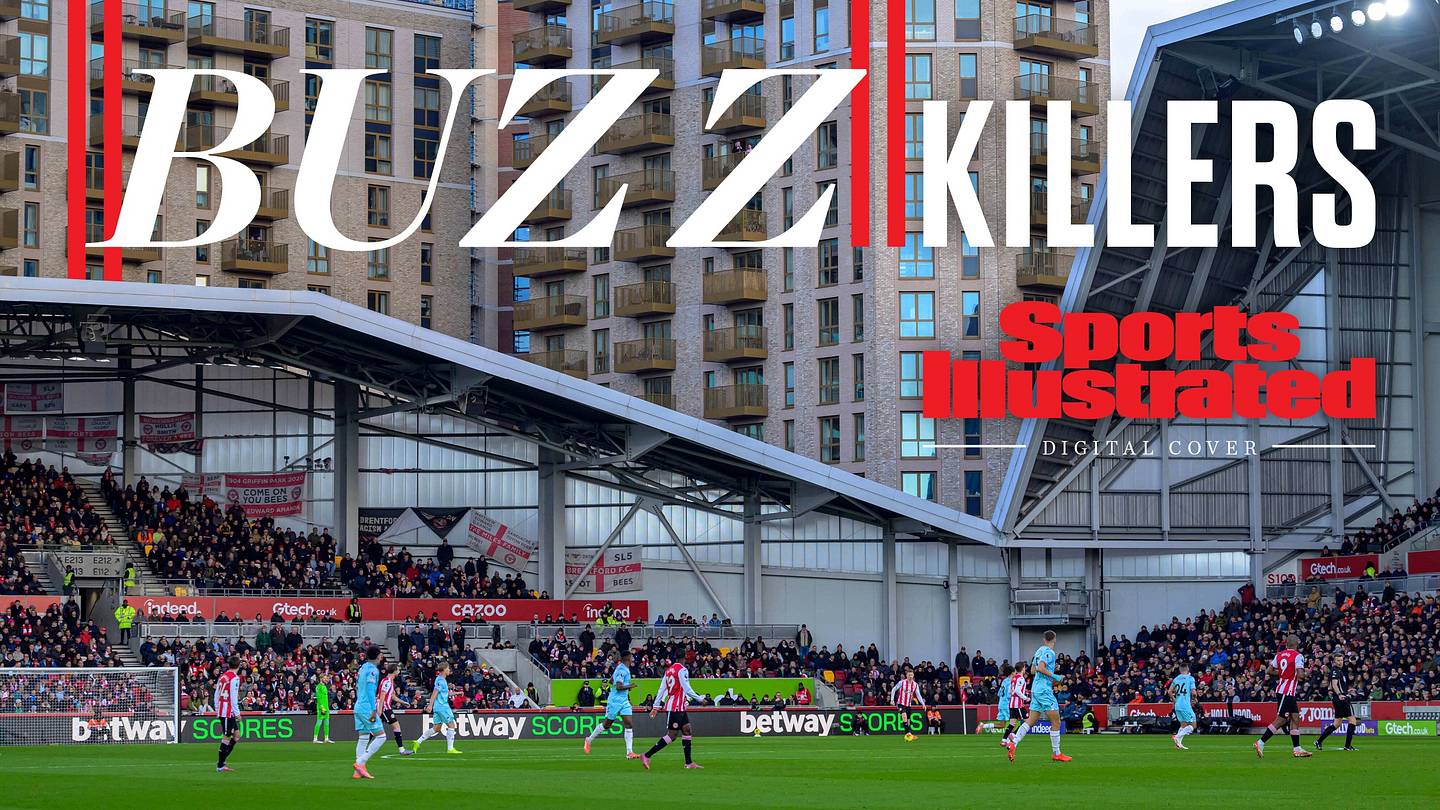

How Brentford FC’s Data Revolution Turned the Premier League Upside Down
On a summer day last year, Billy Grant was sitting by his computer, typing up a fan’s season preview for The Guardian.
He filled out the sections about key players, signings and the kit. At the end, he had to say where he thought Brentford would end up in the table. The team had just finished 10th. Grant put his club 14th.
Grant was one of the optimists.
The newspaper itself put Brentford 18th. Relegation. For four years this tiny West London club had climbed to mid-table spots with one of the smallest wage bills in the Premier League. But over the summer, Brentford had lost its longtime coach (Thomas Frank), its captain (Christian Nørgaard), its goalkeeper (Mark Flekken) and its star forward (Bryan Mbeumo). One of its top scorers (Yoane Wissa) was on strike, forcing a move away. It’s normal for teams to sell a player or two. Brentford had essentially been looted.
Few of the newcomers set the pulse racing. The Guardian had the “star signing” down as Jordan Henderson, the 35-year-old ex-Liverpool captain who was signed on a free transfer. With Wissa heading to Newcastle, the entire attack hinged on the fragile knee of Igor Thiago, the balding 24-year-old Brazilian who had missed almost his entire debut season at the club with a meniscus injury, and whose given names seem to have been inspired by Dr. Frankenstein’s assistant as well as a Copacabana beach football star.
Worse, Brentford had replaced the popular Frank with its set piece coach, Keith Andrews. Who puts a set piece coach in charge of a team?
And yet when Brentford lined up at Nottingham Forest on opening day, Grant trusted his club to get it right once more. Then Forest scored after four minutes. And then Forest scored again, and again.
“They literally wiped the floor with us,” says Grant, who hosts the Brentford podcast Beesotted. “The fans were really concerned. We were rubbish. Thiago was terrible. Forest tore us to pieces.”
When Forest had sealed the 3–1 win, Grant was worried. “They are going to laugh at us. This is terrible.”
Nine months later, Brentford ran out at Anfield on the final day of the season chasing a ticket to the Europa League.
They would have grabbed it and finished seventh had Dango Ouattara scored a close-range header nine minutes into stoppage time at 1–1. Instead Brentford came in ninth, outside the European spots on goal difference. Only two teams conceded fewer goals from set pieces, and though Brentford converted just 10, only two teams had a more expected goals (xG) than the Bees’ 18.96. The pundits must have known they had been wrong when Brentford beat Liverpool 3–2 at home in October, outmuscling the champions with a long throw, a quick break and an Igor Thiago penalty.
For the rest of the campaign, Brentford’s rivals trembled every time the ball rolled across the sideline, and the bruising center backs lumbered into the box, and the fans began shouting and clapping, and the ground shook, and the right back Michael Kayode picked up the ball, backed up a few steps and tossed it 150 feet into the box. It was havoc. It was lethal. By May, Kayode was so famous for this routine that he felt compelled to deny he was playing just because of his throws.
Beyond the results there appeared to be no major turning point after the Forest defeat. Brentford lost even more players: By the end of November, ACL injuries had struck down new midfielder Antoni Milambo and young forward Fábio Carvalho. Yet by late May Igor Thiago had scored 22 league goals, second only in the Premier League to Erling Haaland, and Andrews had been nominated for manager of the season.
Nothing was more Brentford than the appointment of Andrews.
Outside the club, it made no sense. The only hint of logic was that during the previous season Brentford had scored within a minute of kickoff in three straight league games, so Andrews clearly knew his set pieces. But what about the rest of the game? He had only been with the team for a year and was best known as an ex-Ireland midfielder who’d done a couple of TV gigs. “They expected us to get a big name,” says Grant.
Yet over the summer, owner Matthew Benham and his directors had each gone their own way to think about who to hire. When they reunited, all four had Andrews on the list. He was the set piece coach only because no other job had opened up. He understood the club. The players liked him. “A no-brainer,” technical director Lee Dykes would tell The Observer.
“I think they see a football club as a machine,” says Tim Keech, cofounder of MRKT Insights, which advises a series of European teams on recruitment strategy. “They have a very clear vision of what the machine should do, and then they’re just changing individual parts of it.”
The designer of the machine is the 58-year-old Benham, an Oxford physics graduate who founded Smartodds, a company arming pro gamblers with stats to beat the house. Since taking full control of Brentford in 2012, Benham has used data to sign players and gone big on set pieces. When once asked whether the team would get promoted, he replied, “There’s a 42.3% chance.” (Yes, the number was based on actual calculations.) The director of football, Phil Giles, was a quantitative analyst at Smartodds. The chairman, Cliff Crown, was the Smartodds CFO. The technical director, Dykes, has been at Brentford for seven years. These guys decide the playing style and transfers, leaving the coach to handle tactics and training.
Which is why they get so many calls right, says Keech. “Other clubs give full control to one or two individuals, and when they leave, nobody really knows what they’re supposed to be doing. There’s no organizational structure. Brentford has an incredible organizational structure. They have incredible continuity in the back office.”
When Frank left, the Brentford directors didn’t need a genius, or even someone with a new idea. They had the idea. They just needed someone to execute it. Keech says it’s like running a restaurant. “You have to open your doors and serve meals whether you’re ready or not. So if you have a consistent process and you’re like, ‘We’re going to serve Spanish food and this is the menu,’ then it’s easy to train someone to make those dishes. But if you’re like, ‘Oh, we’ve hired an amazing chef and we’re going to let him create every night,’ then you’re very reliant on that chef’s genius to succeed. And if that chef leaves, what are you?”
Brentford had hired big-time chefs before. It was just another struggling English club when Benham granted an interest-free loan back in 2006 and invested $640,000. The fans were rattling buckets outside the stadium, begging for money to keep the lights on, and in 2007–08 the team slid to the bottom half of the fourth tier. According to The Observer, the players were training in sweatshirts made by Fruit of the Loom, and kitman Dave Carter doubled up as the chef, cooking sausage, eggs and beans in the canteen next to the gym.
By the time Benham had become majority owner in 2012–13, Brentford was one kick away from automatic promotion to the third tier. On the final day, they got a penalty in stoppage time at home to Doncaster. Trusted captain Kevin O’Connor stepped up, only for Marcello Trotta, a young Italian on loan from Fulham, to grab the ball and smash it into the crossbar. Seconds later, Doncaster scored. Brentford ended up in the playoffs and lost to Yeovil Town in the final. “Devastating,” said Benham.
Another club would have kicked Trotta out on the spot, but Brentford couldn’t afford a better striker and extended his loan. A year later, Trotta scored 13 goals and the Bees were promoted.
Around that time, Grant met Benham, who talked about when Brentford would get to the Premier League. Grant thought it was a joke. Benham just looked at him. “He knew exactly what the journey would be,” says Grant.
After Brentford was promoted to the second tier, Benham began to assemble his machine. He made Giles codirector of football alongside Rasmus Ankersen, a Dane who had written a book about elite performance, and the two were put in charge of using stats to recruit players. The plan went down badly with Mark Warburton, the financial trader turned head coach, who had delivered the recent promotion. Even with Brentford just outside the playoff spots, Benham and Warburton parted ways.
The next coach, Marinus Dijkhuizen, lasted nine games. “A disaster,” says Grant.
Finally, in 2015, the Bees hired Dean Smith, who understood their values and culture, and then they pressed on with their ideas. Benham had watched the NFL and was baffled by how rarely soccer teams trained set pieces when they led to so many goals. He knew he was right because in the summer of 2014, he had bought the Danish club FC Midtjylland, made Ankersen chairman and told him to focus on corners and free kicks. Midtjylland immediately won its first league title.
Brentford hired a series of specialists, many so good they would be snapped up by richer clubs. Gianni Vio would take his reported 4,830 set piece routines to Tottenham. Nicolas Jover was the guru behind Arsenal’s Premier League–best 18 corner goals last season. Set piece coach Bernardo Cueva was allowed to leave for Chelsea, where he holds the same position, for a reported $1 million. Thomas Grønnemark, the throw-in coach, would get a call from Jürgen Klopp at Liverpool. Brentford also worked with a sleep coach and a sports psychologist. One of the club doctors, Matthew Stride, was doing routine blood screenings and measuring fatigue markers, trying to anticipate injuries. “It was a complete reset,” says Stride.
The ecosystem was so unusual that when Smith left for Aston Villa in 2018, Brentford had already decided to promote his assistant. Frank had shadowed Smith so closely that, at one point, they’d lived together for weeks. And then Frank lost eight of his first 10 games.
Most clubs would have fired him, but Brentford was an early developer of xG, the model that quantifies the probability of an attempt finding the net. The directors realized that the team was actually playing well, that its luck was rotten, and that Frank’s plan would come together. “That desire to understand why things work or not is very rare,” says Keech.
“At most clubs, someone needs to be blamed.”
Three years later, Frank led Brentford to the Premier League, the club’s first appearance in the top tier since 1947. Benham found Grant and said, “I’m sorry.”
What for?
“It took us longer than I thought.”
Many rivals wonder how Brentford keeps finding so many bargains. Four forwards—Ollie Watkins, Ivan Toney, Mbeumo and Wissa—were bought for a total of about $34 million, according to Transfermarkt. They were sold for $245 million. Dykes says they have data on 85,500 players. If the English transfer market is like Wall Street, with big-shot traders shooting from the hip, Brentford is the Michael Burry in the room, the quiet nerd with the numbers and formulas, detached enough to spot the bargains that others are missing.
Yet to Keech, the key is how clearly they define their needs. Every Brentford striker is big and strong. The wingers are fast and direct. If the back office is like a machine, the same might be true for how they see the team. “You almost mathematically break down what the outputs for each part of the team need to be,” says Keech. “And then you find the players who can do those things well.
“So we’re losing our left-sided attacker. Great. Here’s the nearest, best-available replica of that player who we’ve already scouted. We know everything about him. And we know this piece can slot in and replace this piece.”
When Brentford lost Wissa, Benham believed the chances of relegation went from 10% to 20%. In March, he told the MIT Sloan Sports Analytics Conference that he had been “a little bit concerned, but not as concerned as other people were.” “Nothing seems to faze them,” says Grant, who sat down with Andrews for his podcast near the end of last season. Grant asked if he wasn’t worried as he drove home from the Forest game. Andrews said he’d gotten over it by the third service station.
And yet the Moneyball part might be overplayed. In 2015, Benham and Giles wrote up a blueprint and named it Dogme 95, after the radical Danish film movement. Recently, Giles told Benham that he had found the document and realized that most of it was quite embarrassing. “A lot of the success has just been running things efficiently,” Benham said at Sloan. “Good management, everyone being on the same page, and especially culture.”
When Benham made an early visit to Midtjylland, he was struck by how respectful the players were. He told Frank to bring that culture to Brentford. Stride, who worked at the club from 2008 to ’18 and is now a consultant at the Isokinetic medical group, says Brentford always put personality first when hiring people. “Frank would tell the players, ‘Look, you may well go on to play and win things with bigger clubs, but I can guarantee that you will look back at your time at Brentford as one of the happiest moments of your career.’ ”
Frank must have thought the same last season when Tottenham fired him after eight months. In 2024, he told The Athletic, “I’m very aware that the grass is not greener in the garden next door, even if it looks like it.”
The question is how Brentford stay ahead. Last season the number of goals from corners and long throws in the Premier League went through the roof. Manchester United finished in third place in part by fixing their set piece setup. Tottenham might have been relegated had they not scored 19 set piece goals—tied for the second in the league—thanks to Andreas Georgson, who worked for Frank at Brentford. Giles told The Telegraph it’s getting harder to find value in the market now that everyone has a data department and is looking at the same players.
It’s a law of football nature that results and salaries are linked, and not even Brentford can defy it forever. If everyone does the same, the rich guys win.
Nobody has borrowed more than Arsenal, who won the title with an ex-Brentford goalkeeper (David Raya), an ex-Brentford midfielder (Nørgaard), an ex-Brentford goalkeeping coach (Iñaki Caña) and an ex-Brentford set piece coach (Jover). They did long throws, smashed the ball upfield from kickoff and set the Premier League record for goals from corners. Brentford didn’t just see another team win the league with its ideas, but with its staff too.
The hope is that not all clubs do what Arsenal did, and that there are more marginal gains to find. “The ownership wants to learn and improve,” says Stride, who remains in close contact with the hierarchy. “I don’t think you get that sometimes at the bigger clubs.” Benham told the Sloan audience that the key was to stay “super open-minded,” and added, “You have to accept that everything you’re doing is inefficient.”
What gives Brentford a chance is the rare alignment between the ownership and the staff, says Keech, who notes that while many clubs have good data, not all of them use it. “I know people who have been in bigger Premier League clubs who are really smart guys and really get it,” he says. “And they’re just not listened to, because the ownership wants to sign a glamorous player from a shaded sunglass guy on a yacht somewhere in Monaco for three times the market value.”
So all rich clubs won’t copy Brentford? “I don’t think so,” Keech says. “Because a lot of the time that’s not the nature of football ownership.”
Which is a nice way of saying that football can still be completely nuts.
Keech fears that if Benham leaves, the Bees will become another small-budget team that falls back down the ladder. He doubts Brentford has the size and finances to turn into Champions League regulars. “What they can be is a consistently profitable Premier League club, which is amazing for the size of the club historically. It’s almost like a startup succeeding against blue chip companies.”
Grant says the fans have stopped listening to rivals laughing at their unconventional ways. “They keep on giving you all these rules and tell you how things should operate,” he says. “But we don’t operate like that. We just do what we do.”
Ahead of this season, the pundits have made their predictions again. Benham has probably calculated the chances of another top-half finish, written out as a percentage with decimals, hoping that, this season, like most seasons, his crew of nerds will outsmart the loud and the rich.