The views and opinions expressed in this article are those of the author and do not necessarily reflect the official editorial policy or position of LiveScore.
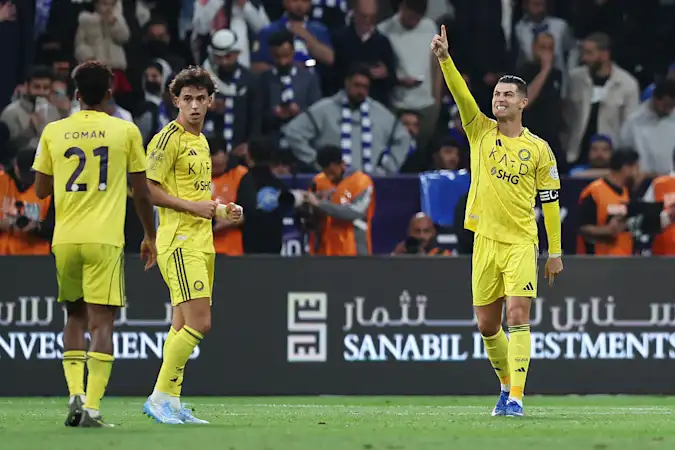
When a 41-year-old striker elects not to play for his club in the middle of a title race, it isn’t just a news item, it is a seismic event. That is precisely what happened in Riyadh earlier this month, when Cristiano Ronaldo, captain and talisman of Saudi Pro League side Al Nassr, was conspicuous by his absence against Al-Riyadh, not through injury or suspension, but choice. Reports framed it as a strike, a protest at what Ronaldo perceives to be inadequate sporting backing from the league’s power brokers, most notably the Public Investment Fund (PIF), which also bankrolls domestic rivals such as Al Hilal.
This standoff is more than domestic gossip or a Saudi subplot. It is perhaps the clearest manifestation yet of modern player power, the ability of elite athletes not merely to negotiate contracts, but to exert pressure on how clubs, leagues and even national sporting projects are run. For football, the implications stretch far beyond one player, one club, or one league.
Undoubtable Talent, Unrivalled Longevity: The CR7 Legacy
Any serious discussion of Cristiano Ronaldo must begin with perspective. This is a player whose career has spanned more than two decades at the summit of elite sport, across eras, styles, continents and tactical philosophies.
The numbers remain staggering. Ronaldo has scored 961 official senior goals for club and country. He is the leading scorer in international football, with 143 goals in 226 appearances for Portugal, and the most prolific player in UEFA Champions League history, with 140 goals. Five Ballon d’Or awards underline not just peak excellence, but sustained dominance across more than a decade.
Across spells at Sporting CP, Manchester United, Real Madrid, Juventus, and now Al-Nassr, Ronaldo has amassed 34 senior trophies, including five Champions Leagues and a European Championship with Portugal. His evolution, from explosive winger to penalty-box predator, from counter-attacking outlet to system-defining focal point, has allowed him to defy football’s natural ageing curve.
Yet Ronaldo’s impact has never been confined to goals alone. He is one of the first footballers to exist fully as a global sporting brand, transcending club identities. That commercial gravity, his sponsorships, broadcast pull and social-media reach, has reshaped the economics of wherever he plays. And it is precisely that influence which now sits at the heart of this dispute.
Behind the Strike: How the Saudi Project Works
To understand why Ronaldo chose confrontation rather than compliance, it is necessary to look beyond Al-Nassr and examine how the Saudi Pro League actually functions, because this is not a free-market competition, but a centrally managed sporting project.
Since the PIF took controlling stakes in four clubs in 2023, spending has been strategic rather than equal. In the 2023–24 cycle alone, Al-Hilal committed over €350m in combined transfer fees and wages, assembling a squad that included Neymar, Rúben Neves, Sergej Milinković-Savić and Kalidou Koulibaly. Al-Nassr’s outlay, by contrast, sat closer to €150m, heavily weighted toward Ronaldo’s own salary rather than squad depth.
That imbalance has persisted. While Al-Hilal were permitted to reinforce aggressively across multiple windows, Al-Nassr’s recruitment remained cautious, shaped by a broader league strategy designed to avoid internal monopolies. This is not accidental. Saudi football is not engineered for one club’s dominance, but for managed growth across several flagship assets.
For Ronaldo, this strikes at the heart of the promise he was sold. He did not move to Saudi Arabia merely to score goals, though he has done so prolifically, netting over 50 goals across the 2023–24 season, but to lead a project meant to win, to dominate, to legitimise the league through sporting excellence as much as global exposure.
Unlike Europe, Saudi clubs do not negotiate freely. Transfers, wage ceilings and long-term squad planning are filtered through central approval, shaped by commercial, political and diplomatic priorities alongside footballing ones. Ronaldo’s strike, then, is not aimed solely at Al-Nassr’s board. It is a challenge to a system in which sporting ambition can be subordinated to strategic balance.
In a league built on star power, that contradiction was always going to surface. Ronaldo has simply chosen to force it into the open.
A Familiar Pattern, Different Power Dynamics: From Old Trafford to Riyadh
It is tempting to frame Ronaldo’s Al-Nassr dispute as a replay of his turbulent exit from Manchester United. The parallels exist: dissatisfaction, public tension, misaligned ambition, but this is not repetition. It is evolution.
At United, Ronaldo was pushing against an institution attempting to move beyond him. His return was meant to be nostalgic and restorative; instead, it exposed a club struggling to reconcile its history with a modern rebuild. His demands of guaranteed minutes, Champions League football and sporting influence clashed with a hierarchy desperate to reassert authority.
When Ronaldo spoke out publicly, it felt like a last stand against marginalisation. United chose structure over stardom. Ronaldo left not because he lacked influence, but because the club no longer needed to bend to it.
Riyadh is different. At Al-Nassr, Ronaldo is not a returning hero, he is the foundation, and this was the greatest appeal to him. The Saudi Pro League’s global relevance is inseparable from his arrival. Broadcast interest, sponsorship growth and international attention trace directly back to his signing. Here, the project has not moved past him; it still revolves around him.
That distinction alters everything. In Manchester, Ronaldo was resisting decline. In Saudi Arabia, he is asserting authority that he was explicitly invited to hold. His United exit was emotional and reactive. His Al-Nassr strike is calculated, strategic and rooted in expectation. The message is no longer “remember who I was,” but “deliver what you promised.”
Wherever Ronaldo goes, the same tension eventually surfaces: the friction between individual ambition and institutional control. What changes is who blinks first.
Player Power: A New Balance of Influence
Ronaldo’s strike is not an isolated incident. Across elite sport, players now wield influence once reserved for owners and executives. Contracts increasingly include image-rights structures, performance-linked bonuses, exit clauses and informal input into recruitment strategy.
Several forces drive this shift. Commercialisation has turned elite players into brands. Ronaldo’s economic footprint attracts revenue streams that often rival those of his clubs. Wealth concentration has widened the gulf between superstars and squad players, translating financial power into leverage. Careers have shortened, encouraging players to prioritise immediate alignment over long-term projects. And cultural change, fuelled by social media and agent-driven narratives, has normalised public pressure as a negotiating tool.
Player empowerment has corrected historic imbalances. But it also introduces instability.
Why Player Power Can Hurt the Game
Unchecked, player power risks distorting football’s competitive fabric. Clubs may become reactive rather than strategic. Sporting decisions risk being driven by optics rather than coherence. Youth pathways and long-term planning are often the first casualties.
When narratives centre on individuals rather than teams, institutional authority weakens. The danger is not that stars have influence, it is that systems lack the resilience to absorb it.
Solutions: Where Next for Football Governance?
Football does not need to suppress player power, but it must structure it. Contracts must clearly define sporting influence. Wage and squad-cost controls must be consistently enforced. Sporting directors must have genuine authority. Collective bargaining models, long resisted in football, may offer balance. Incentives should reward squad depth and youth development, not just star accumulation.
The media, too, bears responsibility. Not every act of leverage should be framed as heroism. Of course, a player of his power has friends in the media. He’ll go to them to amplify his message, and his exit from Manchester United, framed and broadcast by one of his big fans fan Piers Morgan, highlighted that. Friends in the media help, and this is why it is always key to remember that some, or indeed most, media is biased and often heavily sponsored content disguised as breaking news. A player will use their microphones to advance their personal agenda, and those with the most reach tend to have the largest bias. The media has changed from independent to privately owned entities, with their own agenda, nowadays spurred by clicks, views, reads and incoming money from blockbuster moments, and this is something fans need to keep firmly in mind.
Ronaldo as Prototype, Not Exception
Cristiano Ronaldo’s confrontation with Al-Nassr should not be dismissed as the eccentricities of a fading superstar. It is better understood as a preview.
Football is moving toward an era where the very elite are no longer just employees, but strategic assets, capable of shifting markets, shaping leagues and redefining power structures. Ronaldo is not the anomaly; he is the prototype. Younger stars are watching closely, learning how leverage works when sporting excellence intersects with commercial gravity.
The danger for football is not that players will seek influence; that battle has already been won, but that the game’s institutions remain structurally unprepared to manage it. If Ronaldo’s career has taught the sport anything, it is that talent will always push against its limits.
The question now is whether football chooses to govern that power, or continues reacting only once it explodes.