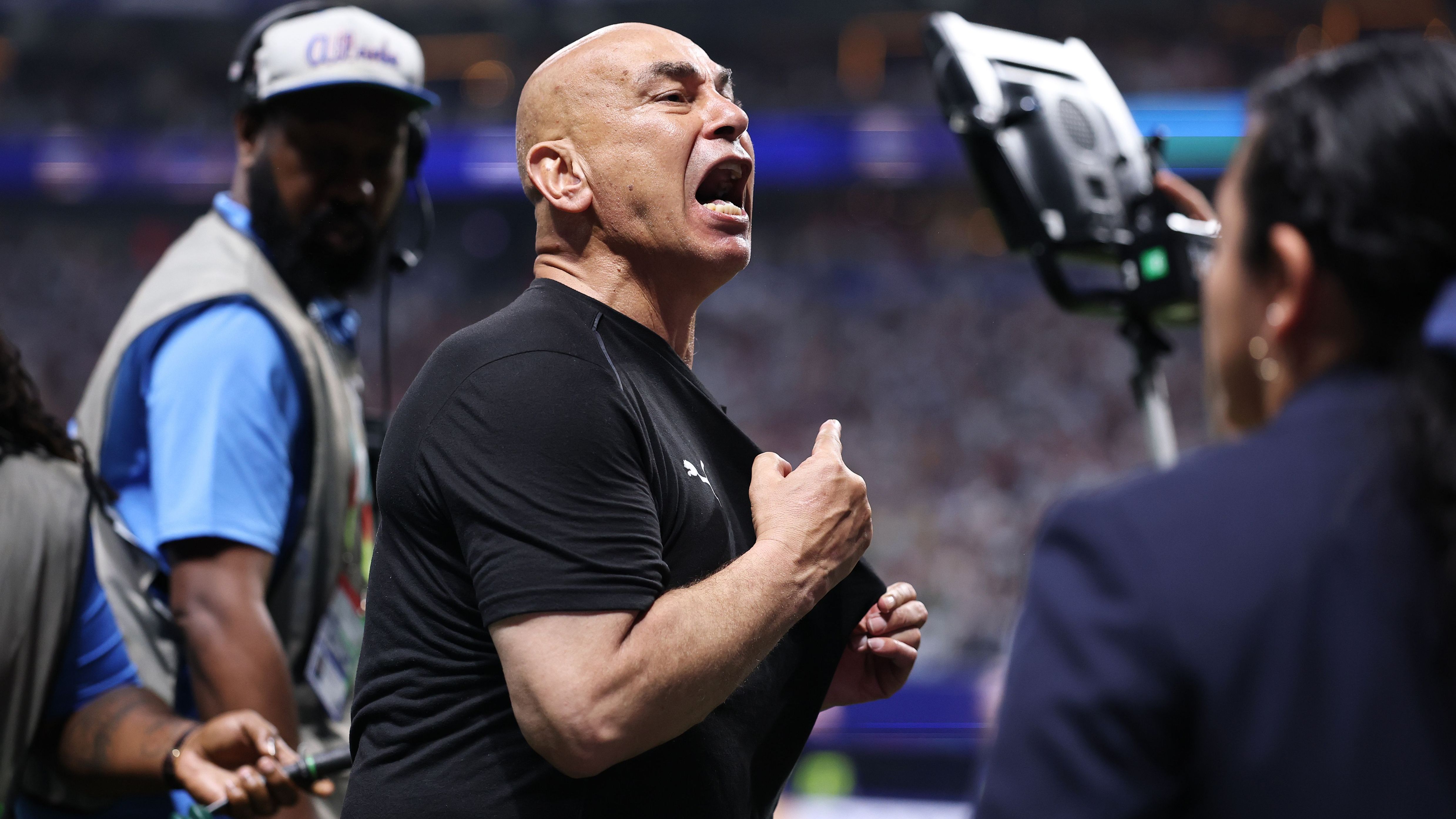

The suicide of Hossam Hassan
The Doyen in the eye of the storm
Sometimes a man needs nobody to push him from the summit in order to fall. He only has to convince himself that he has grown bigger than the place he stands on, that his recent success has lifted him above criticism and review.
This is Hossam Hassan's story right now. He reached the peak of glory with Egypt by qualifying for the World Cup, then set about demolishing, with his own hands, the image he had built.
No one denies that Hossam Hassan worked hard, or that reaching the World Cup is a great achievement that will always stand to his name. But success does not hand you a magic wand. It does not make every decision you take correct, nor does it mean that anyone who disagrees with you understands nothing.
Success is meant to make you calmer, more willing to see your mistakes, better able to build on what you have achieved rather than treating it as the end of the road.
The trouble began when that sense of success curdled into a feeling of superiority. Dialogue grew harder. Agitation crept into situations that never called for such confrontation.
From there the crises came one after another. First the shocking statements about Mohamed El Shenawy, then the controversy around Mohamed Salah and his exit from the national team's camp, until the whole affair became far bigger than a set of technical decisions.
The problem is not in the decision, but in the manner
Hossam Hassan has every right to leave out El Shenawy, and every right to decide when Mohamed Salah plays and when he sits on the bench. The coach owns the technical decision. National teams cannot be run on the logic of pleasing the stars.
Owning the decision, though, does not mean using it in a way that turns every major player into a potential crisis.
The strong coach is not the one who proves to everyone that he is the strongest, but the one who makes his players trust him even when they disagree with him. You do not manage the dressing room with a raised voice, nor with statements that leak out to the media, nor by trying to win every argument. Sometimes a calm word beats an entire press conference.
Read also.. Illness strikes Donis before the Saudi Arabia and Iraq battle
This is precisely where Hossam Hassan went wrong. Instead of letting the pitch do the talking about qualifying for the World Cup, the microphone became the source of most of the controversy surrounding him. Every statement opens a new door. Every attempt to explain a stance turns into another space for debate, to the point that talk of his personality and his words has come to overshadow talk of the national team itself.
From the summit to the brink of collapse
Football rarely serves up a fall this swift. Yesterday, Hossam Hassan was the man who dragged Egypt back to the World Cup. Today, the chatter about his crises and a possible exit drowns out any talk of the achievement itself.
What stings is that none of it needed to happen. Nobody asked him to please everyone, to nod along with every player or every critic. All he had to do was recognise the value of the seat he had climbed into. Real success isn't reaching the summit. It's knowing how to stay there.
Call it a slow suicide, though it means nothing so literal as death. It lies in how he handled the glory once he had it. Arrogance, a refusal to talk, an urge to control every situation: these can tear down in weeks what took years to build.
Hassan could have walked away from this chapter as the man who brought Egypt World Cup glory. Instead, he is closer to becoming the man who threw away the credit for it himself. He can still halt the slide. But it won't start at the microphone. It starts with an honest moment of looking in the mirror.