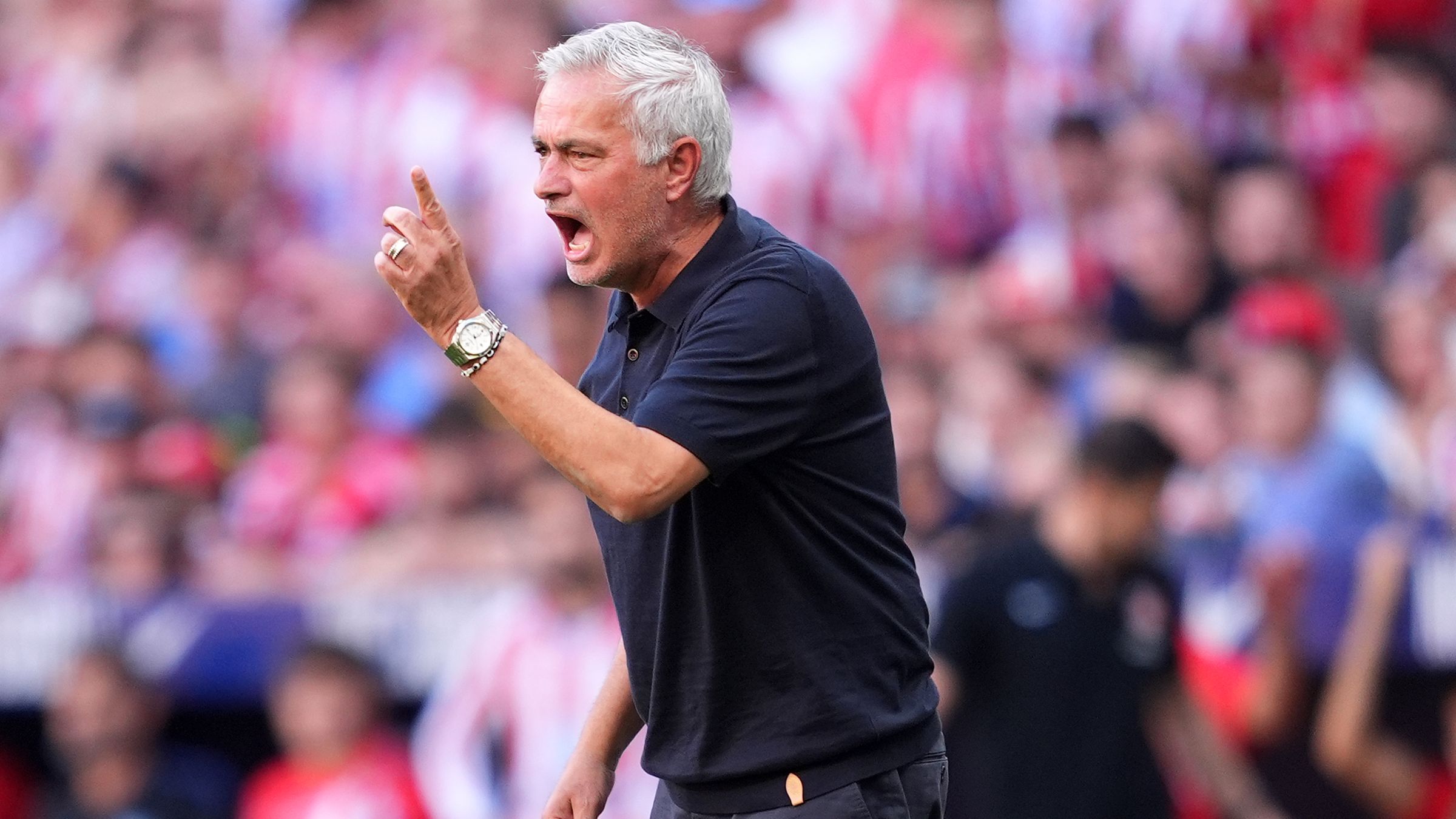

Don't let me down: Mourinho incites Real Madrid players to break the rules
José Mourinho, the Real Madrid coach, got into a "Bet and Go" programme car to tour the streets of Madrid, in the company of Yevhen Karagan.
Marca newspaper published Mourinho's remarks, in which he explained why he returned to the Royal club: "I came back because the club wanted me back and wanted to rebuild the team, but the way they spoke to me also had an impact."
He added: "I left Real Madrid in 2013, I believe, and since then we have always maintained a close relationship. I left the club with an excellent relationship with the board of directors, and that is why we always stayed in contact, and
On his way of working, Mourinho stressed: "I always like to keep close communication with the players. I often tell them this is my idea for this match, this is my strategy, this is how I analyse the match with my assistant, and this is how we want to play."
He explained: "But more important than the way I want to play is what they feel. Do you feel capable of doing this for me? Do you feel capable of carrying out the tasks I assign to you? If you are not, then tell me what you think."
He continued: "So there is always what I used to call, you know, discovery and guidance. We discover things together. And we try to reach the ideal situation in which the coach is happy and comfortable, and at the same time the player feels comfortable too. I do not think it will work if the player does something he does not believe in."
He added: "As one of my university professors used to say: you do not train footballers, you train men."
Don't let me down, and I'll always be by your side no matter what happens
Mourinho revealed to Karagan one of his mottos, saying: "Don't let me down. When I say don't let me down, I'm talking about football, of course. Don't let me down, and I'll always be by your side. Whatever happens."
Mourinho said: "You're a footballer 24 hours a day. That's the point too. You train for two or three hours a day, but you're a footballer 24 hours a day. So everything affects your work: what you eat when you're not at the club, what you drink, how you sleep, and even aspects of your private life."
He added: "Unfortunately, a footballer can't go skiing or cycling. And if he does, and there are those who do it secretly away from the club, I don't care about the contract. What matters to me is the way you deal with your work. If you fall off a bike, you might miss three matches. You could break your leg or suffer a concussion that prevents you from performing at your best."
The Portuguese continued: "You have a group of friends, and you're young and single, and your friends go out to nightclubs on Wednesday, Thursday and Friday evenings, but you can't go. You can only go out the night after a match, provided you don't have another match three days later, which can happen."
Mourinho also said: "There are many things you have to give up in order to become a footballer. But in the end, your career is short. When you reach around the age of 35, you have many years ahead of you to enjoy life in another way. But football, at its core, isn't a job, it's a way of life. If you treat it as a hobby, you're finished. And if you consider yourself a footballer for only two hours a day, you won't reach the top. In the end, it's a way of life."
He added: "I recently watched a documentary about Nadal. And of course, he's not a footballer, but he's certainly an exceptional athlete. It's astonishing how many sacrifices he made and what he gave up in order to achieve that career. And in the end, there's always a relationship between what you achieve and what you give in order to achieve it."
Footballers: artists
Mourinho said: "There are rules and there are rules. There are non-negotiable rules. And there are other rules that I like players to break. I will try to explain: if you must arrive at nine exactly, then everyone must arrive at nine. And if you arrive at a quarter past nine, even if you are a superstar, you simply cannot do that. I do not accept and do not tolerate the breaking of this simple rule."
The Portuguese went on: "But during the match, if one of the players breaks the rule, thanks to his talent or creativity or intuition, and takes the risk of trying to do something different, then I deal with the matter in the same way. I prepare for the match with my assistants and the analysts, and we try to reduce the element of unpredictability in the match as much as possible. I try to set out a plan: 'Right, things will go this way. If we are ahead, I will do this, and if we are behind, I will do that.'"
He added: "But when the match begins, I do not think about the analysts nor about the assistants. I simply have a certain intuition and I act on it. I do what I feel should be done. And if the result at the end is not as I expected, I do not blame myself, because I did it for the team. I did it because I felt it was best."
For Mourinho, "footballers are artists. When you reach a certain level, it is not only about your training or your academic education or what you learned at university. Rather, you have talents that God probably gave you. So let yourself be led by them and follow your instinct."
Mourinho defends the superstars
Mourinho also spoke about handling the stars within a football team's dressing room, saying: "Those I would genuinely call superstars never have a problem with ego, because those who cause problems because of their ego are not superstars in my eyes."
He stressed: "For me, a superstar is a complete package. And this package includes a side of the personality where the size of the ego is proportionate to the size of the talent. But there comes a moment when they know when enough is enough, and when they don't know when to stop and want to cross that line, then for me they cease to be superstars."
Signing off, the Portuguese added: "I learn every day. I learn from the difficult moments. I learn from the people I work with, especially the players. And to win, we must work together. We have to play for one another, and sacrifice for one another. And in the end, there is always a relationship between what you achieve and what you give in order to achieve it."