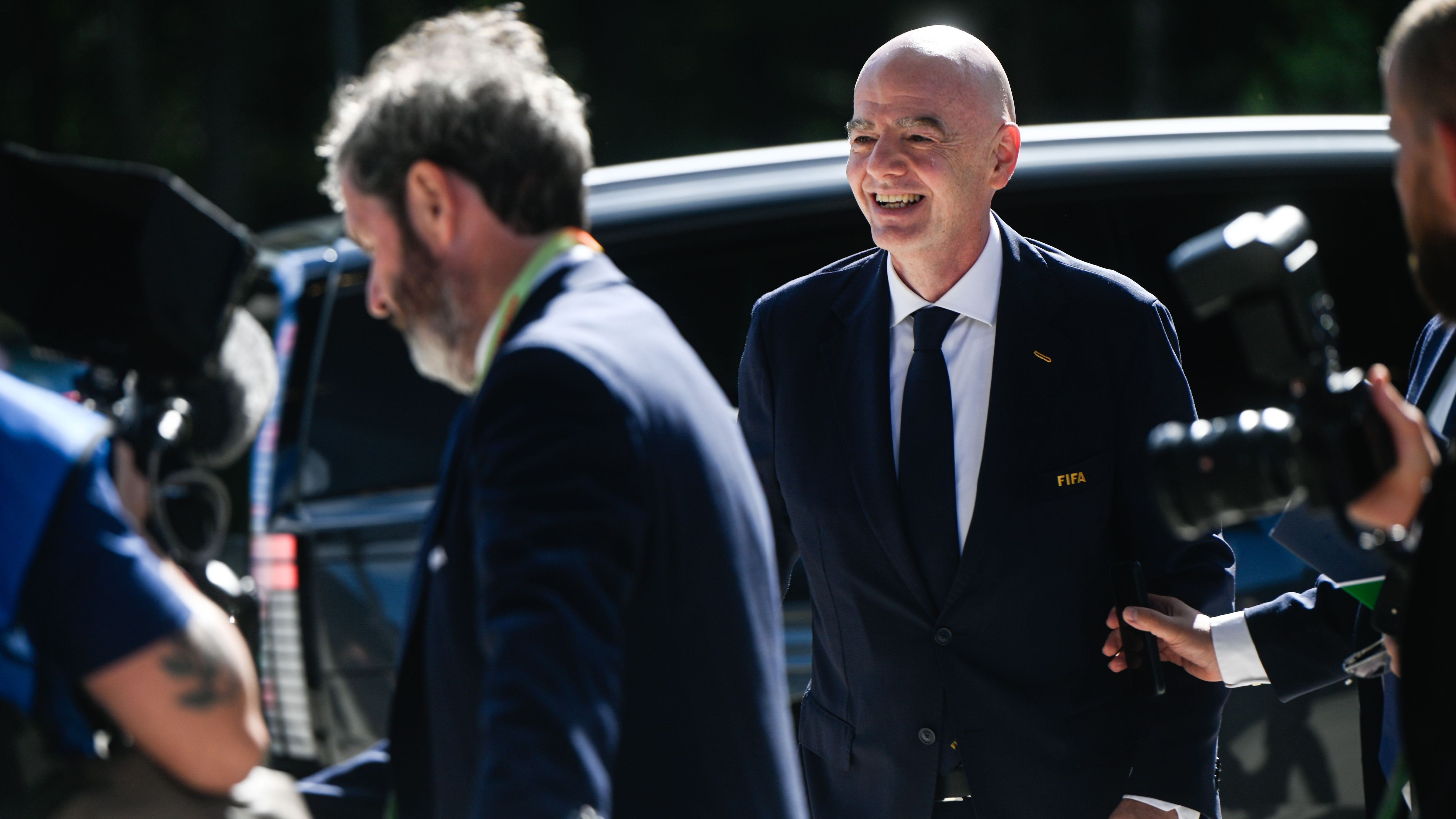

Did "Morocco's influence" save Infantino? Rivals switch tactics from ousting him to "clipping his nails"
Morocco the password in the FIFA elections
Just three weeks ago, toppling Gianni Infantino from the FIFA throne looked like a matter of time. Behind the closed doors of meetings in Rabat and Nyon, every calculation was overturned. The president his opponents believed was finished came back to reveal a network of loyalties built over ten years. Some have described it as "unbreakable", and today it guarantees him enough votes to stay in place.
Faced with that turnaround, the European opposition camp had no choice but to shift the battleground. Their goal had been to overthrow the most powerful man in football. Now they settled on something more realistic and more dangerous: not to bring Infantino down, but to clip the wings of the presidency itself and strip it of its absolute powers.
The belief that the matter is over
The news agency "Reuters" quoted a global football source with knowledge of the secret discussions between senior officials as saying: "Three weeks ago, I thought he was finished. What I did not realise was just how strong the relationships he built after ten years in power are, relationships that are almost impossible to break."
Infantino, aged 56, faced the biggest challenge of his career this year after the collapse of his controversial proposal to sell a 20% stake in FIFA's competitions, including the World Cup, to private-sector investors.
Branded a bombshell, the plan triggered widespread anger. UEFA, the Asian federation and CONCACAF led a campaign calling for a change in FIFA's leadership. Several European federations withdrew their support for his re-election, the latest being France last Thursday.
FIFA's Secretary General Mattias Grafström described what happened as "an unfortunate and shameful chain of events". Yet he announced his full support for Infantino following the crisis meeting in Rabat, a clear sign that the immediate danger had passed.
The 211-vote calculations: Europe's dilemma
Infantino's real power lies in FIFA's electoral system. At the FIFA congress, each of the 211 national associations holds one equal vote. Ousting the president would require a global coalition far exceeding the 55 votes of UEFA's members.
That is where the danger lies for his opponents. Confront the president and lose, and you strengthen his grip rather than weaken it.
One source comments: "I think the course of events has changed. It has become far too dangerous for UEFA to go into the vote and not win."
There is no rival: Al-Khelaifi withdraws
No rival capable of rallying global support has emerged ahead of next March's elections. The final deadline for candidacy is 18 November.
Nasser Al-Khelaifi, president of Paris Saint-Germain, is one of the few figures football insiders believe could build the continental alliance needed to defeat Infantino. He has ruled himself out entirely through a spokesperson, insisting he "does not aspire to, intend, or wish to take up the FIFA presidency".
Victor Montagliani, president of CONCACAF, is the other name doing the rounds. He has confirmed he will not stand without sufficient guarantees of victory. The door remains open for a surprise African or Asian candidate to emerge.
Small nations' loyalty: Morocco's card
By contrast, Infantino still enjoys solid backing from the major blocs outside Europe. Steve Laigle, president of the New Caledonia federation, spoke for Oceania: "Most of the presidents of Oceania's federations have declared their support for Mr Infantino, and we will support him to the end. When we make a promise and are loyal to someone, we remain loyal to them until the end."
Africa shares the same mood, where the majority believe that continued support will lead to increased development funding. Morocco rank among Infantino's public backers, one of the most influential federations on the continent. Reports, denied by FIFA, claim a promise to host the 2030 World Cup final in Casablanca in return for maintaining African support. The Moroccan federation has not commented.
The alternative plan: trimming the president's powers
With the situation deadlocked, some opponents have begun studying an alternative plan. It involves changing the structure of FIFA's administration itself rather than changing the president.
Officials are studying how to reduce the powers concentrated in the presidency and redistribute them to the general secretariat, two sources revealed, while tightening oversight of major strategic and commercial decisions.
Philippe Diallo, president of the French Federation, withdrew his confidence in Infantino, saying "the confidence granted to the FIFA president has broken". He confirmed that the distribution of power has become part of the discussion within UEFA.
"The project cannot be purely European, but must bring together all the continents," Diallo added. "Our mission now is to ensure the emergence of a programme and a candidate, then to work on ensuring their victory."
Rabat hosts the FIFA presidential elections on 18 March 2027. The battle may turn from an attempt to overthrow Infantino into a battle to tame him.