
Cameroon rise, Nigeria fall and NWSL star Temwa Chawinga takes over: The defining stories of WAFCON 2026
Temwa Chawinga wins Golden Boot, Cameroon makes history winning WAFCON and players like goalkeeper Michaely Bihina, and defenders Yvana Makana and Maeva Nyadjou showcase young talent across tournament.
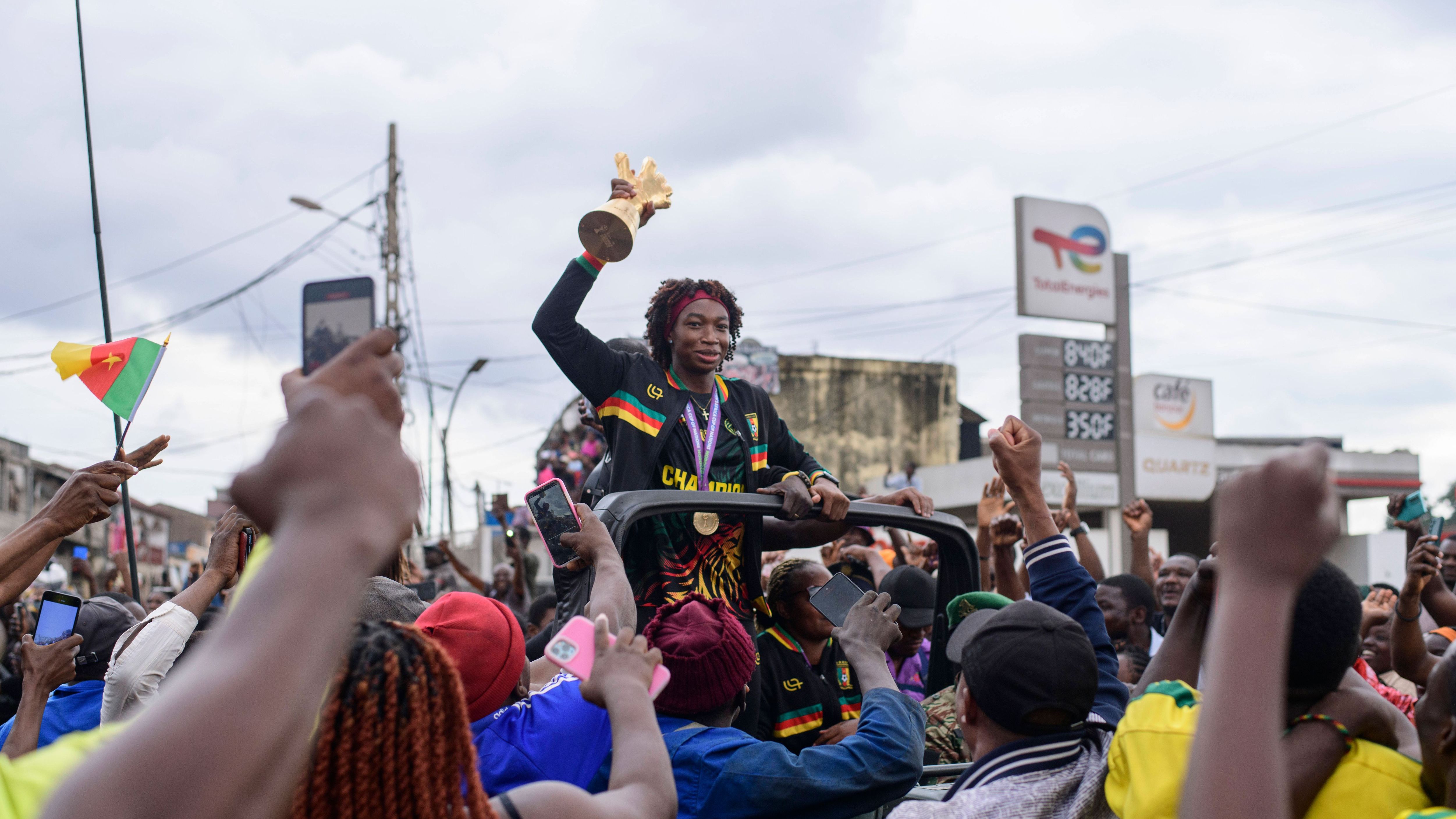
By the time Cameroon lifted the Women's Africa Cup of Nations trophy, the established order of African women's soccer had been turned upside down.
The Indomitable Lionesses entered the tournament only because it had expanded from 12 to 16 teams. They left as champions. Cameroon eliminated 10-time winners Nigeria, survived a penalty shootout against host Morocco behind 22-year-old goalkeeper Michaely Bihina, and completed its remarkable run with a 3-0 victory over Malawi in the final.
Yet Malawi's journey was every bit as memorable. Making their WAFCON debut as the lowest-ranked team in the tournament, the Scorchers stunned defending champion Nigeria in their opening match, reached the final and qualified for their first FIFA Women's World Cup. Sisters Temwa and Tabitha Chawinga powered that run, combining for nine goals, while Temwa finished as the tournament's joint-leading scorer with five.
WAFCON has long struggled to command the attention and respect afforded to many of the world's other major women's tournaments. This edition showed exactly why it deserves more. Established powers fell, new stars emerged, and two unlikely finalists produced historic breakthroughs.
From Bihina's penalty-saving heroics to the Chawinga sisters leading Malawi's remarkable rise, GOAL looks at the players and moments that defined a tournament that reshaped African women's soccer.
Cameroon makes history
At just 22, Michaely Bihina helped carry Cameroon to its first Women's Africa Cup of Nations title.
The goalkeeper made nine saves in the Indomitable Lionesses' quarterfinal upset of Nigeria before stopping three penalties in their semifinal shootout against host Morocco. She did not concede a goal throughout the knockout stage, establishing herself as one of the tournament's breakout stars.
Cameroon's triumph was a collective effort - and one the country nearly never had the opportunity to pursue.
The Indomitable Lionesses initially failed to qualify for WAFCON after losing 3-1 on aggregate to Algeria. After qualifying had concluded, however, CAF expanded the tournament from 12 to 16 teams. The four additional places were awarded to the highest-ranked countries eliminated in the final qualifying round, giving Cameroon a route back into the competition.
They made the most of that lifeline. Cameroon opened the group stage with a 2-1 victory over Mali, followed it with a 1-0 win over Ghana and closed with a 1-1 draw against Cape Verde.
The Indomitable Lionesses then produced their best soccer when it mattered most. They stunned defending champion Nigeria 1-0 in the quarterfinals, securing their place at the 2027 FIFA Women's World Cup, before advancing past Morocco in a penalty shootout following a scoreless semifinal. Cameroon completed its remarkable run with a commanding 3-0 victory over Malawi, capturing the WAFCON title for the first time.
Malawi rise to team of the tournament
Malawi made their first appearance in WAFCON this year, and as debutants, shocked the nation by defeating Nigeria, the reigning champs 3-2, in the opening match of the group stage.
It was impossible to think it was just a fluke performance from Nigeria, because Malawi were all over them. The Chawinga sisters were the difference-makers, though, with Temwa and Tabitha Chawinga both dominating in the final third. Temwa plays for the Kansas City Current in the National Women's Soccer League (NWSL) and is a two-time Most Valuable Player and Golden Boot winner. Her sister, Tabitha, plays for top French club Olympique Lyonnais in French Ligue 1.
Most people thought that Malawi, in their first-ever WAFCON, might get lucky to get out of the group stage, but they didn't just do that; they made it to the final of the tournament, and because of that, qualified for their first-ever World Cup. Their style of play was certainly attacking-minded, but also quite disciplined in the midfield, which helped do the legwork to win the fifty-fifty balls and find Temwa down the middle and Tabitha out wide.
Chawinga player of the tournament
There is a compelling case for Cameroon's Bihina after the goalkeeper produced the tournament of her life. Yet there is nothing quite like a goalscorer who continues to find the back of the net at every level. That was Temwa Chawinga.
Chawinga was nearly unstoppable at WAFCON, finishing with five goals and two assists. She made scoring look easy—something NWSL fans have grown accustomed to seeing her do week in, week out.
Her defining performance came against Nigeria in the group stage. Chawinga scored twice in Malawi's stunning 3-2 victory over the defending champion, producing the kind of performance that made people stop, pay attention and buy into the Scorchers' remarkable story.
Malawi ultimately fell short in the final, but Chawinga left Morocco with the Golden Boot and something even more significant: She helped carry her country to its first FIFA Women's World Cup and announce Malawi as one of Africa's fastest-rising teams.
Nigeria disappoint
Nigeria arrived in Morocco as the defending champion and record 10-time WAFCON winner. They left having produced the worst finish in their tournament history - and having failed to qualify for the FIFA Women's World Cup for the first time.
The Super Falcons' WAFCON title defense ended with a 1-0 quarterfinal defeat to Cameroon, marking the first time Nigeria had failed to reach the tournament's semifinals. That loss cost them an automatic place at the 2027 World Cup but left them with one final route through the CAF play-in stage.
Nigeria could not take advantage. A subsequent 2-1 defeat to South Africa ended their hopes of advancing to the inter-confederation playoffs and confirmed that the Super Falcons would miss the World Cup for the first time since the tournament began in 1991.
That failure was especially stunning given the depth and experience of Nigeria's roster. The fallout was immediate: The Nigeria Football Federation directed head coach Madugu and the rest of his technical staff to step down four days after the defeat to South Africa.
The NFF has yet to appoint a replacement and has announced plans for a task force to investigate the causes of the Super Falcons' historic failure.
What this tournament means for the NWSL
One of the clearest lessons from WAFCON is not simply that several of the NWSL's biggest stars performed well. It is that Africa should be viewed as one of the league's most important scouting markets.
Eleven active NWSL players represented seven countries at the tournament, the league's largest WAFCON contingent to date. That group included Golden Boot winner Temwa Chawinga, Player of the Tournament Monique Ngock and established stars such as Barbra Banda and Racheal Kundananji.
The NWSL can take pride in providing a home for some of Africa's best players, including Chawinga, one of the league's defining stars. But WAFCON also introduced a wider audience to lesser-known players who could follow the same path. The tournament offered clubs an extended look at how those players performed against elite opposition and under the pressure of international knockout soccer.
Seattle Reign provided an immediate example of what could come next. Two days after the final, the club announced the signing of Ivory Coast forward Ami Diallo through the 2028 season. Diallo arrived from ASEC Mimosas after scoring 31 domestic goals in 2025-26 and helping the club reach the CAF Women's Champions League final.
Her transfer should be viewed as the beginning of an opportunity, rather than an isolated move. WAFCON showed that the NWSL already has meaningful ties to African soccer. The next step is ensuring that clubs continue using the tournament to identify the continent's next Chawinga, Banda or Ngock.
The NWSL players who entered WAFCON were:
Mélissa Bethi, Washington Spirit — Algeria
Monique Ngock, Washington Spirit — Cameroon
Rosemonde Kouassi, Washington Spirit — Ivory Coast
Temwa Chawinga, Kansas City Current — Malawi
Aïssata Traoré, Boston Legacy FC — Mali
Deborah Abiodun, Washington Spirit — Nigeria
Gift Monday, Washington Spirit — Nigeria
Michelle Alozie, Chicago Stars FC — Nigeria
Barbra Banda, Orlando Pride — Zambia
Racheal Kundananji, Bay FC — Zambia
Prisca Chilufya, Angel City FC — Zambia