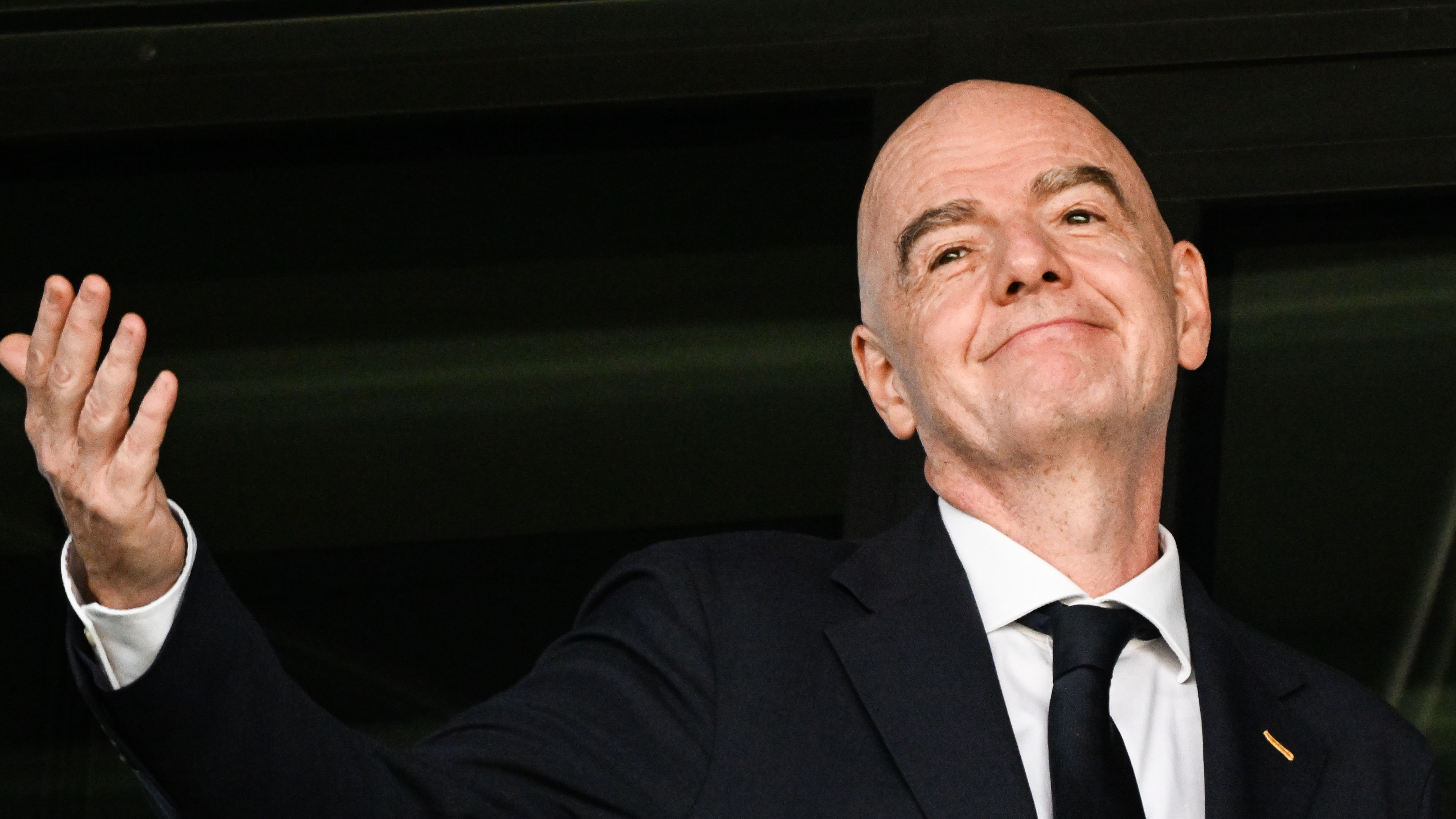

A blow for Morocco? Secret agreement leads the 2030 World Cup final to the Santiago Bernabeu
The battle has not been officially settled.
The media and public rivalry between Spain and Morocco over hosting the 2030 World Cup final rumbles on. FIFA, football's international governing body, sticks to its official position of neutrality, with no final decision yet taken on the venue for the tournament's most important match.
The official verdict may be a year away, perhaps not arriving until 2028, yet the current signs look largely clear. Expectations within the corridors of world football suggest the Santiago Bernabeu in Madrid remains the leading candidate to host the final, while Casablanca and Barcelona look the most likely venues for the two semi-finals.
Nothing fundamental has shifted in the plan announced previously, despite the tension that has surfaced between Spain and Morocco over the race for the final. The data confirms this is not about sporting considerations alone. Political and institutional calculations come into play, alongside the standing of each country within the world football system.
The Bernabeu at the forefront of the scene
Spain wields considerable influence in football, and FIFA has not tried to hide that fact, despite the controversy the rivalry with Morocco has stirred over hosting the final.
Morocco, by contrast, has made significant progress in recent years on the political, sporting and organisational fronts, strengthening its presence within the world football system. Yet the gap with Spain remains in terms of influence, history and institutional weight in football.
According to the circulating data, the Santiago Bernabeu still holds a very advanced position in the calculations for the final. Expectations lean towards one semi-final in Casablanca and the other in Barcelona.
That picture has not changed so far, despite the statements and mutual media campaigns that have reopened the debate over which city will host the closing match, according to the Spanish newspaper "AS".
An unwritten agreement between Real Madrid and Infantino
Press reports have flagged it before: a longstanding, unwritten understanding exists between Real Madrid and FIFA president Gianni Infantino, built on a conviction that the 2030 World Cup final should be held in the Spanish capital, specifically at the Santiago Bernabeu.
This understanding has never reached the stage of an official agreement or a signed document, because FIFA holds the final decision on World Cup venues. Yet the existence of this plan for so long partly explains why Real Madrid's stadium remains at the forefront of the scene.
Relations between Real Madrid and Infantino have cooled in the past period, particularly amid disputes and differing positions between the two parties, including the Spanish club's statement over one of the steps the FIFA president had been planning.
That cooling has not been enough, according to the current data, to scrap the previous plan for the final or to remove the Santiago Bernabeu from the circle of the strongest candidates.
FIFA elections could change much
The 2030 World Cup file cannot be separated from the political scene inside FIFA, especially as the institution itself goes through a period of uncertainty over the future of its presidency.
Several files are expected to become clearer over the coming months, with the federation's presidential elections approaching and Gianni Infantino already pressing ahead with his campaign.
It will also be important to know whether Infantino faces a rival in the elections. That may become clearer towards the end of November, offering a read on the direction of the coming period within the international federation.
The FIFA presidential elections may therefore prove one of the key factors in understanding many of the unknowns tied to the 2030 World Cup, and not just the question of the stadium that will host the final.
A recurring struggle over the host cities
The same scenario keeps repeating. Hosting the 2030 World Cup final turns into a central focus of debate between Spain and Morocco, while the mutual statements reveal that the level of understanding and cooperation between the two is not as ideal as it might appear from the outside.
On various occasions, Spain or Morocco has taken the initiative to push one particular city as the leading candidate to host the final, sparking new waves of debate and controversy.
Part of this controversy reflects, in some cases, a lack of clarity over the mechanism through which the cities and stadiums hosting the tournament's matches will be chosen, according to the newspaper "AS".
The World Cup project does not simply rest on a prior consensus among the organising countries. It is ultimately subject to FIFA, which holds the final word on the various organisational details.
Morocco strengthens its influence
Nobody can ignore the significant development Morocco has seen in the recent period, especially after it became the last country to enter the file to host the 2030 World Cup alongside Spain and Portugal.
Morocco's political and sporting standing has risen notably over the past months, in parallel with repeated media and promotional campaigns focusing on the quality of the stadiums, the infrastructure and the organisational preparations the country possesses.
These campaigns, along with some of Infantino's statements, have raised plenty of questions in the media and among the public, especially over Morocco's ability to snatch the final away from Madrid.
The three countries, when the bid file was still under study, had set out a plan that named the Santiago Bernabeu as the stadium for the final.
That plan never turned into a binding official agreement, because FIFA, as the body responsible for organising the World Cup since 2022, keeps the final decision on all the details of the tournament.
FIFA prepares to take the reins of the tournament
FIFA is expected to start, over the coming months, taking over management of the 2030 World Cup in a more direct manner, after the organising countries spent the previous stage preparing the joint file and readying the infrastructure and stadiums.
One of the first steps is the formation of the company that will run the tournament. That step has not been carried out so far, and no official date has been set for a meeting or a document within the international federation to begin the process.
Once this organisational partnership launches, FIFA will begin managing the tournament's details in practical terms, including deciding the candidate cities to host the matches, according to the newspaper "AS".
Before that comes a review of the documents specific to each city, field visits to the stadiums and facilities, and an assessment of progress on the new stadiums and the updates required in the existing ones so they meet the federation's standards.
Selecting the cities and stadiums will not depend only on statements or media campaigns. It will be subject to a series of technical and organisational procedures led by FIFA.
The decision is still far off
These data reveal that the current controversy over the 2030 World Cup final does not necessarily reflect an official position inside FIFA.
No final decision on the venue has been reached so far, and the official race has not entered its decisive stages. It may take at least another year before the selection process gets clearer, and the resolution may stretch to 2028.
FIFA officials are due to revisit the stadiums and facilities in the race, reviewing their readiness and their capacity to host the tournament's matches in line with international requirements and standards.
What is happening now between Spain and Morocco, then, can be described as an early struggle over influence, image and the political and sporting message, more than an official race that has entered its final stages.
The Bernabeu remains the leading candidate
Despite all these calculations, the Santiago Bernabeu remains strongly present at the heart of the scene. Real Madrid's global standing plays its part, so does Spain's position within the football system, and so does the previous plan that placed the stadium among the options for the final.
Morocco, by contrast, seeks to capitalise on the significant development it has achieved in football, infrastructure and political influence to strengthen its chances, and it will not settle for the role of organising partner.
The last word will not belong to Spain or to Morocco, but to FIFA, which will begin a comprehensive process of evaluating the stadiums and cities in the coming period before reaching its final decision.
The battle over the 2030 World Cup final has not yet begun officially. It has already begun on the media and political level, and the coming months may prove decisive in shaping the fight, especially with the FIFA presidential elections drawing near.
Right now, the picture closest to reality remains the Santiago Bernabeu at the front of the race for the final, with Casablanca and Barcelona in the circle of candidates for the two semi-finals, but with no official decision settling the matter so far.