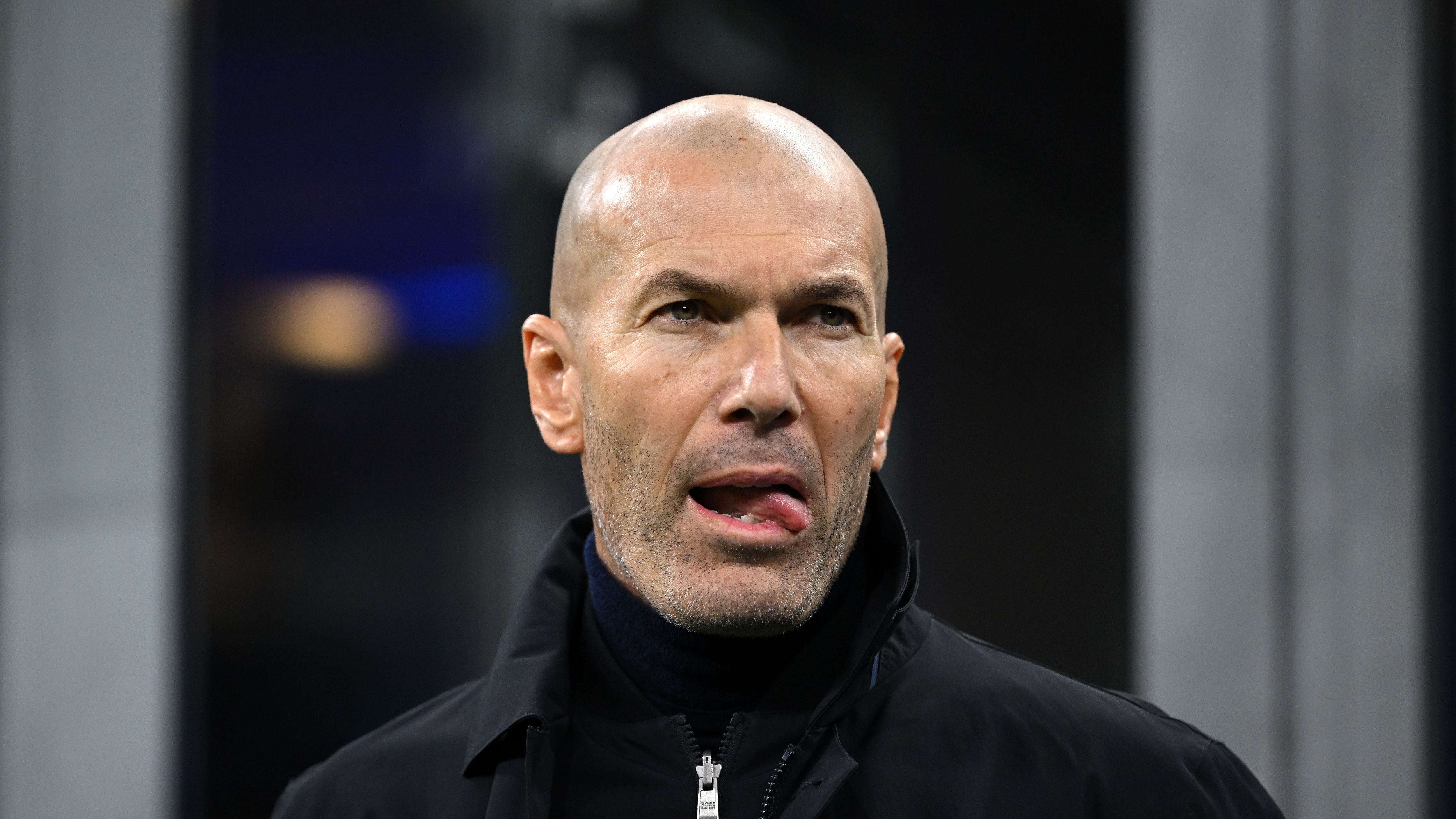

25 minutes of illusion: Italy exposes the other face of Zidane's team
Zinedine Zidane suffered his first real blow since taking charge of France, after Les Bleus fell 3-1 to Italy, in a match that exposed clear contradictions in the team's performance and triggered a wave of criticism over the French coach's choices, especially following the striking collapse in the second half, which turned a promising evening into a night to forget. The defeat was not just a passing stumble, but opened the door to early questions about Zidane's ability to impose his ideas and manage the difficult details.
The defeat against Italy represented France's first loss under Zidane's leadership, in his fifth match since taking charge, after he had begun his tenure with three wins and a draw. The fall at the San Siro came out of nowhere, given the way the French side started. Les Bleus gradually lost their balance and ceded the initiative to opponents who pounced on their retreat and dictated the rhythm until the final whistle, according to the French website "Foot Mercato".
In the opening minutes, France looked a completely different team from the one that trudged off beaten 3-1. Michael Olise gave his country the perfect start with an early goal in the tenth minute, the product of lively attacking movements and advanced pressing that unsettled the Italian defence. Malo Gusto made some errors on the right flank, yet the French pressed on with their attacking attempts and showed a clear desire to control the game.
The real problem lay in the final touch. France simply couldn't turn their superiority into the extra goals that would have handed them the cushion they needed. Barcola and Christopher Nkunku both struck the post, a scene that summed up their lack of cutting edge, before the team fell away sharply after the break. As time passed, the collective pressing vanished and the players lost their ability to create danger. Italy, meanwhile, exploited the spaces and errors to turn the game their way.
Zidane under the guillotine of criticism
The defeat did not pass unnoticed. Christophe Dugarry, Zidane's close friend, was quick to take aim at France's performance on "RMC" radio, arguing that the coach's plan worked at the start before collapsing alarmingly. He said: "There was a plan, and things went well at the start, then it collapsed. There is a lack of confidence, work and communication, and many other things the team needs to improve."
Dugarry pointed to the absence of several key players, among them Jules Koundé, Ousmane Dembélé, Kylian Mbappé, Kingsley Coman, Aurélien Tchouaméni and William Saliba, all of which cost the team its balance and the experience needed to handle moments of pressure. But he refused to accept the absences as a sufficient excuse for the collapse, stressing that the individual errors and the physical decline showed just how much work still awaits Zidane and his staff.
France, Dugarry added, must develop their ability to handle difficult matches rather than rely on technical skills alone. "You can't always show off your technical abilities, you have to be able to give your maximum effort and participate effectively. Look at the fighting spirit the Italians showed! This team will learn how to suffer and deal with difficult circumstances." He called the second-half collapse a heavy blow, but perhaps a necessary lesson for the group.
Zidane's substitutions raise question marks
Not that the criticism stopped at the collective performance. It extended to Zidane's technical decisions, above all the timing of his substitutions and the players he chose to bring on. The French coach waited until the 77th minute to make his changes, then handed Mayulu, Kroupi and Koumbédi their first international appearances. Blooding new faces matters, but the timing raised questions over whether the coach had effectively given up on the result.
More experienced names sat on the bench, such as Warren Zaïre-Emery and Eduardo Camavinga, and Zidane could have called on them earlier to try to regain control of midfield. He was also criticised for keeping Malo Gusto on despite his obvious struggles on the right flank, and for failing to move quickly to plug the leak Italy kept exploiting. Dugarry said: "It's Zidane's decision, but it hasn't proven right so far. It's strange that he doesn't try Zaïre-Emery."
Zidane had explained his thinking on the Paris Saint-Germain player, insisting he wants to see him in midfield and in his natural position rather than shuffled through different roles. The coach clearly prefers specialists in their positions before turning to versatile players, but this conviction did nothing to stem the criticism, especially with the team crying out for urgent solutions during the match.
Daniel Riolo, also speaking on "RMC" radio, joined the queue of critics. Some of Zidane's choices made no sense to him, and the team seemed to lose its identity for spells of the game. He said: "There are things I didn't understand, and Zidane's choices raise doubts in some positions. We put in 25 good minutes, but after that we felt deeply confused, so much so that I no longer knew who was playing in which position, and who was doing what."
So the defeat against Italy became the first real test of Zidane's reign with Les Bleus. It exposed problems that run deeper than the result, reaching into cohesion, effectiveness and his technical decisions. His tenure may still be in its infancy, yet the loss left the coach facing questions he cannot ignore: how to keep the team's level up for 90 minutes, how to cope with absences, and when to intervene. A good start is no longer enough. Zidane must now prove he has real solutions when things turn awkward.