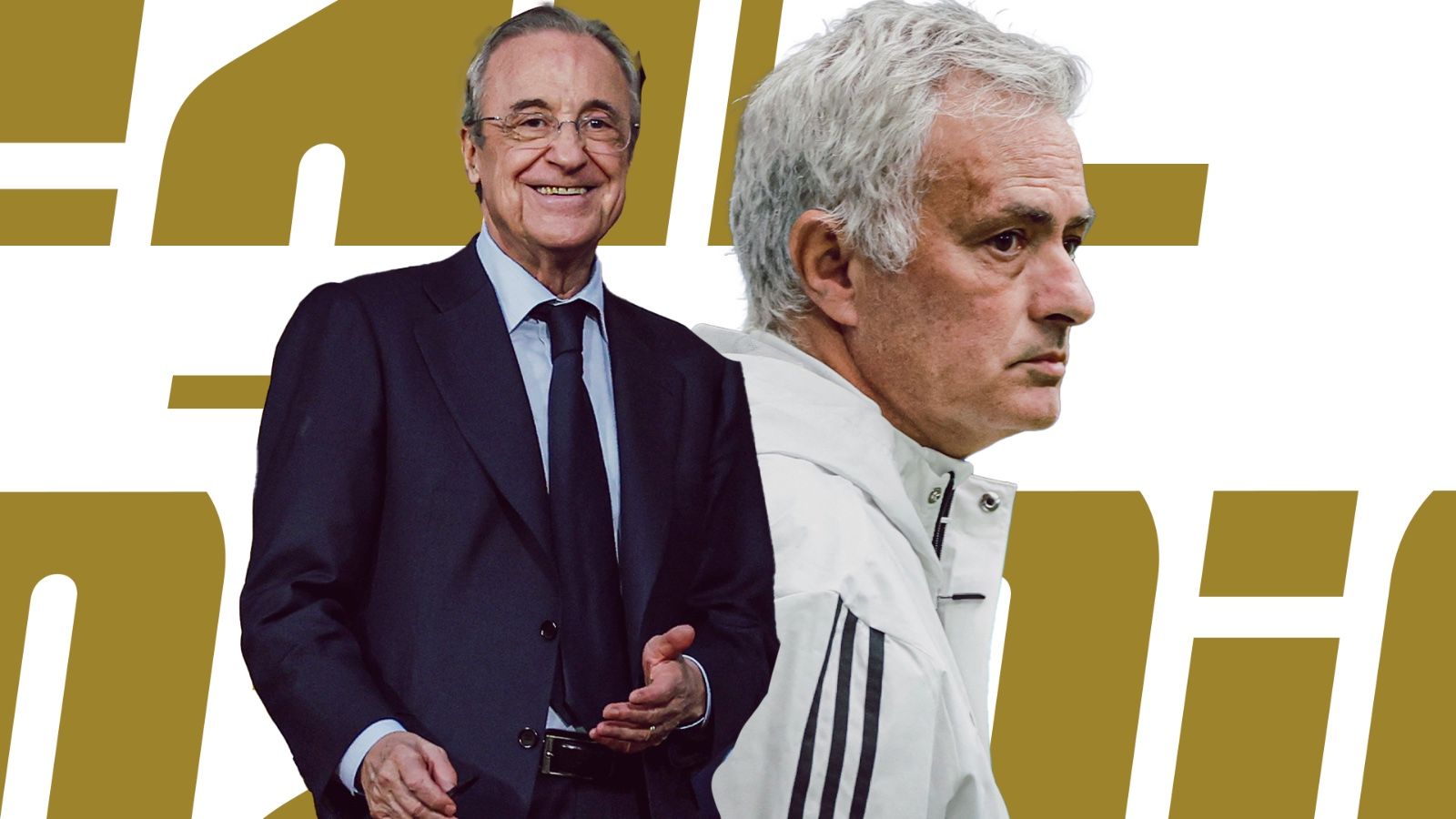

Mourinho raises the banner of defiance: Real Madrid begin the war to bring down Barcelona
Amid a trophy drought, Real Madrid have moved aggressively into the transfer market, placing the rebuilding of the squad and the recovery of their domestic and continental dominance at the top of their priorities. Two seasons have now passed without a major trophy. The Merengues have opened their coffers to strengthen their ranks, hoping to end Barcelona's dominance under Hansi Flick and return to the winners' podiums.
A year ago, Real Madrid had completed one of their most successful deals since 2019. This summer they widened the scope of their investments. More than a third of their spending on signings over the last five years came in the past few months, a clear sign of the scale of change the club is targeting.
€225 million to reshape Real Madrid
Diomande, Cucurella, Espí and Dumfries. Real Madrid have splashed out around 225 million euros to bolster José Mourinho's squad.
Ivorian Diomande arrives as the most expensive deal in the club's history, while Real Madrid handed Chelsea 55 million euros for Cucurella.
Levante banked 25 million euros from the Espí deal. Dumfries, meanwhile, cost 20 million euros from Inter Milan.
Two more names bolstered the ranks on free transfers. Bernardo Silva and Konaté both arrived after running down their contracts at Manchester City and Liverpool respectively.
Real Madrid tops the Spanish transfer market
Six deals have taken Real Madrid to the top of La Liga's biggest spenders this summer, accounting for around 40% of the total outlay by the competition's clubs. That figure has now passed 560 million euros, according to the Spanish newspaper "AS".
The scale becomes clearer with another comparison. Real Madrid have already spent more than Barcelona and Atletico Madrid combined. Barcelona's outlay reached around 100.5 million euros against 102 million euros for Atletico Madrid, and both clubs still have anticipated deals to complete, among them Rodri and Cuti Romero.
Real Madrid's influence stretches beyond Spanish football. Among the six biggest spenders in the market this summer, the Spanish club is the only one from outside the Premier League.
A new strategy without abandoning the club's identity
Real Madrid's current transfer business tells its own story: they want the La Liga title and the Champions League back, and they want to end two years without a trophy.
A season that finished empty-handed forced the board to widen their approach in the market. Real have leaned on two main strategies in recent years. They sign promising young talents for the future, and they squeeze value from experienced players through low-cost deals or free transfers.
Bellingham and Tchouaméni fell into that first category, two of the club's most expensive signings over the past five years. Rüdiger, Trent and Joselu stood out as the clearest examples of the second, the hunt for seasoned professionals.
This summer, Real broadened their horizons without abandoning their identity. They signed talents for the future such as Diomandé, alongside players who can make an immediate impact like Konaté and Bernardo Silva, both on free transfers.
Then came the real twist. Cucurella, 27, and Dumfries, 30, arrived in a striking break from everything that came before.
A striking shift in transfer policy
Trent stands as the exception, with Real Madrid paying 10 million euros to bring forward the end of his Liverpool contract and secure his participation in the Club World Cup. Beyond him, the club has not paid a transfer fee for a player over the age of 23 since signing Eden Hazard and Ferland Mendy in 2019.
Go back to Luka Modric in 2012, during Jose Mourinho's first spell in charge, and Real Madrid have paid a transfer fee for only five players over the age of 25: Hazard, Thibaut Courtois, Keylor Navas, Kiko Casilla and Diego Lopez. The latter two, it should be noted, graduated from Real Madrid's academy.
This summer, the club has torn up that rule. They are leaning more heavily on players capable of making an immediate impact while still investing in the future.
Real Madrid's academy funds the rebuild
Real Madrid's heavy spending in the transfer market didn't happen in isolation from the club's economic policy. Their academy, "La Fábrica", played a pivotal role in financing it, with player sales and the revenues from their rights growing remarkably.
The academy has already generated around 199 million euros from player sales and returns linked to percentages of rights the club retained in a number of deals.
Gonzalo left for 40 million euros, with Real Madrid keeping 30% of his rights. Como paid 60 million euros for 50% of Nico Paz's rights, part of which the Merengue club still retains.
Another 20 million euros came in from the Víctor Muñoz deal, on top of returns from the transfers of Palacios, Jacobo Ortega, Mario Gila, Álvaro Rodríguez, Álex Jiménez, Fran García and Mario Martín.
Direct and indirect operations have strengthened the team on the pitch and boosted the club's revenues, all without upsetting the economic balance that has long been one of the most prominent features of Real Madrid's management.