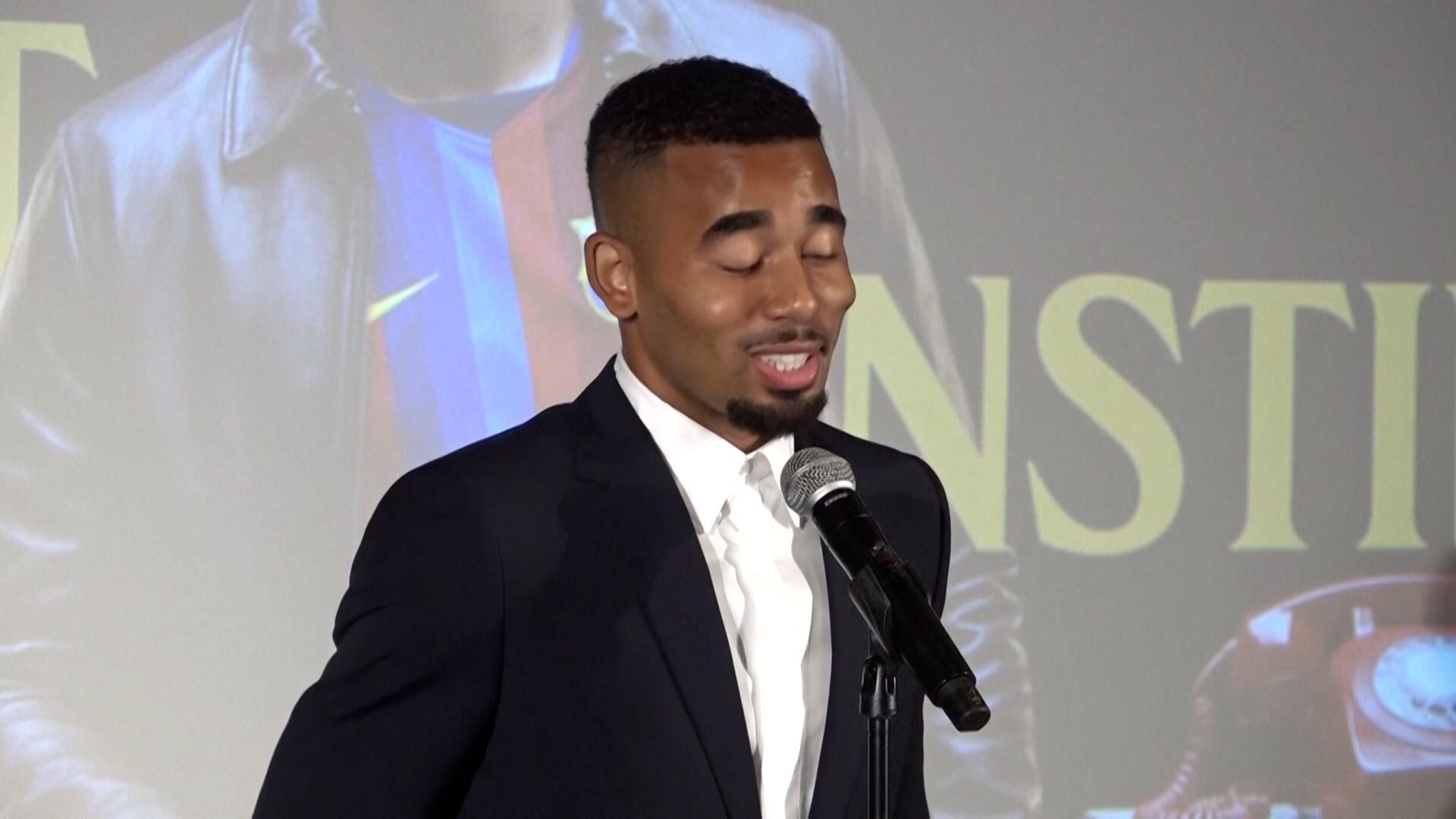

9 months of persistence and evasion: how Barcelona signed Gabriel Jesus
Deco ruled out the deal until the very last moment of the transfer window
Gabriel Jesus's arrival at Barcelona was full of curiosities and surprising circumstances. The Brazilian striker joined Flick's side in the final stage of the transfer window, closing the deal almost in a flash. Yet it had sat on Deco's table for many months, according to the Catalan newspaper Sport.
Nobody made a secret of Barcelona's focus on Julian Alvarez, and Atletico Madrid refused point blank to part with one of their most prominent players. The scenario was ideal for every agent knocking on Deco's door to offer their best strikers.
Read also
Abdelkarim the latest example: Neymar's ghost still appears at Barcelona
In an official statement: Asensio breaks his silence in the sex video case
The list of strikers on offer ran long, but the name that concerns us here is Jesus. At the end of last November, the Brazilian had recovered from his injury and was training normally under Arteta. Arsenal were locked in the Premier League battle, and the coach wanted no more changes than necessary. Jesus, meanwhile, needed minutes to rediscover his lost level.
The solution was clear: find him an exit during the winter transfer window.
Deco learned in December that Jesus could be a genuine option to strengthen Barcelona, an economically affordable deal that could be completed once the winter window reopened. The move carried risks, of course, after the Brazilian had spent months out of action. But it was exactly the kind of unexpected swoop the Catalan club had grown used to pulling off in January.
Ruling out the deal
Deco studied the matter, then ruled out Jesus's arrival. The timing was wrong to add another striker, especially a player who was not physically ready to deliver an immediate return. Deco and Flick reckoned Lewandowski, even at half his power, alongside Ferran Torres, would be enough until the end of the season.
Postponed, the Jesus file was not closed for good. Veteran agent Giovanni Branchini's office, working with the "Roc Nation Sports" agency, kept the Brazilian's name constantly in the frame.
The persistence changed nothing. Deco's answer held firm throughout the first half of 2026. He valued the player's undeniable quality, but insisted the order of Barcelona's needs put other names first. As ever, Julian Alvarez stayed outside the circle of discussion.
Summer came, the World Cup ended, and Barcelona still had not resolved their doubts about their central striker. Lewandowski's official departure to the United States reopened contacts and sparked some negotiations, but they all dissolved early, because Deco would not budge an inch from his official position: the focus remained on signing Alvarez.
Back onto Deco's table came the Jesus file, and the answer was the same: not an option for Barcelona. There was not even any contact with Arsenal to explore ways to negotiate, or to sound out the initial figures for a possible transfer.
Plan "B"
This time the market did not spare Deco. Barcelona concluded plenty of good deals, no doubt about it, but the sporting department's biggest target slipped away. With Alvarez impossible, it was time to turn to the frightening plan "B" they had kept putting off for months.
Deco returned, with Flick's approval, to pushing the file forward. Lautaro Martinez himself confirmed there had been contacts with Barcelona a few days after the window closed, and in Belgium the Blaugrana's interest in Tresoldi was confirmed too. Neither file reached the Spotify Camp Nou, and a long list of names surfaced with varying degrees of seriousness.
The Jesus operation turned around during Barcelona's match against Athletic Bilbao. On 27 August, Deco realised the time had come for decisive decisions. He knew Arsenal were ready to facilitate the deal for a reasonable 10 million euros, and all that remained was to agree the player's salary.
Within 24 hours, they closed it. The Brazilian reduced his salary, while Barcelona agreed to grant him a guaranteed third year in his contract. Every party came away satisfied.
Nine months of almost continuous contacts ended with the deal done, and Jesus became a Barcelona player. One question now lingers: will the player regain his physical fitness and reach the level he has lacked for so long, the very matter that raised Deco's reservations back in late 2025?