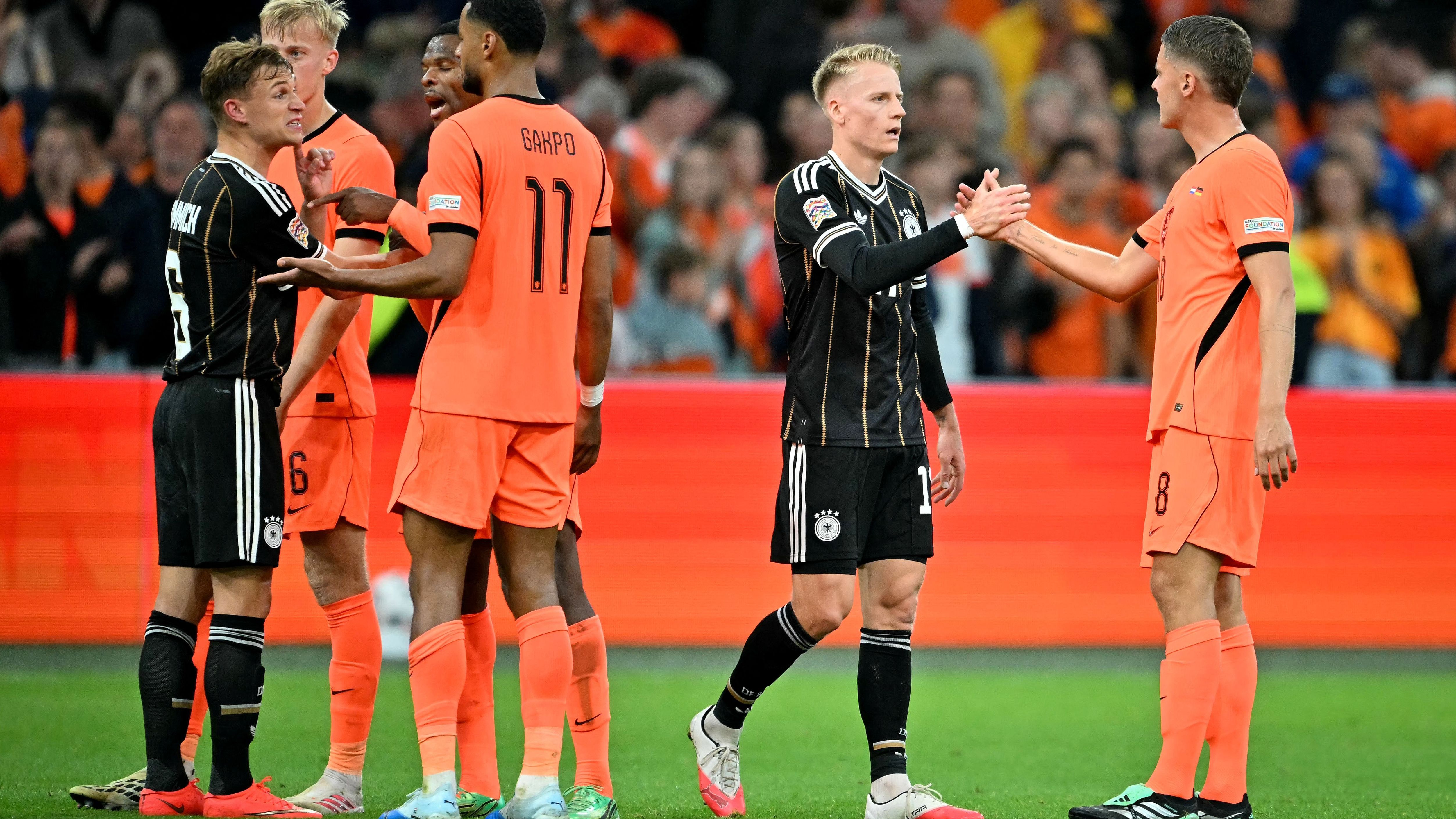

Netherlands vs Germany: Winners & losers - Cody Gakpo rescues Xavi as Jürgen Klopp’s experimental debut ends in stalemate
Xavi Hernández and Jürgen Klopp both marked their international managerial debuts with a hard-fought 1-1 draw in Amsterdam. While Cody Gakpo's late equaliser saved the Dutch, Felix Nmecha's midfield dominance provided a glimpse into Klopp's tactical future.
The dawn of a new era for two of Europe’s most storied footballing nations arrived at the Johan Cruijff Arena, with Xavi Hernández and Jürgen Klopp taking their respective seats in the international dugout for the first time. The atmosphere in Amsterdam was charged with the expectation of tactical evolution, as Xavi sought to reinstall the possession-heavy DNA of the Oranje while Klopp unleashed his trademark intensity upon a transitional German roster.
It was a match of two distinct halves; Germany controlled the central corridors for much of the first hour, deservedly leading through a Felix Nmecha strike, before the Netherlands’ relentless late pressure eventually breached the visitors. While the 1-1 scoreline shared the spoils in League A Group 2, the tactical data points and individual performances suggested that both managers have significant work to do before their grand visions fully crystallise.
Winners
Cody Gakpo
When his nation needed a talismanic moment to avoid a damp debut for Xavi, Cody Gakpo stepped up in the second minute of stoppage time. The Liverpool forward has faced questions regarding his consistency at the club level, but in the orange shirt, he remains the undisputed heartbeat of the attack. His equaliser was a masterpiece of positioning and timing, capitalising on a late surge that rewarded the Netherlands' 55% possession share.
Gakpo’s goal does more than just secure a point; it validates Xavi’s decision to build the front line around his directness. By salvaging a draw against their fiercest rivals, Gakpo has ensured that the new managerial tenure begins without the crushing weight of an opening-day defeat. His ability to produce high-leverage goals will be the cornerstone of the Netherlands' campaign to reach the Nations League finals.
Felix Nmecha
Jürgen Klopp’s selection of Felix Nmecha was perhaps the most telling tactical signal of the evening. Tasked with anchoring a midfield devoid of veteran presence, Nmecha delivered a performance of cerebral dominance. His goal in the 32nd minute was a clinical illustration of late-arriving midfield runs, a trait Klopp valued immensely during his years at Anfield. Nmecha didn't just score; he dictated the tempo against a Dutch trio that looked technically superior on paper.
With legends like Manuel Neuer and Antonio Rüdiger retiring, and elite stars like Florian Wirtz being rested, Nmecha has seized the opportunity to become the face of Klopp’s "Gegenpressing" revolution. His physical profile combined with technical security makes him the ideal hybrid midfielder for the modern international game, likely cementing his place in the starting XI for the foreseeable future.
Marc-André ter Stegen
Confirmed as Germany’s absolute number one by Klopp before kick-off, Ter Stegen produced a performance that mocked the long years he spent in Manuel Neuer’s shadow. Making eight saves in total, the Barcelona stopper was the only reason Germany remained in the lead for as long as they did. He was particularly impressive in one-on-one situations, thwarting a Dutch attack that registered nine shots on target and a significantly higher Expected Goals (xG) of 2.65.
This match served as a definitive statement of intent from Ter Stegen. Under a manager who demands his goalkeepers be proactive and brave, he showed he can anchor a defensive unit that is currently undergoing a massive structural overhaul. The save percentage he maintained under intense Dutch pressure in the final twenty minutes will go a long way in silencing any lingering debate over the German goalkeeping hierarchy.
Losers
Jan Paul van Hecke
It was a night to forget for the Brighton defender, who struggled with the pace and spatial awareness required at this level. Van Hecke looked uncomfortable from the outset, picking up a yellow card in the 24th minute after being caught out of position by the movement of Kai Havertz. His hesitation in defensive transitions often left Virgil van Dijk exposed, and he was fortunate not to be further punished by a German side that thrived on the counter.
The fallout for Van Hecke could be severe. With Xavi demanding a high defensive line and precise ball-playing capabilities, any defensive liability is magnified. Given the depth available to the Netherlands when fully fit, Van Hecke’s failure to secure the backline in this opening fixture may see him slide down the pecking order as Xavi looks for more reliable partners for his captain.
Kai Havertz
While Germany looked dangerous in spells, Kai Havertz endured a frustrating evening that was cut short by injury in the 30th minute. Before his forced withdrawal, Havertz struggled to act as the focal point Klopp requires. Despite the manager's public backing, Havertz failed to register a meaningful shot on target and often drifted too deep, leaving the German attack without a presence in the penalty area.
The timing of his injury is particularly damaging. Klopp is currently assessing a massive 44-man pool of talent, and Havertz’s absence allows other forwards to stake their claim in the upcoming fixtures against Greece and Serbia. If the experimental fringe players impress in his absence, Havertz may find his "locked-in" status as the primary striker under threat in this new era.
Nadiem Amiri
Inserted into the creative hub of Klopp’s 4-2-3-1, Nadiem Amiri failed to provide the spark needed to kill the game off. While he was industrious, his discipline let him down; a yellow card in the 68th minute was followed by his substitution just twelve minutes later as Klopp looked for more defensive solidity. In a game where Germany had fewer shots and less possession, the number ten needed to be far more clinical in transition.
Amiri is fighting for a permanent spot in a squad that will eventually reintegrate world-class talents like Florian Wirtz. By failing to dominate the creative spaces and ultimately being hauled off before the Dutch equaliser, he missed a golden opportunity to prove he belongs in the elite tier of Klopp’s midfield options. The lack of impact in Amsterdam could lead to his exclusion from the next competitive squad selection.
Conclusion
Ultimately, this stalemate provided more questions than answers for both Xavi and Klopp. The Netherlands showed admirable spirit to fight back, yet their injury-ravaged midfield remained a point of vulnerability. Germany displayed flashes of the high-intensity "Kloppo" style but lacked the ruthlessness to secure all three points. As both nations transition into these high-profile managerial eras, a draw feels like a fair, if slightly underwhelming, reflection of two projects that are very much still in the laboratory phase.