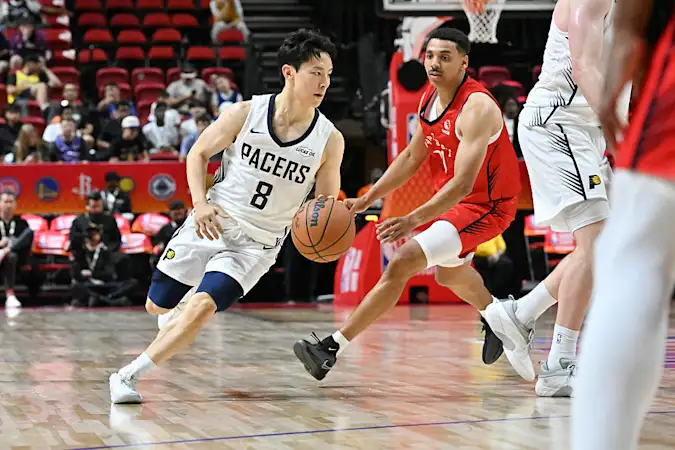
Basketball favours height, but it has never belonged exclusively to the tallest players. We highlighted the tallest players in the NBA, now let’s focus on the smalls balling hard.
Shorter guards cannot simply shoot over defenders or finish above the rim. They must find different routes through the game, using tighter ball-handling, sudden acceleration, sharper changes of direction and the ability to squeeze through gaps before they disappear.
A low centre of gravity can become a weapon. The ball stays closer to the floor, crossovers become harder to reach and taller defenders must turn their hips against players capable of changing direction in an instant.
Size may decide the physical battle. Smaller guards make sure that battle never takes place on comfortable terms.
So, who are the shortest players entering the 2026-27 NBA season, and which players rank among the smallest in league history? The NBA was at its shortest during its inaugural 1946-47 season, when the average player stood just over 6ft 2in. Since then it the average height has risen:
1947-48: 6ft 2.5in
1948-49: 6ft 3.2in
1949-50: 6ft 3.6in
2025-26: roughly 6ft 7in
Player | Team | Height |
|---|---|---|
Yuki Kawamura | Indiana Pacers | 5ft 7in |
Isaiah Stevens | Sacramento Kings | 5ft 11in |
Ryan Nembhard | Dallas Mavericks | 5ft 11in |
Jordan McLaughlin | San Antonio Spurs | 5ft 11in |
Aaron Holiday | Houston Rockets | 6ft |
Chucky Hepburn | Toronto Raptors | 6ft |
Jahmir Young | Miami Heat | 6ft |
Davion Mitchell | Miami Heat | 6ft |
Jevon Carter | Orlando Magic | 6ft |
Jose Alvarado | New York Knicks | 6ft |
Yuki Kawamura: 5ft 7in
At 5ft 7in, Yuki Kawamura is comfortably the shortest player entering the 2026-27 NBA season.
The Japanese guard is eight inches shorter than the next-smallest players on the list, but his game is built around the abilities that allow undersized guards to survive.
Kawamura keeps the ball low, changes pace sharply and attacks openings before defenders can close them. He does not simply run quickly. He manipulates speed, slowing down long enough to shift the defender’s weight before bursting in another direction.
His passing is equally important. Kawamura averaged 3.4 points and 2.6 assists across 18 appearances for Chicago during the 2025-26 season, despite playing only 11.6 minutes per game.
At his height, every possession creates another puzzle. Passing lanes are obstructed by longer arms, shots near the basket are difficult to release and defensive switches can leave him guarding players almost a foot taller.
His answer is speed of thought as much as speed of movement.
Isaiah Stevens: 5ft 11in
Isaiah Stevens enters the season at 5ft 11in, sharing second place with Ryan Nembhard and Jordan McLaughlin. NBA.com currently lists Stevens as a Sacramento Kings guard.
Stevens cannot rely on overpowering defenders. His effectiveness comes from controlling the rhythm of a possession, using hesitation dribbles, changes of direction and tight turns around screens to manufacture space.
That efficiency of movement is vital for smaller guards.
A taller ball-handler may recover from a loose dribble through reach or strength. An undersized point guard needs the ball protected, the angle calculated and the next pass identified before the defence reacts.
For Stevens, regular minutes will be earned through organisation and decision-making rather than physical dominance.
Ryan Nembhard: 5ft 11in
Ryan Nembhard is also listed at 5ft 11in and enters the season with the Dallas Mavericks.
His game is based on control. Nembhard reads the floor, protects his dribble and changes speed rather than attacking every possession at full throttle.
Constant speed eventually becomes predictable. A guard who can stop, pause and accelerate again forces the defender to repeatedly reset his balance.
One sharp burst can then create enough room for a floater, pull-up jumper or pass to a rolling centre.
Nembhard must prove his playmaking can withstand the NBA’s longer and faster defenders. Like many small guards, his route to success depends on making the correct decision before his physical limitations become relevant.
Why Can Shorter Players Thrive in Basketball?
Shorter players are not automatically quicker or more skilful, but their size encourages a different set of weapons. They usually dribble closer to the floor, making the ball harder to steal and allowing faster crossovers and changes of pace. A lower centre of gravity helps with sharp turns, while short bursts of acceleration can punish defenders who lean the wrong way. Court vision matters too, as smaller guards must anticipate passing lanes before they open. Around the basket, floaters, reverse lay-ups and wrong-foot finishes help them avoid taller shot-blockers and create scoring angles that others may not see.
Who Are the 10 Shortest Players in NBA History?
Historical measurements are not always consistent. Spud Webb, for example, has frequently been described as 5ft 7in, while his current NBA profile lists him at 5ft 6in. The table below follows NBA-listed measurements where available.
Player | Teams | Height |
|---|---|---|
Muggsy Bogues | Washington Bullets, Charlotte Hornets, Golden State Warriors, Toronto Raptors | 5ft 3in |
Earl Boykins | New Jersey Nets, Cleveland Cavaliers, Orlando Magic, LA Clippers, Golden State Warriors, Denver Nuggets, Milwaukee Bucks, Charlotte Bobcats, Washington Wizards, Houston Rockets | 5ft 5in |
Mel Hirsch | Boston Celtics | 5ft 6in |
Spud Webb | Atlanta Hawks, Sacramento Kings, Minnesota Timberwolves, Orlando Magic | 5ft 6in |
Yuki Kawamura | Memphis Grizzlies, Chicago Bulls, Indiana Pacers | 5ft 7in |
Greg Grant | Phoenix Suns, New York Knicks, Charlotte Hornets, Philadelphia 76ers, Denver Nuggets, Washington Bullets | 5ft 7in |
Keith Jenkins | Golden State Warriors | 5ft 7in |
Red Klotz | Baltimore Bullets | 5ft 7in |
Wat Misaka | New York Knicks | 5ft 7in |
Monte Towe | Denver Nuggets | 5ft 7in |
Muggsy Bogues: 5ft 3in
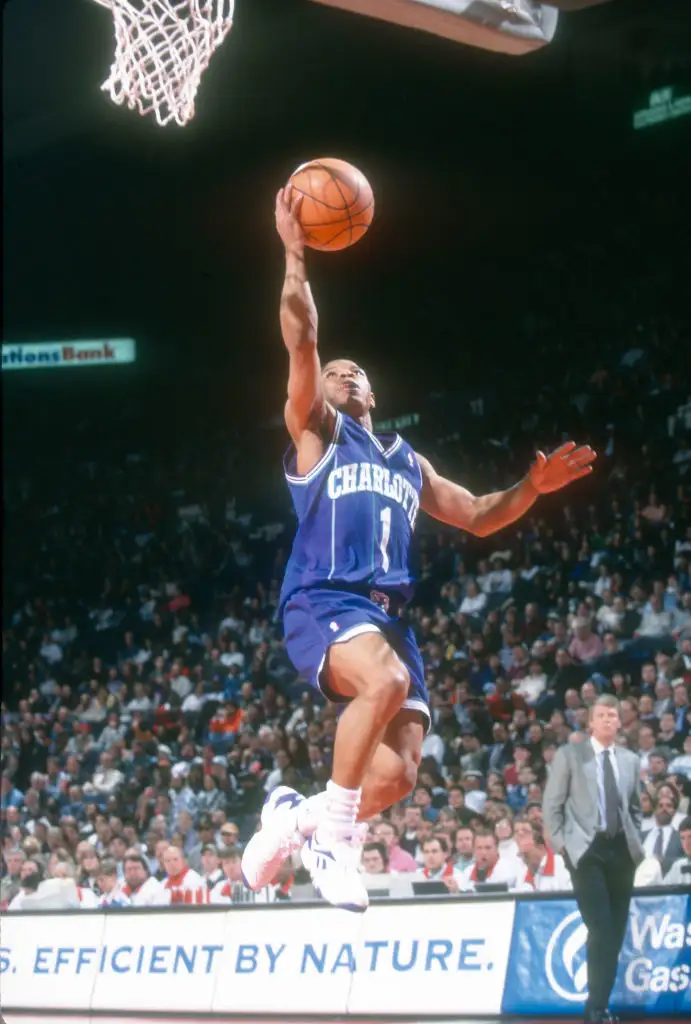
Muggsy Bogues remains the shortest player in NBA history at 5ft 3in.
That fact makes his 14-season career remarkable, but Bogues was not kept in the league as a novelty. He became an outstanding organiser, disruptive defender and one of the fastest guards of his generation.
Bogues recorded 6,726 assists during his career and remains Charlotte’s leader in assists and steals. During the 1993-94 season, he averaged a double-double with 10.8 points and 10.1 assists per game.
He used his low position to pressure the ball, attack exposed dribbles and escape from larger opponents attempting to post him up.
Bogues could not change his height. He changed how opponents experienced it.
Earl Boykins: 5ft 5in
At 5ft 5in, Earl Boykins became the second-shortest player in NBA history and still enjoyed a 14-year career.
He averaged 8.9 points and 3.2 assists, with several productive seasons as an explosive scorer from the bench.
Boykins combined speed with unusual strength. Bigger guards often tried to take him into the post, but his balance and powerful frame made those matchups less straightforward than they appeared.
In 2005, he scored 15 points during a single overtime period for Denver, taking control of a game despite being the smallest player on the court.
Spud Webb: 5ft 6in: Slam Dunk Contest Winner.
Spud Webb supplied perhaps the greatest reminder that height and jumping ability are not the same thing.
The 5ft 6in guard averaged 9.9 points and 5.3 assists across 12 NBA seasons, but he is best remembered for winning the 1986 Slam Dunk Contest.
Webb defeated Atlanta Hawks teammate Dominique Wilkins, one of the most powerful dunkers in basketball history, by producing three perfect scores.
His career demanded more than leaping ability. Webb needed speed, control and a reliable playmaking game to remain effective over more than 800 appearances.
The dunks made him famous. His guard skills kept him employed.
Does Height Matter for NBA Guards?
Of course it does.
Shorter players face real disadvantages. They have less margin for error when shooting, defending and passing through traffic. Every opponent has the potential to create a mismatch.
But basketball is not a standing reach competition.
The smallest guards turn their supposed weakness into a different style of play. They remain low, accelerate quickly and force taller defenders into movements their bodies are less comfortable making.
Height can help a player reach the NBA.
Handles, timing, intelligence and the ability to change direction can help someone stay there. This season, make sure you’re following NBA News here, as LeBron’s final season unfolds with his new team, the Philadelphia 76ers.