The views and opinions expressed in this article are those of the author and do not necessarily reflect the official editorial policy or position of LiveScore.
In the modern NBA, position labels blur. Wings initiate offence, guards screen, and centres stretch to the perimeters. The modern NBA athlete must do it all. Giannis Antetokounmpo is a fine example. Victor Wembanyama too. How is he scoring that many three pointers for a man of his size? Positionless play is the requirement.
Despite this, in the Western Conference, it is brutally clear: elite teams still need a reliable, defensive, two-way centre presence who can run the distance of an entire season and post. The LA Lakers this season, for all their star power, are lacking at this position despite having two on the roster, and are paying a heavy price.
How Lakers Compare Against League Rivals
Before exploring the central void, let’s examine how the Lakers are doing so far this season, as they hover between 4th and 5th in the Western Conference.
The numbers point to the fact that Lakers’ center position remains functional not dominant. Respectable numbers get stacked, but nothing close to what elite teams are getting from their bigs.
Deandre Ayton is the clear focus point. He is averaging 13.9 points per game and just under 9 rebounds per game, leading the Lakers in rebounding while scoring efficiently at the rim,. His finishing remains a strength, on nights when he’s engaged, but what he has not provided is clear rebounding dominance.
Behind him, Jaxson Hayes continues in a limited, high-energy role. His averages are significantly lower than Ayton’s. About six points and four rebounds per game, numbers that reflect his minutes and usage. He brings athleticism and pace but his rebounding impact is marginal when compared to starters across the league.
The comparison is where the gaps get even bigger. Around the NBA, elite bigs continue to set the standard. Nikola Jokić gets just shy of 30 points per game plus 12 rebounds. Rudy Gobert and Karl-Anthony Towns grab 11 rebounds. Many teams are almost getting more rebounds from one player, than both of Laker’s bigs combined
The Trade: Winning Offence, Losing Certainty
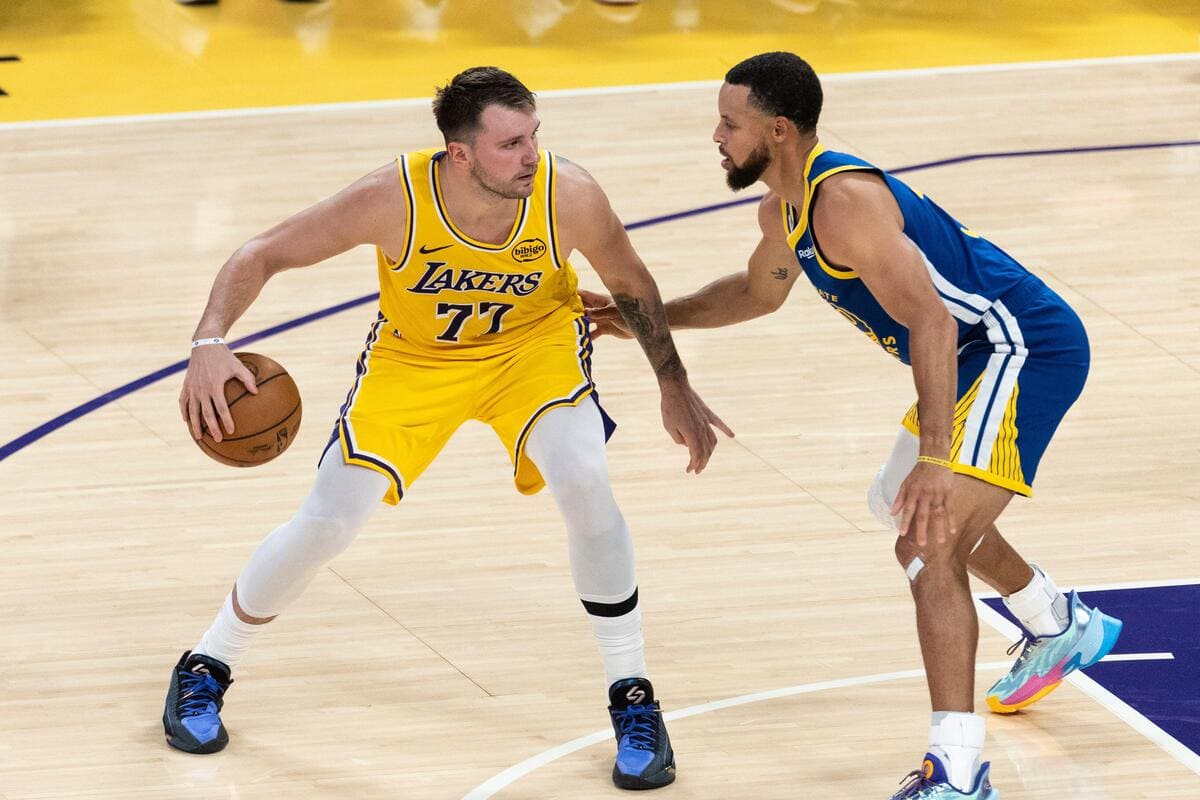
Anthony Davis is still the first name that pops to mind when you think of a Laker’s centre. Their last championship, discussed below, came when he pulled the team together. Yes, he was dogged by injuries, and the Mavs have yet to see any value; the Lakers won that trade. But did they really? Dončić is one of the league's rare offensive systems in human form. He dictates tempo, collapses defences, and makes late-game execution feel routine, rather than desperate. From the moment he arrived, the Lakers’ offence gained clarity. Possessions slowed when they needed to, shot quality improved, and the margin for error widened.
But trades do not exist in isolation, no matter how dodgy this one felt. They rearrange responsibility on the floor. And the cost of the Lakers’ offensive upgrade was the gradual erosion of something they once took for granted: defensive clarity in the paint.
For years, AD had been the solution to multiple problems at once. He was the rim protector, the switch defender, rebounder in chief, and when required, the small-ball centre who closed playoff victories. The 2020 Championship was built on that versatility. They were not just good defensively, they were inevitable. Teams could not shoot uncontested; they had to rush and were made uncomfortable.
That version of the Lakers defended first and asked questions later. The Lakers/Mavs trade reversed that order entirely. Now the Lakers ask offensive questions first, and hesitate defensively.
2020 as a Reference Point, Not a Memory
The 2020 title is not ancient history. It shows what the Lakers look like with their house in order. That team did not rely on shooting variance or pace. It controlled the space.
Davis’ postseason numbers were huge, but the subtler nuances mattered more. Rotations were easier with him. Opponents were worse under the rim. Davis erased mistakes before they were amplified. The Lakers finished the playoffs with the best defensive rating in the league.
The key there: defensive clarity. Davis stuck to his role. A lot was demanded of him, but he was never confused. He played centre when it mattered but was not asked to absorb every collision over the gruelling 82 game season. There was a structure built around him, even if it was imperfect.
That structure was disassembled with his trade, and it has not even begun to take shape around Dončić or Lebron yet.
Two Centres, Still No Anchor
In response, the Lakers did what logic demanded: fill that gap. They added centres. Hayes proves athleticism, vertical spacing and pace. Ayton arrived with more experience, size and a promise of stability, together with a redemption arc in waiting.
Problem solved right? Well, not entirely. The shape shifted again.
Hayes is useful in bursts. He runs the floor hard, finishes lobs and offers moments of defensive clarity. But his game is fragile. He is only 25 years old. Foul trouble, which comes with inexperience, limits his time on the court. Positional discipline waivers. It’s almost a lack of focus, which will increase with age. His rebound numbers still fluctuate heavily between games. He is not yet a solution, but an accessory. A player to deploy, not build around. But his potential is huge. His character is obvious.
Ayton was signed to counter that. He is built differently. Two years Hayes’ senior, but with playoff pedigree. A former number 1 pick, a centre who held his own on a Finals stage. His numbers show reliability: efficient scoring, double-digit rebounds, size that demands respect. Yet his Lakers tenure reveals ambiguity.
Ayton fills the space, but does not control it. His rim protection comes and goes. His buckets dry up. His rebounds are solid, but not overwhelming. He oscillates between roles without fully imposing himself as the defensive anchor the Lakers crave. He is present but not authoritative. And herein lies the problem.
This leaves the Lakers caught between two incomplete answers. Hayes gives the energy without consistency. Ayton gives them size without dominance. Neither has emerged as the centre, the positional reference point that simplifies decisions for everyone else.
Is it a case that the Laker’s main duo, Dončić’s and Lebron are floor leaders that cast a shadow on their teammates? Or is it a simple case of giving Ayton time, as this is his maiden season as a Laker. Let’s examine their star duo.
The Defensive Cost of Offensive Brilliance
Dončić’s presence magnifies this uncertainty. His offensive control is so total that it demands clarity elsewhere. Historically, Dončić has thrived alongside centres who provide two things: reliable screening and dependable backline defence. Those players turn his manipulation of space into efficient output and cover for his defensive limitations.
In Los Angeles, that ecosystem is incomplete. Dončić creates advantages, but they do not always resolve cleanly. Defensive positions stretch longer than they should. Second-chance points accumulate. Perimeter defence collapses earlier, knowing there is not absolute deterrent behind them.
The Western Conference Context
The matter is important because of where the Lakers play. The Western Conference remains defined by bigs who give teams their identity. Denver’s offence flows through Nikola Jokić with serene inevitably. Minnesota’s defence begins and ends with Rudy Gobert’s spatial control. Sacramento’s physicality is embodied by Domantas Sabonis. Oklahoma City Thunder, young as they are, know exactly what Chet Holmgen does and where he is.
These teams do not debate their middle. They build from it.
The Lakers, by contrast, negotiate theirs nightly. Lineups shift, roles blur. Their centre position becomes reactive, often in-play. It would be unfair to say the Lakers haven’t tried to address the issue. Hayes and Ayton represent genuine attempts to build. But the void is narrowed, and not closed.
Identity Still Lives in the Middle: Fix It
The Laker’s recent history offers a clear lesson. When the interior was resolved, they won a championship, and they are not that far off from that 2020 skeleton. Dončić immediately raised their offensive ceiling. Lebron still gives them the numbers, but defensive clarity is still a major concern. Until one emerges as a true anchor, they have to rely heavily on an injury prone offence, and a small bench. In a conference dominated by bigs, unresolved space under the rim still defines seasons.
Balance in this LA Lakers roster is a clear issue. Now a new name is being heavily linked to LA. Giannis Antetokounmpo. The Greek Freak is hitting 28.2 points per game this season, and just under 10 boards per game too. And this is him in quiet mode, during a season where his happiness in Milwaukee has been under scrutiny. Should a move materialise, we might see more big headlines… but who will LA sacrifice to bring in another star into an already ego-packed dressing room. JJ Redick, at 41 years old, is already having to juggle Dončić and Lebron… will Giannis be an asset, or a problem for a team struggling to find an identity?