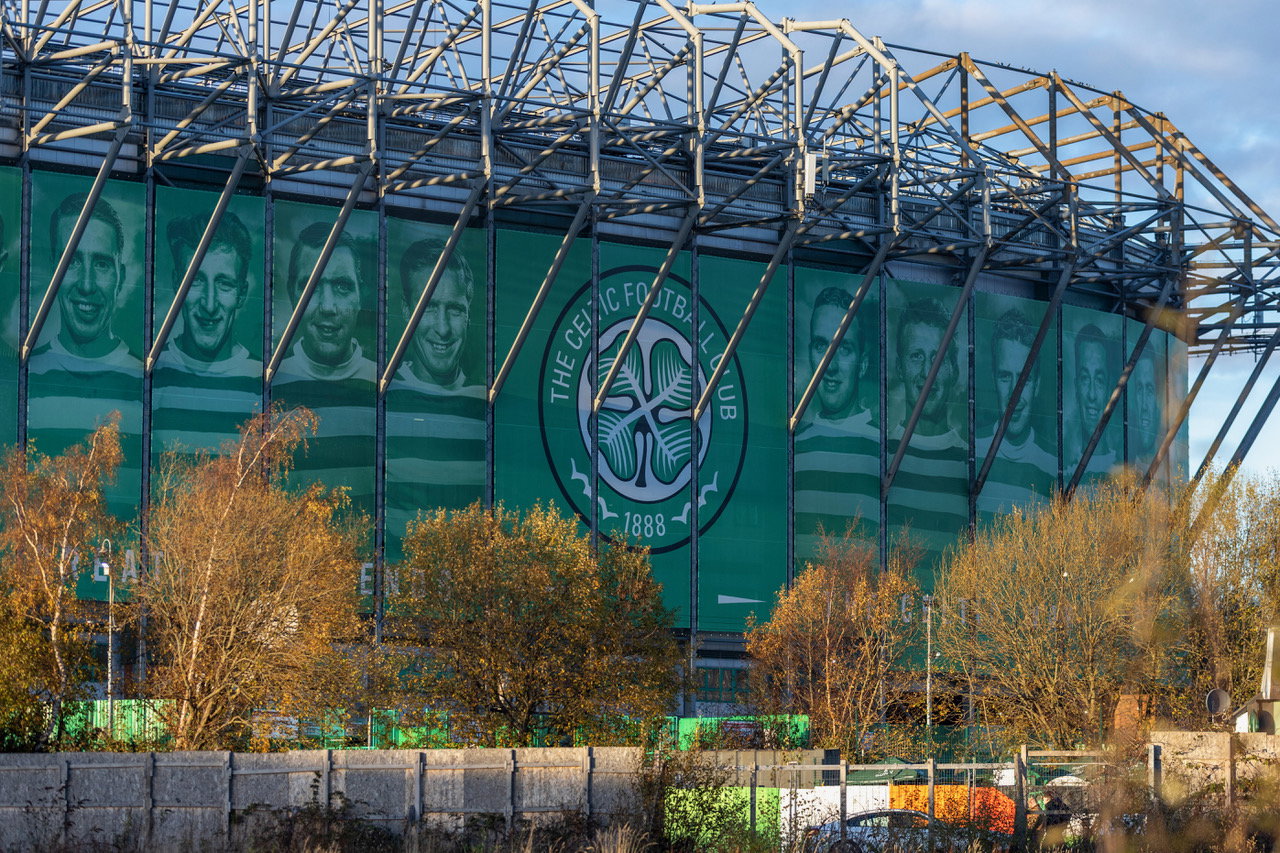

Different Roads, One Destination: Rediscovering the Solidarity That Defines Celtic
A Peek Behind the Curtain – Different Roads, One Destination: Rediscovering the Solidarity That Defines Celtic. It’s the latest controversial column on Celtic Shorts from Colin Dempster…
There is something deeply troubling about watching sections of the Celtic support become increasingly consumed by arguments over the very things that should be bringing us together.
At a time when we are questioning the direction of our football club, debating governance, demanding accountability, and exploring different ways of securing meaningful change, too much of our energy is finding its way into disagreements with one another.
Forums, podcasts, and social media have become places where differences of opinion quickly harden into divisions between people who share a love for the same club and want to see it protected. When did having a different view on how to achieve change become a reason to question somebody else’s commitment to Celtic?
We are not all going to agree, nor should we expect to. Some believe meaningful governance reform is the priority; others see peaceful activism and organised protest as essential. Some favour shareholder engagement and voting rights, while others look toward supporter ownership and greater influence over the club’s future.
That diversity of thought should be one of our greatest strengths—provided no single group, campaign, or individual claims a monopoly on the ideas or moral authority required to make a difference.
Before we become too absorbed in the arguments of the present, we should remind ourselves of the history, people, and principles that made Celtic what it is.
Brother Walfrid: Our conscience and where we came from
To understand the foundations of our club, we must return to Glasgow’s East End in the late nineteenth century. Poverty, overcrowding, and hardship were part of everyday life for working-class families, and the Irish immigrant community faced considerable barriers establishing themselves in a society that did not always welcome their arrival.
Within that environment, Brother Walfrid—born Andrew Kerins in County Sligo—recognised that football’s growing popularity offered a practical way to raise funds for those in need, establishing the Poor Children’s Dinner Table to feed hungry children across the East End.
Celtic was born with a purpose extending far beyond the football pitch: to bring people together, support the vulnerable, and build a shared identity across communities.
The football industry has changed beyond recognition since 1887, and Celtic now operates within a highly commercial environment. Yet our relationship with the club has never been defined solely by balance sheets or first-team results. It is built on generations of families, shared memories, and a sense of belonging rooted in compassion, generosity, and collective responsibility.
Community and solidarity are easy words to use when everybody agrees; their real value becomes clear when we hold different opinions yet still recognise our duty to one another.
Tommy Burns: The beating heart of our Celtic identity
Few people embodied the emotional bond between Celtic and its supporters quite like Tommy Burns. Born in the Calton, close to Celtic Park, Tommy formed his connection with the club long before he became a professional footballer, famously describing himself as “a supporter who got lucky.”
After making his debut in 1975, he went on to make more than 500 appearances, playing a central role in the unforgettable 1987/88 centenary season. Having experienced Celtic from both sides of the touchline, he understood the anticipation before a big match, the sting of defeat, and the joy of celebrating success with tens of thousands of fellow supporters.
When he returned as manager in 1994 during a period of domestic struggle, Tommy brought an attacking philosophy and restored pride to the jersey, delivering the 1995 Scottish Cup to end a six-year trophy drought.
Measuring his tenure solely by silverware would miss his true contribution. Through his later work in youth development and on the first-team coaching staff, his warmth, humility, and humanity resonated far beyond Celtic Park—demonstrated by the outpouring of affection across Scottish football following his passing in May 2008.
Tommy never needed to prove his love for Celtic through arguments with fellow supporters; it was evident in how he lived his life. His famous reminder that pulling on the Celtic jersey means playing for “a people and a cause” carries particular weight today.
That inheritance belongs to all of us—the generations who fill Celtic Park, travel the country and the continent, and pass this club on to our children.
Jock Stein and the Lisbon Lions: Our soul, European DNA
If Brother Walfrid gave Celtic its conscience and Tommy Burns became its beating heart, then Jock Stein and the Lisbon Lions gave our club its soul.
European ambition is not a modern aspiration bolted onto Celtic’s history; it is baked into our DNA. Nearly sixty years on from that unforgettable afternoon in Portugal, we still measure ourselves against the standard set by the first British club to lift the European Cup—a group of men born within thirty miles of Celtic Park who conquered the continent on our terms.
At the centre of it stood Jock Stein. Through revolutionary training methods, tactical innovation, and an uncompromising belief in attacking football, Stein transformed Celtic’s mindset, instilling a conviction that the club should never feel inferior to anyone, anywhere. On the pitch, that vision was anchored by captain Billy McNeill, whose stature and authority carried the manager’s standards onto the grass in the biggest moments.
Yet the true genius of 1967 was that leadership ran through the entire dressing room and dugout. From Ronnie Simpson behind Jim Craig, Tommy Gemmell, Bobby Murdoch, Billy McNeill, and John Clark, to the relentless artistry of Jimmy Johnstone, Willie Wallace, Stevie Chalmers, Bertie Auld, and Bobby Lennox—backed every step of the way by John Fallon, John “Yogi” Hughes, Joe McBride, Charlie Gallagher, Willie O’Neill, Sean Fallon, Neil Mochan and Bob Rooney —there were no passengers on that journey.
What made the Lisbon Lions truly immortal was the unmistakable swagger with which they carried themselves. There is no finer snapshot of who we are than Bertie Auld standing in the tunnel in Lisbon, looking across at the superstars of Inter Milan, and—with a smile, a wink, and zero intimidation—breaking into a chorus of “For it’s a grand old team to play for.”
There was no arrogance in that moment, only pride, togetherness, and absolute belief in the badge. That is real leadership at Celtic: clarity of vision, collective discipline, and a fearlessness that unites everyone behind a single purpose.
A Call to Arms: Protecting Our Standards and Our Future
As we stand at this crossroads, we need to treat this moment the way any great Celtic manager would treat half-time on a defining European night: take a breath, look around the dressing room, and remember who we are and what that badge demands of us.
First, to the support: stop turning the fire inward. Respect the different roads people are taking to push for a better Celtic, whether in the stands, at the ballot box, through shareholder engagement, or through peaceful protest. We do not have to march in lockstep on every tactic, but we must stand shoulder to shoulder on the principle that we will never accept mediocrity on the pitch.
In every department—from recruitment and sports science to youth development and modern governance—Celtic should be relentlessly chasing every marginal gain to restore our rightful standing at home and in Europe.
Because boards, executives, and major shareholders are only temporary custodians of an institution that belongs to its support. It should be us that shape our future.
Colin Dempster