



The champagne night and the angry prophecy: the secret that changed Manchester United's history
40 years since the great departure
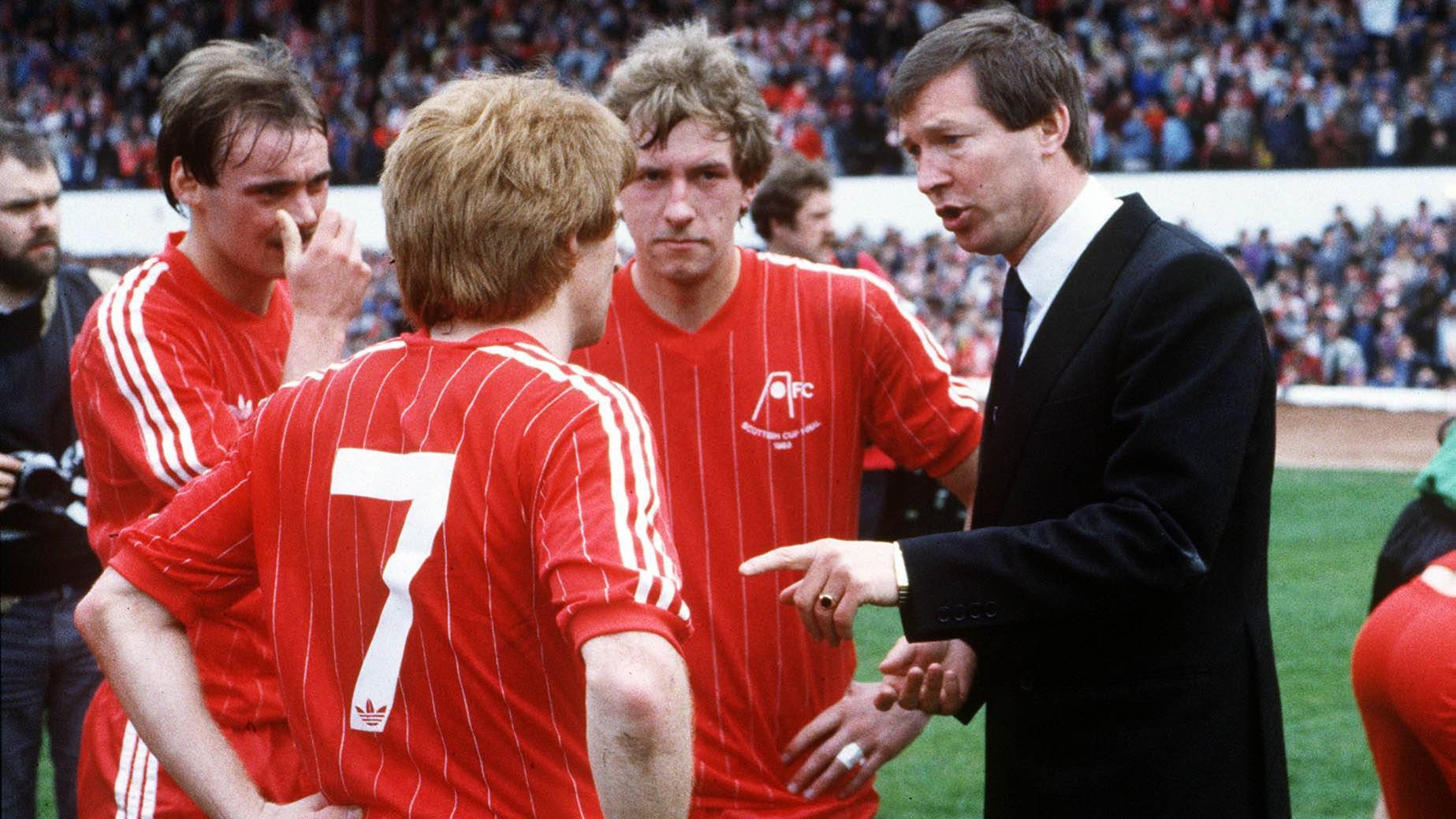
Alex Ferguson's departure from Aberdeen was not merely the move of a successful manager to a bigger club. It marked the end of an exceptional era in the Scottish club's history and the beginning of a journey that would become one of the greatest success stories football has ever seen. Aberdeen's supporters were dreaming of keeping the manager who had restored the club to European and domestic podiums. Instead, Ferguson sprang a surprise and left for Manchester United, leaving behind anger, shock and disappointment.
"I think he is making the wrong move, and I think he will regret it," one Aberdeen supporter said of the decision in November 1986, voicing the feelings of a large section of the fanbase who could not comprehend how the man who had built the club's glories could walk away like this.
What that supporter, and many others, could not have imagined was that the Scottish manager had an appointment with history in England. The following 26 years would make him one of the greatest managers the game has ever known.
Forty years on from the day Ferguson left Aberdeen for Manchester United, the British Broadcasting Corporation, the BBC, revisited the details of those moments, from behind the scenes of the announcement to the reactions of fans, players and officials, right through to an assessment of the decision four decades on.
Eight years of glory: Ferguson creates the Aberdeen miracle
Before his name became synonymous with success at Manchester United, Alex Ferguson had carved out an exceptional standing in Scotland, leading Aberdeen through eight years to a golden phase the club was not accustomed to.
Under his leadership, the Dons broke the traditional dominance of Scottish football's two giants, Rangers and Celtic. They were crowned with three Scottish league titles and four Scottish Cup titles, in addition to the European Cup Winners' Cup and the European Super Cup.
Those achievements were not merely a collection of trophies. They were a historic transformation that made Aberdeen one of the most prominent European clubs of the period and gave its fans a sense that the team was living through an era that might last for many years.
Little wonder, then, that the supporters struggled to accept the departure of the man behind those successes. Ferguson had given the club stability and exceptional results, which made his leaving appear as if it were the end of an entire project.
A journalist uncovers the deal, and a bottle of champagne reveals the secret
On the sixth of November 1986, the BBC journalist and sports broadcaster in Scotland, Rodi Forsyth, had an appointment with one of the most important stories of his career.
His editor had asked him to head to the city of Aberdeen to verify rumours of negotiations between Alex Ferguson and Manchester United, after talk had grown of the Scottish manager being close to taking charge of the English side.
Forsyth's flight from Glasgow was crowded with journalists, but most of them were not heading to cover football. They were following the aftermath of a Chinook helicopter crash in the Shetland Islands, which claimed the lives of 43 people.
As soon as he arrived in Aberdeen, Forsyth set about chasing the truth, until chance led him to the place where Ferguson was meeting Martin Edwards, the Manchester United chairman at the time, inside one of the airport hotels.
The journalist recounts that he stumbled on the location in an unexpected way. He made a phone call asking to speak to "Mr Edwards coming from Manchester," and the receptionist told him the man was in the restaurant area.
Forsyth says: "I heard some voices, so I headed towards their source, and there I found Martin Edwards and Alex Ferguson. I asked him directly: Are you the new manager of Manchester United? He replied: Yes."
The scene was clearer than the journalist had expected. A bottle of champagne sat on the table, and Ferguson poured him a glass, which Forsyth raised, congratulating the Scottish manager on his new post.
After a short conversation, the journalist rushed to contact the BBC newsroom to confirm the story, which became one of the biggest sports headlines of the day.
Forsyth added: "The Sumburgh disaster was leading the main news headlines, while Alex Ferguson led the sports news headlines. It was a day full of news, sporting and broadcasting events, and one of those days you can never forget throughout your professional career or your life."
"He will regret it": fan anger at the decision to leave
Ferguson's move was no ordinary news for Aberdeen's fans, who found themselves facing a difficult truth. The manager who had led their team to unprecedented glory had decided to leave, abandoning a project that looked capable of reaping more trophies.
That same day, the BBC's programme "Reporting Scotland" relayed fans' reactions from the Pittodrie Bar, where sadness mixed with anger and astonishment.
One supporter was convinced that Ferguson was making a big mistake by leaving the club, saying: "It is a sorry thing for Aberdeen, and I think he is making the wrong move, and I think he will regret it in years to come."
Another did not stop at disappointment. He aimed direct criticism at the Scottish manager, recalling his previous stances on players who had left Aberdeen in search of better opportunities.
He said: "Ferguson used to preach about the importance of having loyal players, and he used to envy Rangers and Celtic for having players of this kind. In other words, he used to criticise his players for leaving Aberdeen, but he himself set a completely contradictory example when he decided to leave."
Those words captured the contradiction some supporters felt. The man who demanded loyalty from his players chose to leave the moment he was offered the chance to move to one of England's biggest clubs.
"A crushing blow": Aberdeen loses its manager and management staff
The fallout from Ferguson's departure was not confined to the fans. It extended to the club's management and the players, who found themselves facing a new reality after years of working under the Scottish manager.
Ian Donald, Aberdeen's vice-chairman at the time, described Ferguson's departure as "a crushing blow," pointing to the sheer speed with which everything happened.
He said, in comments dating back to 1986: "It happened with extreme speed, almost overnight. Only yesterday morning, we had perhaps the best management staff in Britain, and now we are losing them both."
By that he meant Ferguson and his assistant, who left with him for Manchester United. The blow was not only technical. It cut into the administrative and technical structure that had helped build Aberdeen's successes.
Inside the dressing room, the impact was just as clear. Former captain Willie Miller spoke of the uncertainty that gripped the players after their manager's departure.
Ferguson was known for his strong personality and fierce temper, yet the players were acutely aware of his influence on the team and his insistence on winning matches and trophies.
Miller says some of the Scottish manager's methods would perhaps no longer be acceptable in modern football, recalling the tense atmosphere the dressing rooms used to witness.
He added: "Such behaviour would not pass unnoticed in our current times. Perhaps that was what we expected at the time from any manager. I do not think today's players would accept anything like that, such as throwing cups inside changing rooms."
At the same time, he stressed that Ferguson was not merely chasing titles. He wanted to win them in a distinctive way, which made his strict personality part of the culture of success he created at Aberdeen.
Miller admitted he felt great disappointment when he learned of the manager's departure, insisting the feeling ran through most of the squad, despite their awareness that the final decision rested with Ferguson alone.
The strongest reply to the doubters: did Ferguson deserve the blame?
Four decades on from that decision, the feelings of Aberdeen's fans appear calmer and more balanced, now that the events can be viewed away from the shock of the first moment.
Sandy Smith, 72, who lived through the various stages the club went through during his long years of support, says Ferguson's departure was deeply painful, but that time has made him more understanding of its reasons.
He explained: "It was very frustrating and very painful, but to be fair, there is no comparison between Manchester United and Aberdeen. After all he gave to the club, I felt very sad when he left."
He added that Ferguson faced difficulties during his first two seasons at Manchester United before he changed the club's course and began the journey of collecting trophies. His departure, Smith said, was a huge shock to Aberdeen by every measure.
In his first press conference after taking charge of Manchester United, Ferguson did not hide the scale of the sacrifice he had made. He had walked away from a job that offered him exceptional stability.
He said: "I have left what can be considered the most stable job in British football, with a lifetime contract at Aberdeen. There was only one club that could tempt me to leave Aberdeen, and it is the only club I always wanted to move to."
Those words made it clear his decision was not a search for money or a new job. It was tied to a long-held dream of working at Manchester United.
Despite the difficulties he faced early on at Old Trafford, Ferguson turned the club into a force that dominated English and European football over a career spanning 26 years, during which he reaped 38 titles.
His haul included 13 Premier League titles, two Champions League titles, five FA Cup titles and four League Cup titles, along with many other trophies.
So the supporter who predicted Ferguson would regret leaving Aberdeen was not wrong in capturing the mood of the fans at the time. He simply could not imagine what would come next.
For after 40 years, the real question is no longer why Ferguson left Aberdeen, but what would have happened had he not taken that step?


