Why a Five-Second Throw-In Rule Could Be a Good Idea for the Premier League
 Mark Strijbosch
The views and opinions expressed in this article are those of the author and do not necessarily reflect the official editorial policy or position of LiveScore.
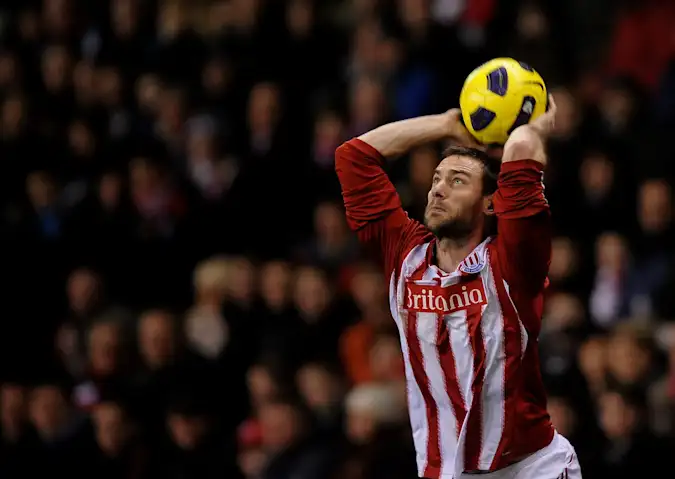
The Premier League often feels like football’s elite entertainment product: fast, tactical, and deliciously unpredictable. Yet amid all that drama, one of the most basic actions in the game has quietly become something of a spectacle, not because it’s thrilling, but because it eats up time. The humble throw-in, once a simple restart, is now a recurring lull that, cumulatively, drains precious minutes of live action.
Opta data shows that Premier League matches this season have seen an average of about 38 throw-ins per game, a significant number in itself, and this has come with an average delay before the restart of more than 11 minutes per match. That’s time when the ball isn’t in play, fans aren’t cheering, and the game’s rhythm is being eroded.
Throw-ins, shockingly, now account for well over a tenth of a full 90-minute match; more than many substitutions, and certainly more than most fans realise while they’re sat in stands or on the sofa. And while not all of that delay is deliberate, the sheer number of stoppages and the increasingly protracted way teams prepare for them suggest something has changed in the nature of the modern restart.
When you stack the cumulative throw-in time against the seconds genuinely spent with the ball in play, which data from this season estimates to be just over 54 minutes per match, you start to see how critical even “small” stoppages are in shaping the viewing experience.
The Futsal Model: Fast Football That Doesn’t Wait
Enter the idea of a five-second throw-in rule, a concept already familiar to anyone who’s played futsal. In that smaller, faster variant of the game, players have a strict time limit in which to restart play after the ball leaves the field. The result? Fewer delays, a relentless tempo, and matches that feel electric from first whistle to last.
This is not radical in a vacuum. In fact, the International Football Association Board (IFAB), the body that sets the Laws of the Game, recently approved a broader set of measures aimed at curbing time-wasting, including the possibility of a five-second countdown for throw-ins and goal kicks at the 2026 World Cup and beyond.
Under such a proposal, if a player couldn’t restart play within five seconds of the ball going out, possession would turn over to the opposition, a rule designed to disincentivise deliberate delays while preserving competitive fairness. Futsal hasn’t mastered football’s nuances, of course, but its emphasis on flow and quick restarts is instructive: games feel livelier, transitions come quicker, and stoppage time shrinks into insignificance. That’s a model worth adapting.
How Long Throws Have Emerged and Why They Matter
Part of the reason throw-ins have become such a time vacuum this season is something nearly no one anticipated a decade ago: a renaissance of the long throw (Enter, Rory Delap!).
According to the Premier League’s own analytics, we’ve seen a sharp rise in long throws - those aimed 20 metres or more into the opposition’s penalty area, with averages more than 3.4 to 4 per game this season. That’s more than double the frequency of recent seasons. Elite sides from Brentford to Crystal Palace and even some traditionally possession-led clubs have started treating long throws as genuine aerial set pieces.
These aren’t quick, reactive restarts. They are carefully orchestrated events. Players huddle, defenders shuffle bodies like they’re at a corner kick, and the ball is sometimes hurled into the box like a cross on steroids. The time taken to set each one up can be significant: individual teams have been noted waiting around 25 seconds for a single throw, before even accounting for the aerial contest that follows.
Why has this evolved? Tactically, there are two main drivers. First, the long throw can be a genuine weapon, a direct path to goal that bypasses midfield congestion and forces defenders into uncomfortable aerial battles. Data suggests throw-ins now contribute directly to an increasing number of goals at the top level, raising their strategic value. There have been about 12 goals scored as a direct result of long throw-ins in the Premier League this season.
Second, there’s a subtler time-wasting allure. A protracted throw-in allows teams to slow down the game, regroup, and reset, especially useful for sides looking to protect a lead or disrupt an opponent’s flow. When every millisecond counts in the Premier League’s bonkers sprint of fixtures, deadening the tempo can be just as valuable as tactics on the ball.
Why Change Is Not Only Desirable, But Inevitable
Taking the ball out of play shouldn’t resemble a rugby lineout or an American football huddle. Football’s beauty lies in its fluidity: the unexpected turnover, the instant counter-attack, the sense that at any second the game can change. Long, drawn-out throw-ins erode that feeling. They reduce the rhythm that makes football so globally beloved.
A five-second throw-in rule wouldn’t strip teams of tactical depth. Good players already know how to take quick, intelligent restarts when it suits them. Instead, it would strip away the unnecessary, boring bits that even the most die-hard fans would gladly handle in stoppage time.
If the Premier League wants to protect its identity as the world’s most exciting league, and football aspires to maintain momentum amid shortening attention spans, this rule merits consideration. Let’s bring back pace, fluidity, and, most importantly, more actual football.
At the end of the day, watching football should feel entertaining, and a five-second throw-in rule might just boost that factor.