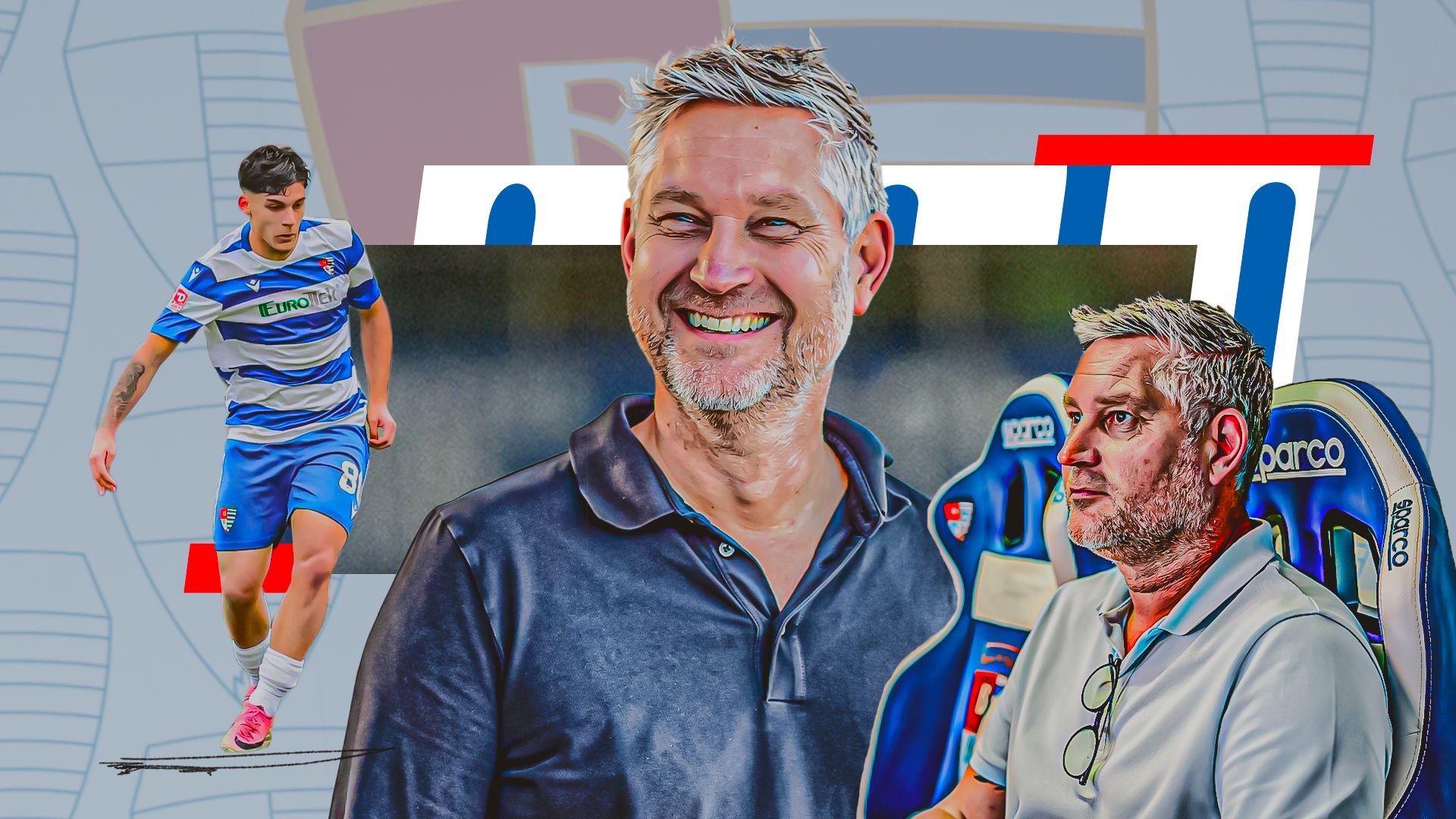

Multi-club ownership in Serie D? David Dwinger on Estrella's Pro Patria model: "Youth first, we'll be better than the big clubs for families. The dream is to return to Serie A to face Milan and Juve"
City Group? BlueCo? RedBird? The multi-club ownership model in football is no longer reserved for major clubs and international groups. Lower-division clubs can use it to build sporting projects, share expertise and develop young talent. That is the vision of Estrella Football Group, an international group that has acquired Pro Patria, adding them to a portfolio that includes Cascais and Carvoeiro United in Portugal.
The group's plans in Italy and the thinking behind the Pro Patria acquisition are the subject of an exclusive interview with Calciomercato featuring David Dwinger, co-founder and president of Estrella Football Group. Youth, talent, technology, infrastructure and, above all, ambition drive this investment. For Estrella, results on the pitch must follow from a structured approach.
Can you tell us about your sporting background and how Estrella Football Group came about? What was the original idea behind the project, and what kind of football group do you want to build?
"I grew up in a sporting family: many of my relatives were athletes, some of them Olympians, and my children play football too. Personally, I'm very drawn to talent in all its forms. I like talented people and I like surrounding myself with them because I think they can create value. For example, I like having people such as Cecilia Vagnoni around me. She's the best hockey player in the world and now works with us."
What convinced you to invest in Pro Patria? What did you see in the club?
"We've assessed a huge number of clubs and we're still looking for others. We want to expand our portfolio considerably. We have a tool with 50 assessment criteria: location, growth potential, history and many other factors. Pro Patria have a significant history and people such as our partner Luca Bassi and Walter Sabatini, who could help us develop on the sporting side.
We saw good potential that could turn into something significant. We felt that, after a difficult season, it was the right time to step in and invest."
What dreams do you bring with you, and what are your main priorities for the club's development?
"The aim, or rather the dream, is obviously to hope we can return to Serie A and, who knows, perhaps compete with Milan and Juventus (laughs). Promotion to Serie C is a priority today, but it shouldn't be seen as an end in itself. It should be the result of the work we do.
But clearly we have to be realistic and sustainable. We must make sure our clubs don't run into problems and act very intelligently. We have to build a brand and bring the fans back to the stadium. It's easy to win them over, but we must keep them close even when things aren't going well."
Estrella now own clubs in Italy and abroad, including Pro Patria, Cascais and Carvoeiro. When you buy a club, do you also look for specific opportunities for young players?
"I'm a father, so I'm very interested in youth football. I believe it's the most sustainable path. Since last year's relegation, a lot of players have left. Our ambition is to bring as many young players into the team as possible.
We need a very close connection between the first team and the youth set-up. We have to work to close the gap between the Under-19s and the first team. The aim is to get as many players through as possible.
Of course, we have to be ambitious and attract young talent. We need to be good at offering them a contract as soon as possible so they don't find an opportunity elsewhere. Our mission is to find a way to keep talented players here and help them take the next step."
The multi-club ownership model is often associated with major international groups and top-level football, such as City Football Group, BlueCo or Red Bull. How can that approach work in the lower divisions, where finances, infrastructure and visibility are very different?
"Honestly, we focus a lot on what happens off the pitch before we even look at what happens on it. Our priority is to gain visibility, so we try to do that not only through results but also through interviews like this and social media...
I've been impressed by the level of visibility Italian amateur football already gets.
The aim is to grow on social media, raise our profile, make an impact and increase commercial revenue. We want more fans, to attract talent and to be able to compete with clubs in other countries, such as the UK, Austria and the Netherlands."
How do you see Italian football today? Italy have a great tradition and plenty of talent, but also face several structural problems. And where does the group stand on the Malagò-Galliani contest?
"Something has certainly changed in Italy compared with the past, regardless of what happens at the federation. To me, it can't just be a question of individual talent. Clearly, something isn't working as it used to, and there's a need to take another step forward.
You have to take risks, but I believe young players are the way forward. A lot of young players choose to go abroad. The question Italy must ask is: why do our talented players decide to leave? There are so many good clubs in Italy, even in Serie B. I don't believe your country has run out of talent. Quite the opposite, but I think talent is being lost along the way."
Staying with young players, how difficult is it to develop footballers in a non-professional or semi-professional environment? And how do you compete with the academies of bigger clubs?
"Perhaps not today, but competing with the youth set-ups of top clubs is the path we want to take. There are many young players who can develop here and perhaps reach a high level. We need ambition in that regard.
I want people to say: "My son should go there because it's the place where he'll have the best chance of becoming a professional footballer." If we can build that kind of environment, we'll have achieved something significant.
If you're genuinely committed to developing young players and can explain the project to them clearly, people will understand that this is the best path. I'm convinced no other club will do what we want to do."
In Italy, major clubs' second teams have been introduced in Serie C, while projects such as Milan Futuro have also reached Serie D. What do you make of this model?
"Honestly, it depends on the place. At Cascais, our first club, we chose to establish a permanent second team. And if results on the pitch mean that team has to play in a lower division, that's not a problem. The model is 100% right. The fact that Milan Futuro may be in Serie D is just an anomaly.
I'll say it again: we all have to try to keep talent in our system. And we mustn't view young players solely in commercial terms. That's why second teams can be a valid option. We need to identify the best 16- and 17-year-olds and create value for them."
Scouting and recruitment are central to Estrella's philosophy, including through ClubOS. Can you explain how the system works?
"It's software that every club should use, not just for football operations but also for finances, sponsors and other aspects of management. We put all that data into one system, and from there we can extract models that help us and make suggestions.
We're always looking for the so-called "Butterfly Effect": the system allows users to make individual decisions and understand how they might affect the future. For example, I might need a defender because we're conceding too many goals. But if I make that investment, I might lose the 19-year-old I'm waiting to develop. There's a lot of data in football that isn't interpreted. Our tool lets us simulate what could happen in the future."
Looking ahead five years, where would you like to see Estrella Football Group and Pro Patria?
"That's a tricky question (laughs). From a sporting perspective, I think the aim could be to reach Serie B quickly. But again, that has to be the result of a process. I'd also be happy for us to be established in Serie C, provided we could be sure we'd brought lots of young players into the first team and become a leading youth club across the region."