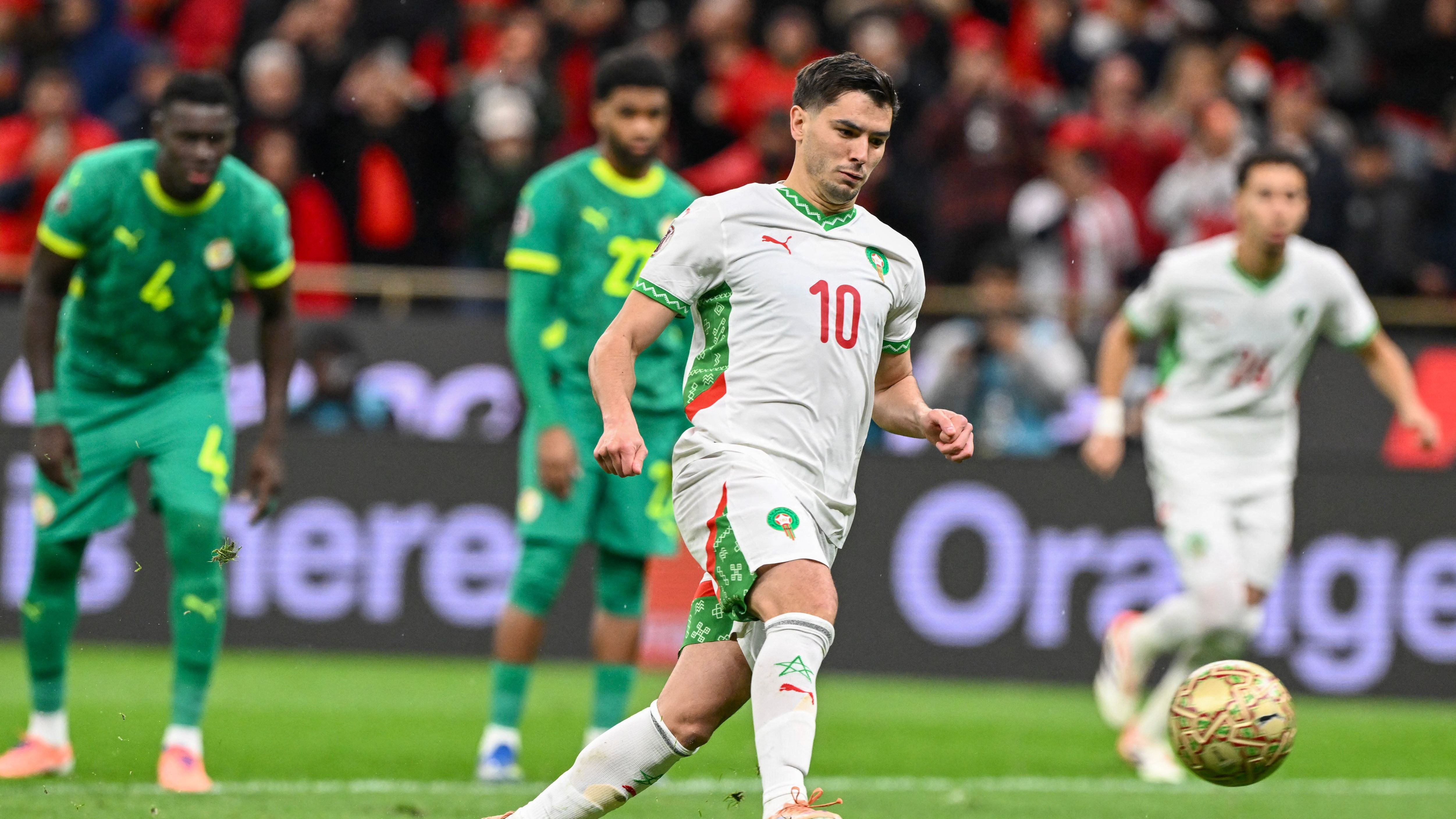

International lawyer answers Kooora's question: did CAS wrong Morocco in the Africa Cup of Nations final case?
International sports lawyer Ralph Charbel has given his view on the ruling issued by the Court of Arbitration for Sport (CAS) in the case over the 2025 Africa Cup of Nations final between Morocco and Senegal.
CAS announced on Tuesday that it had upheld the Senegalese Football Federation's appeal and overturned the Confederation of African Football (CAF) Appeal Board's decision, which had declared Morocco continental champions by an awarded result after Senegal's players left the pitch during the match.
Ralph Charbel said in exclusive comments to Kooora on Thursday that CAS had based its ruling on Congolese referee Jean-Jacques Ndala's decision to complete the match in the 109th minute, which allowed it to end 1-0 to Senegal.
The CAS panel, Charbel added, had applied the "field of play" principle to the case.
He explained: "The field of play principle is a legal principle established by the Swiss Federal Tribunal. Under this principle, sports judicial bodies refrain from reviewing or overturning technical decisions taken by referees on the pitch during a match, unless it is proven that the Laws of the Game were applied arbitrarily or in bad faith."
Under that principle, he pointed out, only the match referee can decide whether or not a match resumes. No body, committee or court holds that authority. That makes the Congolese referee's decision binding and beyond any challenge or review.
Were Morocco wronged?
Asked whether the CAS decision was unfair on Morocco, Charbel insisted the court had reached a fair ruling given how the case unfolded.
"In my opinion, the ruling is fair and consistent with the Court of Arbitration for Sport's settled and established case law on the application of the field of play principle," he said.
Charbel pointed to a precedent: "On 6 March 2009, CAS issued a decision rejecting the appeal filed by the Netherlands Antilles Olympic Committee against the international athletics federation and the United States Olympic Committee, on the basis of the field of play principle."
The Lebanese lawyer continued: "Referee Ndala's decision does not appear to be tainted by any arbitrariness or bad faith. Therefore, the case of the last Africa Cup of Nations final does not constitute an exception to the field of play principle."
CAS rule out Articles 82 and 84
In the grounds for its ruling, CAS stated that Articles 82 and 84 of the Africa Cup of Nations regulations did not apply here. Those articles, it explained, only determine a match result when one team's conduct leads the referee to end the match for good.
The panel therefore concluded that the referee had made no legal error in deciding to resume the match. That knocked away the basis for the decision awarding Morocco the final.
The court did weigh up the circumstances, acknowledging that the referee had been forced to rule in an atmosphere marked by "extreme tension".
But those circumstances weren't enough to make the decision arbitrary, it stressed, as the referee's judgement did not appear to have been influenced by factors outside the match.
With that, the court also dismissed the Royal Moroccan Football Federation's argument that the referee's decision had been arbitrary.
The Moroccan Football Federation now plan to challenge the court's decision and are expected to take the case to the Swiss Federal Tribunal.