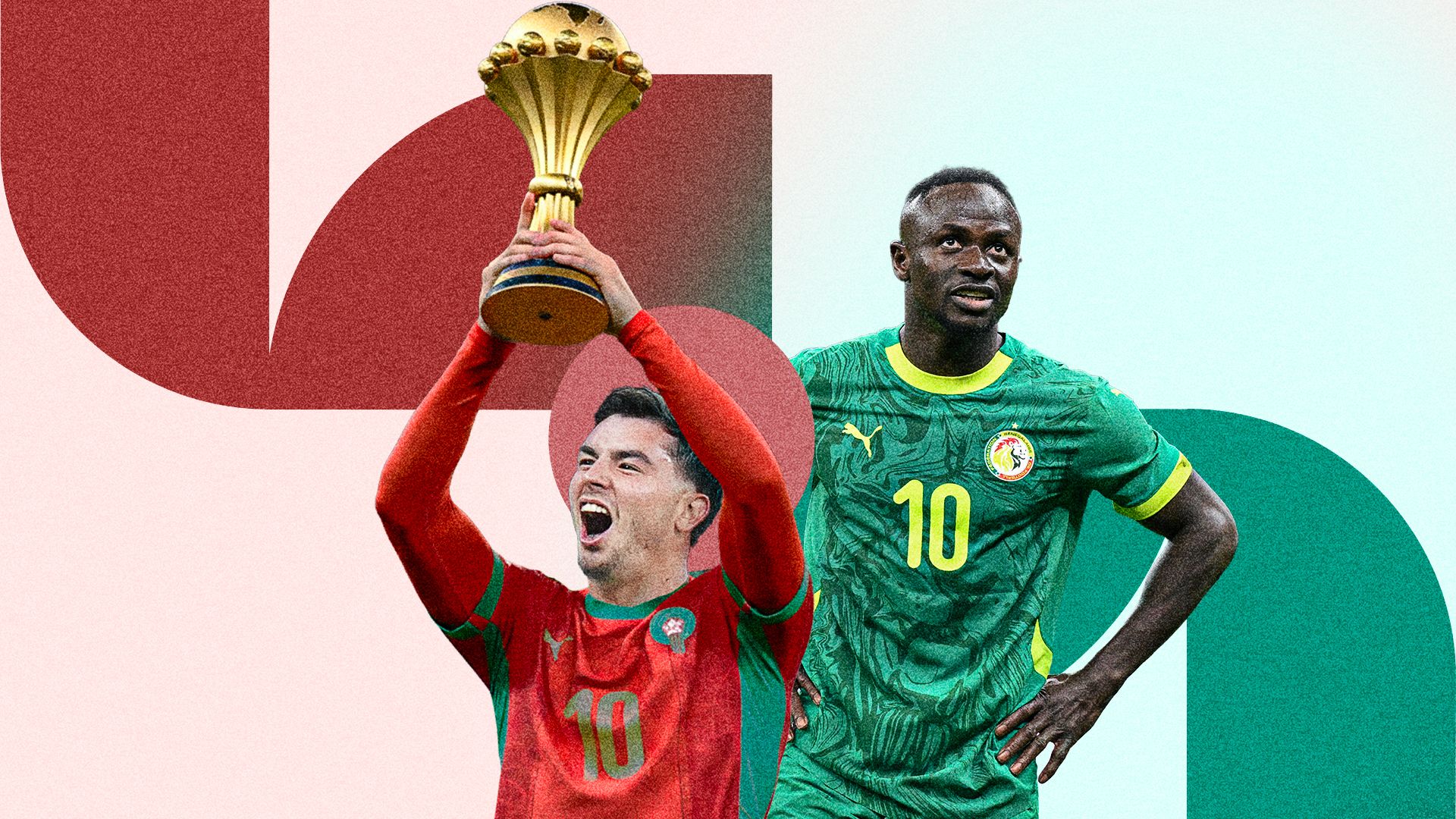
"Don't be sad, Moroccan": two legal precedents revive hopes of reclaiming Africa Cup of Nations title from Senegal
Despite the ruling issued on Tuesday by the Court of Arbitration for Sport (CAS) in favour of Senegal, in their dispute with the Confederation of African Football (CAF) and the Royal Moroccan Football Federation, the battle for the title is not over yet.
After more than eight months of waiting, speculation and conflicting statements, plus a hearing in Lausanne in early October, the Court of Arbitration for Sport delivered its verdict on Tuesday, closing a long chapter in the dispute over the 2025 Africa Cup of Nations final, handing Senegal the decision they had been waiting for and stripping Morocco of the title.
Under the regulations, CAS decisions can be appealed to the Swiss Federal Supreme Court, the country's highest judicial authority.
The Moroccan federation, like the other parties in the dispute, has up to 30 days from official notification of the ruling to lodge an appeal with the Swiss court.
That doesn't mean reopening the case from scratch, though. Nor does it give the judges the power to reassess the facts and the technical and sporting evidence on which the Court of Arbitration for Sport based its ruling.
The Swiss Federal Court treats appeals of this kind very narrowly. It looks mainly at whether the legal procedures were sound and the rules governing arbitration respected, not at the substance of the dispute.
The figures show just how limited this route is. According to the Court of Arbitration for Sport, only around 6% of its decisions are appealed to the Swiss Federal Court each year, a sign of how exceptional the procedure is.
5 grounds that could open the door to an appeal
The legal rules set out five main grounds for challenging CAS decisions before the Swiss Federal Court.
First comes the improper composition of the arbitral panel, whether in how the sole arbitrator was appointed or in the make-up of the panel that heard the case.
The second concerns jurisdiction: specifically, whether the panel agreed to hear a dispute outside its remit, or declined jurisdiction in a case it was entitled to rule on.
Third, the panel may have gone beyond the claims put before it, or failed to rule on one of the parties' requests.
An appeal can also be lodged if the parties weren't treated equally, or if a party's right to have its defence and submissions heard was undermined during the proceedings.
The fifth and final ground is incompatibility with public policy, one of the exceptions that allow courts to intervene in rulings by international arbitral bodies.
Morocco's key weapon
Simply objecting to the CAS outcome won't be enough. Morocco will have to prove a serious legal or procedural flaw in the case.
Just hours before the final verdict, the 2025 Africa Cup of Nations final saga erupted again. The Royal Moroccan Football Federation didn't sit idly by. It sent an urgent official letter to the Court of Arbitration for Sport, "CAS", reporting what it described as a suspected "incident" that threatens the integrity of the entire case.
According to sources at "Radio Mars", Morocco have no intention of overlooking what they describe as a "highly worrying situation" in the case, and are determined to hold on to all their legal rights until the very last moment.
At the heart of the episode is a phone call, believed to have taken place last Sunday, between the German legal expert, one of the three arbitrators CAS appointed to rule on the case, and Senegalese Football Federation president Abdoulaye Fall.
In its official statement, the Moroccan side questioned the contact and expressed deep surprise at it. It stressed that it fully reserves the right to pursue every available legal avenue of appeal, and that it will not accept any measure that could undermine the integrity of the case or cast doubt on the fairness of the awaited ruling.
If Morocco can prove what happened and establish in court that this arbitrator lacked impartiality, or find another ground for annulment, they may yet get the CAS decision overturned.
Two cases that offer Morocco hope
In December 2020, the Swiss Federal Court overturned the eight-year ban on Chinese swimmer Sun Yang, who had been punished for destroying the sample from a doping test he underwent in September 2018.
In a statement, the Federal Court said it had upheld Sun Yang's request because one of the members of the Court of Arbitration for Sport was biased.
The CAS decision was annulled, it stressed, and the court would have to rule on Sun Yang's case again with a different panel.
Another case points the same way. On 22 June 2023, the Swiss Federal Court annulled a ruling by the Court of Arbitration for Sport (CAS) in the contractual dispute between Croatian club Dinamo Zagreb and Austrian assistant coach René Poms, citing a procedural flaw in the composition of the arbitral panel.
It all began in March 2020, when Dinamo Zagreb sacked coach Nenad Bjelica's assistant staff, René Poms among them, after they rejected the club's proposal to cut wages during the coronavirus pandemic.
René Poms turned to FIFA for compensation over the termination of his contract. Dinamo Zagreb objected, arguing that jurisdiction lay with Croatian sports arbitration, but FIFA ruled in the Austrian coach's favour and ordered the club to pay compensation.
Dinamo Zagreb challenged FIFA's decision at the Court of Arbitration for Sport in Lausanne. After proceedings lasting around two years, the court upheld Poms' entitlement to compensation (around €220,000).
Dinamo Zagreb didn't stop there. The club took the case to the Swiss Federal Court, which annulled the CAS decision because of a flaw in the composition of the arbitral panel.
According to the Federal Court, CAS had accepted a request from FIFA to remove one of the arbitrators and appoint a replacement after the legal deadlines for challenging arbitrators had expired.
Missing those deadlines, the Federal Court found, had compromised the integrity of the panel's composition. The ruling had to be annulled and the case heard again under proper procedure.