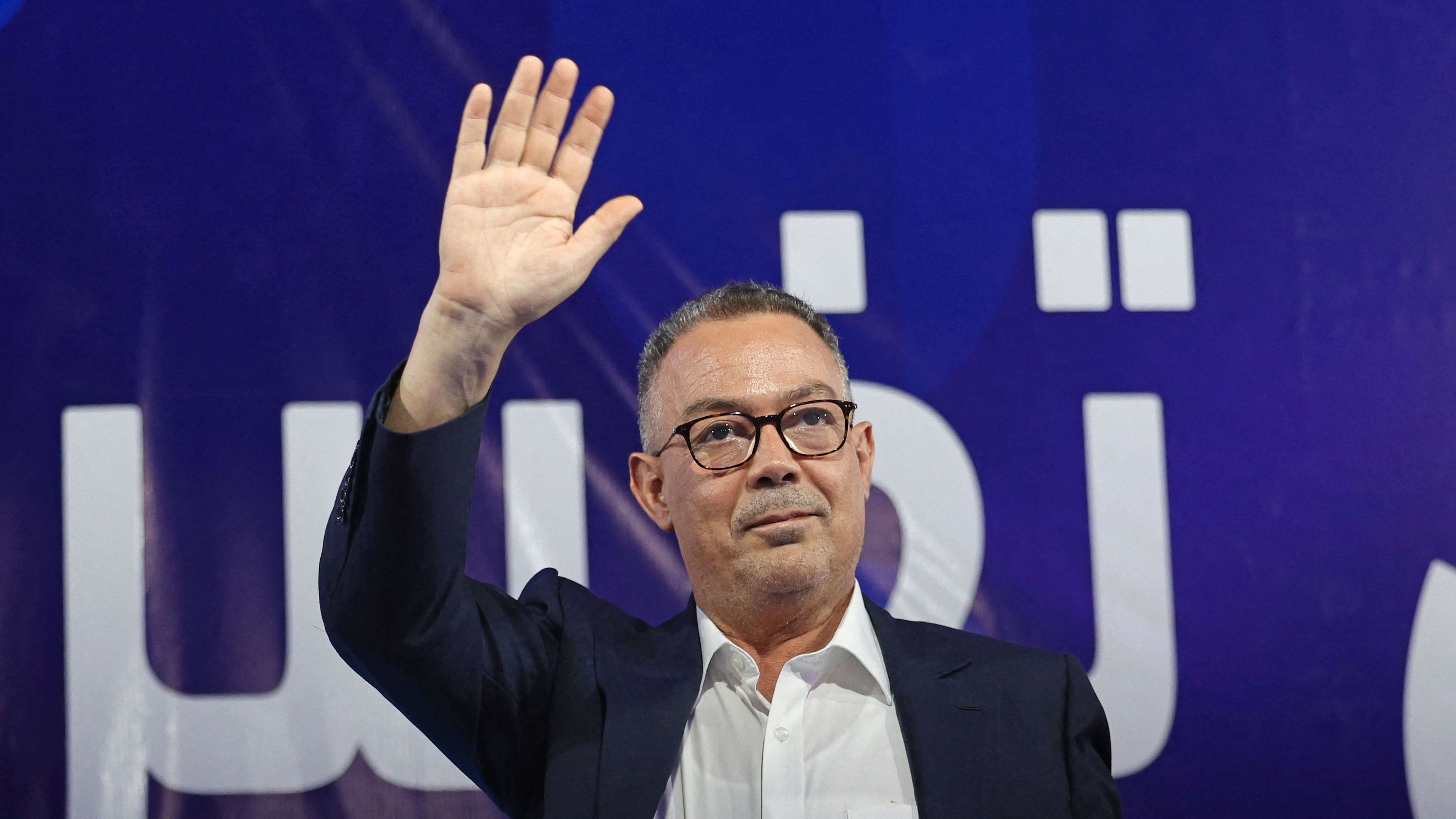

By video: Fouzi Lekjaa announces his bid to settle the battle over the 2030 World Cup final
Translато: 115,000 spectators in a single stadium: Morocco reveals its trump card
Fouzi Lekjaa, president of the Royal Moroccan Football Federation, has revealed the latest developments on the Grand Stade Hassan II project in Benslimane. Work is progressing at a reassuring pace, and the federation chief expects the project to be completed in early 2028, roughly two years before Morocco co-host the 2030 World Cup alongside Spain and Portugal.
Speaking on the programme "Saat Al-Saraha" on Moroccan channel "2M", Lekjaa talked up the project and its importance to the bid to stage the World Cup final. Morocco's ambitions, he stressed, stretch beyond merely hosting matches to delivering a sweeping urban transformation across the Greater Casablanca region.
A stadium with a capacity of 115,000 spectators: a project that goes beyond football
The Hassan II stadium will hold 115,000 spectators, yet Lekjaa insists it will be far more than a sporting venue. It forms part of an integrated plan to restructure the urban space of Greater Casablanca, with infrastructure and transport networks developed alongside it.
"The Hassan II stadium will contribute to restructuring the urban space of Greater Casablanca," the president of the Moroccan federation said. He pointed to a raft of transport improvements accompanying the project, among them the regional high-speed rail network and the high-speed train line.
He added: "Over the coming years, we will see Greater Casablanca in a different form."
The stadium's completion date and matches before the World Cup
On the progress of the work, Lekjaa voiced his optimism that construction could be finished in early 2028. That would hand Morocco plenty of time to put the facility to use before the World Cup kicks off.
Finishing early, he explained, would let the Moroccan national team play on the stadium's pitch before the global tournament. Casablanca clubs, chief among them Wydad and Raja, could also benefit, and the venue might host other major events too.
Lekjaa said: "It is good for the national team to play in this stadium before the World Cup."
Lekjaa reveals his argument regarding the 2030 World Cup final
On the Hassan II stadium's chances of hosting the 2030 World Cup final, Lekjaa was keen to frame the competition in a wider context than simply dividing matches among the three host nations.
Hosting the centenary edition, he pointed out, carries civilisational and humanitarian dimensions. He recalled the royal message in which Moroccan monarch Mohammed VI announced, from Kigali, the joint organisation of the tournament with Spain and Portugal.
The project, he explained, is built on strengthening the shared memory in the Mediterranean basin, bringing together the peoples on its two shores and entrenching the values of coexistence and exchange among younger generations.
That shared vision, though, does not mean Morocco is giving up on hosting the final. Lekjaa held firm to stadium capacity as the fundamental factor in the bid.
"The final must be given to the stadium that has the largest capacity, and at the present time, that is the Hassan II stadium," the president of the Moroccan federation said.
With room for 115,000 spectators, Morocco are banking on the Benslimane project to strengthen their case for the final. Which stadium stages the closing match, however, remains tied to the final decision on how the 2030 World Cup fixtures are shared out.