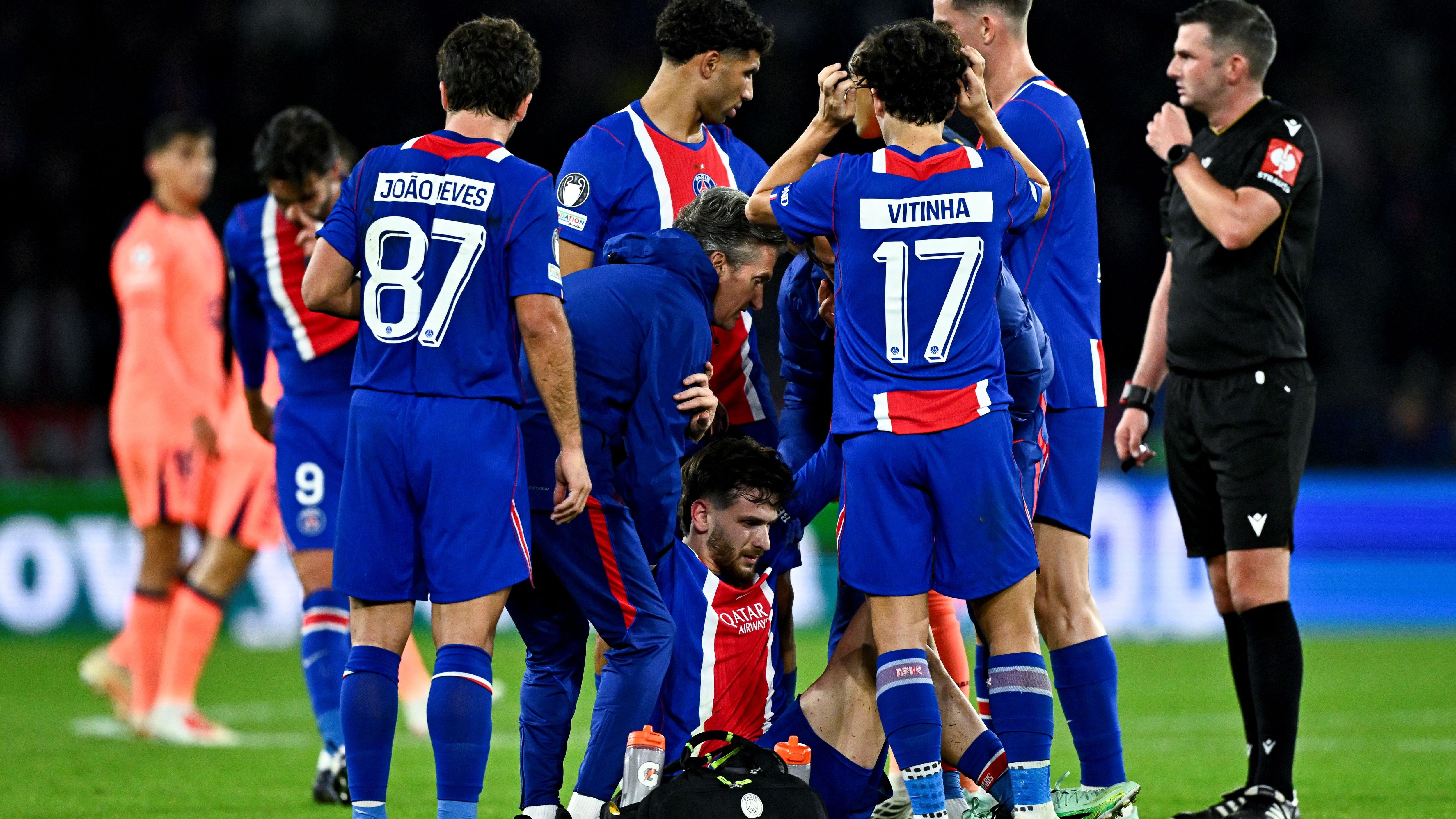

After Kvaratskhelia's injury: why does the cruciate ligament strike footballers in particular?
Cruciate ligament injuries represent a nightmare for players
Paris Saint-Germain confirmed on Wednesday that their Georgian star Khvicha Kvaratskhelia has torn his anterior cruciate ligament. The news was a fresh reminder of just how brutal these injuries can be, carrying a long recovery and the constant threat of recurrence.
The anterior cruciate ligament does vital work. It stabilises the knee, stops the tibia sliding forward and controls rotation, braking and changes of direction. Those movements are everywhere in football, which leaves players badly exposed to the risk of a tear.
Read also
Sendings-off and minutes a man down: a vast gap between Real Madrid and Barcelona
Former France star: Mbappé has not reached the status of Messi and Cristiano, and the Barcelona player is the best in his position
Surgery is usually the only road back for a professional athlete who wants to compete again. Surgeons replace the damaged ligament with a graft taken from one of the tendons, and the player then faces a long rehabilitation programme to rebuild the knee's strength and stability.
Nine to 12 months is the typical recovery window. That timeline can stretch or shorten depending on the nature of the injury, how the player's condition progresses and how well he responds to rehab.
Training can restart before then. Competition is a different matter, demanding full strength, stability and the ability to change direction without hesitation.
Risk of recurrence
The danger does not end at the touchline. Around 15% of athletes who go under the knife for an ACL tear suffer a new rupture in the graft or in the cruciate ligament of the other knee, according to the French newspaper "L'Équipe".
Those under 25 face the greatest risk, especially in sports built on jumping, rotation and sudden changes of direction.