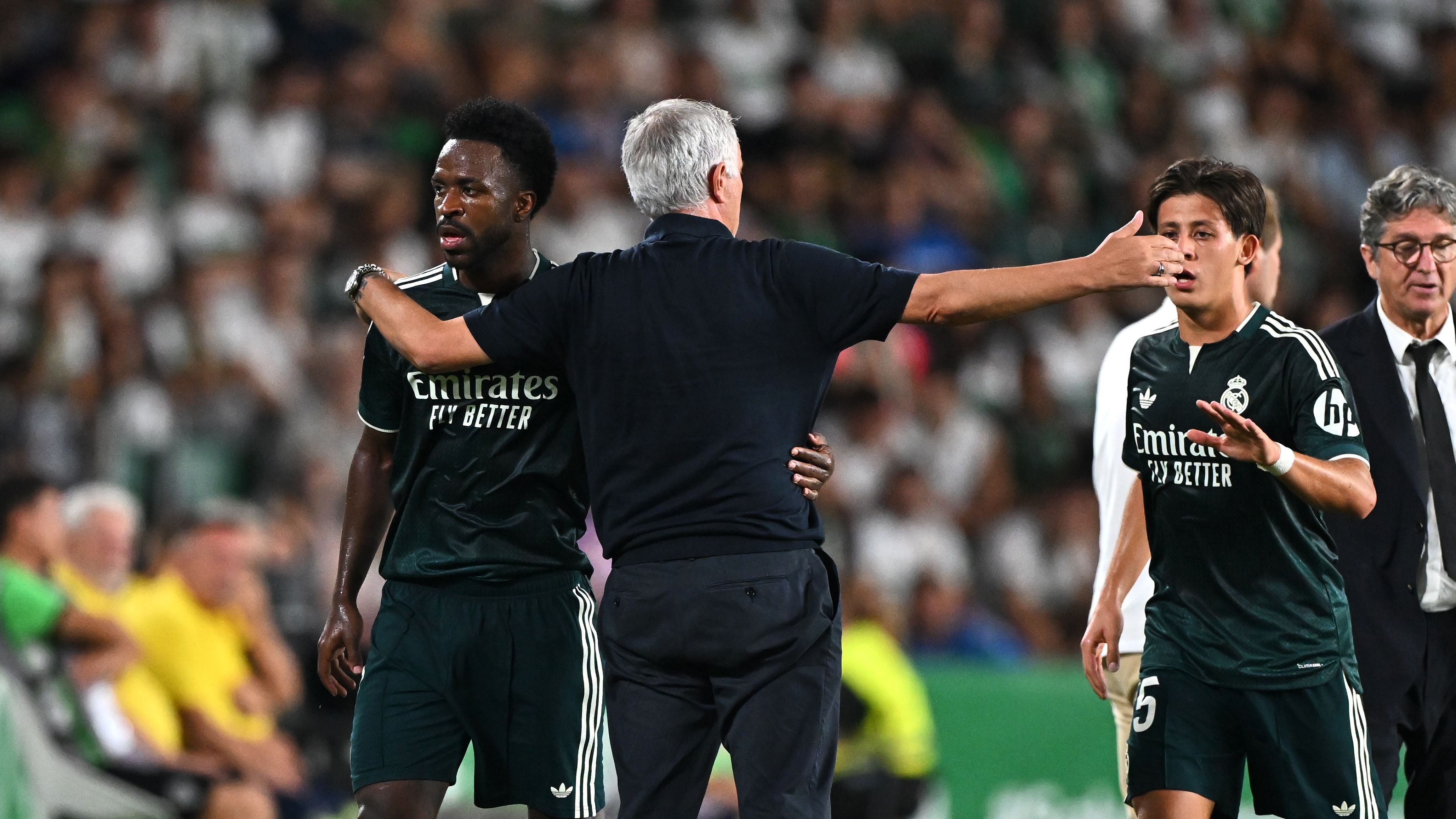

The risk of self-destruction at Real Madrid: where does the collapse begin?
Mourinho faces serious warning
Real Madrid's recent second-half displays have exposed a dangerous flaw in the team's game. Count only the second-half results across their last four matches and they have not won once, managing a single draw against three defeats while conceding five goals and scoring just two.
Spanish newspaper "Marca" report that these numbers now dominate the calculations of manager Jose Mourinho, having turned from a mere negative indicator into a genuine threat to the team's stability and results.
Those second-half figures have set alarm bells ringing among the coaching staff. The team keep losing control of matches after the interval. The problem has already done real damage, most notably in the defeat to Real Betis, and it nearly turned into another disaster against Elche after Madrid squandered the chance to settle the match and had to accept a result that did not reflect their superiority during long spells.
Worse still, this is no longer tied to a single match or a freak set of circumstances. It has become a recurring pattern across several games in recent weeks. Madrid start one way, then look like a completely different side after the break. That is precisely where the danger lies.
Look at the last four matches: not a single second-half win. They lost to Elche 2-1, to Inter Milan by a goal to nil and to Real Betis by the same score, while drawing with Rayo Vallecano one goal apiece.
One point out of 12 available in those second halves. That figure alone captures how badly the team fall away after returning from the dressing room. More concerning still, Madrid conceded five goals during those second halves and scored only two. These numbers are not just about results. They reveal a failure to keep rhythm, focus and control when a match reaches its decisive stages.
Victories hide the problem
The paradox is that Madrid have survived this flaw in some matches thanks to their first-half work. In three of the four games mentioned, a strong opening 45 minutes gave the team an advantage that kept them in the fight for the win, even if things were far from easy against Inter Milan and Elche.
Against Real Betis, though, that cushion never existed. With nothing to protect them from the second-half collapse, the match ended in a painful defeat. Here lies one of the clearest explanations for the contradiction in the team's performance.
Madrid do not always suffer a total weakness across a match. They suffer an inability to sustain the same level over 90 minutes. The team can produce a strong, convincing first half, then struggle to hold that superiority once the circumstances shift after the interval.
In truth, Madrid have been playing with fire in recent weeks, and that makes the problem all the more dangerous. They go from controlling matches to making them difficult, from imposing their rhythm to letting the opponent seize the initiative, from the brink of sealing a win to watching a lead evaporate before their eyes.
Put simply, Madrid win the first half convincingly, then lose the second in ways that are hard to explain. That very fluctuation has let them survive so far. It also threatens to turn any match into a crisis if they cannot fix the flaw.
Any further slip against Elche would have landed a heavy blow to Madrid's title calculations, especially with a heavyweight clash against Atletico Madrid at the Wanda Metropolitano looming next.
7 matches reveal the contradiction
The picture sharpens across Madrid's last seven matches: six in La Liga, one in the Champions League. In the four where the flaw showed clearly, they failed to win the second half, losing to Elche, Inter Milan and Real Betis and drawing with Rayo Vallecano.
Against Malaga, Real Sociedad and Espanyol, by contrast, Madrid won the second half, and they even scored a decisive goal against Real Sociedad. That confirms the problem is not a permanent inability to perform after the break, but a state of sharp fluctuation that leaves the team unable to guarantee steady control in the second period.
Such fluctuation sometimes eases the severity of the problem, yet it also makes the team harder to predict. In one match Madrid can impose themselves and kill the game off. In another they can lose control entirely and hand the opponent a route back.
Mourinho knows the problem
Mourinho is clearly well aware of the crisis, as his comments after the Elche match showed, yet he has offered no clear solution to stop it recurring. "The problem is clear to me," he said. "There are matches that seem settled, but they are not. The only explanation I find is that they are easy matches that we do not settle. Matches we do not settle, and it seems we go from ease to loss of control."
He added: "This kind of stadium, packed with wonderful fans, makes things difficult. The good thing is that despite this difficulty, the team reacts and wins, and that is the most important thing. The good thing too is that no one gets bored watching Real Madrid matches, because they are highly entertaining."
His words carried a hint of humour. The numbers are not remotely funny. Behind the enjoyment and excitement lies a real second-half problem, one that needs solving before it turns from a mere dip in performance into a crisis that hits Madrid's results and ambitions head on.
Madrid may have dodged some consequences so far thanks to their fast starts, but leaning on the first half alone is no strategy to build a season on. Football offers no permanent guarantee that an early lead will hold until the final whistle.
Keep handing opponents the space and time to fight their way back after the interval, and Madrid may pay a heavy price in tougher fixtures. The problem, as Mourinho said, is clear. Just as clear is that the second halves have not been kind to Madrid so far, and that letting this scenario continue may see them pay for losing control in moments that offer no way back.