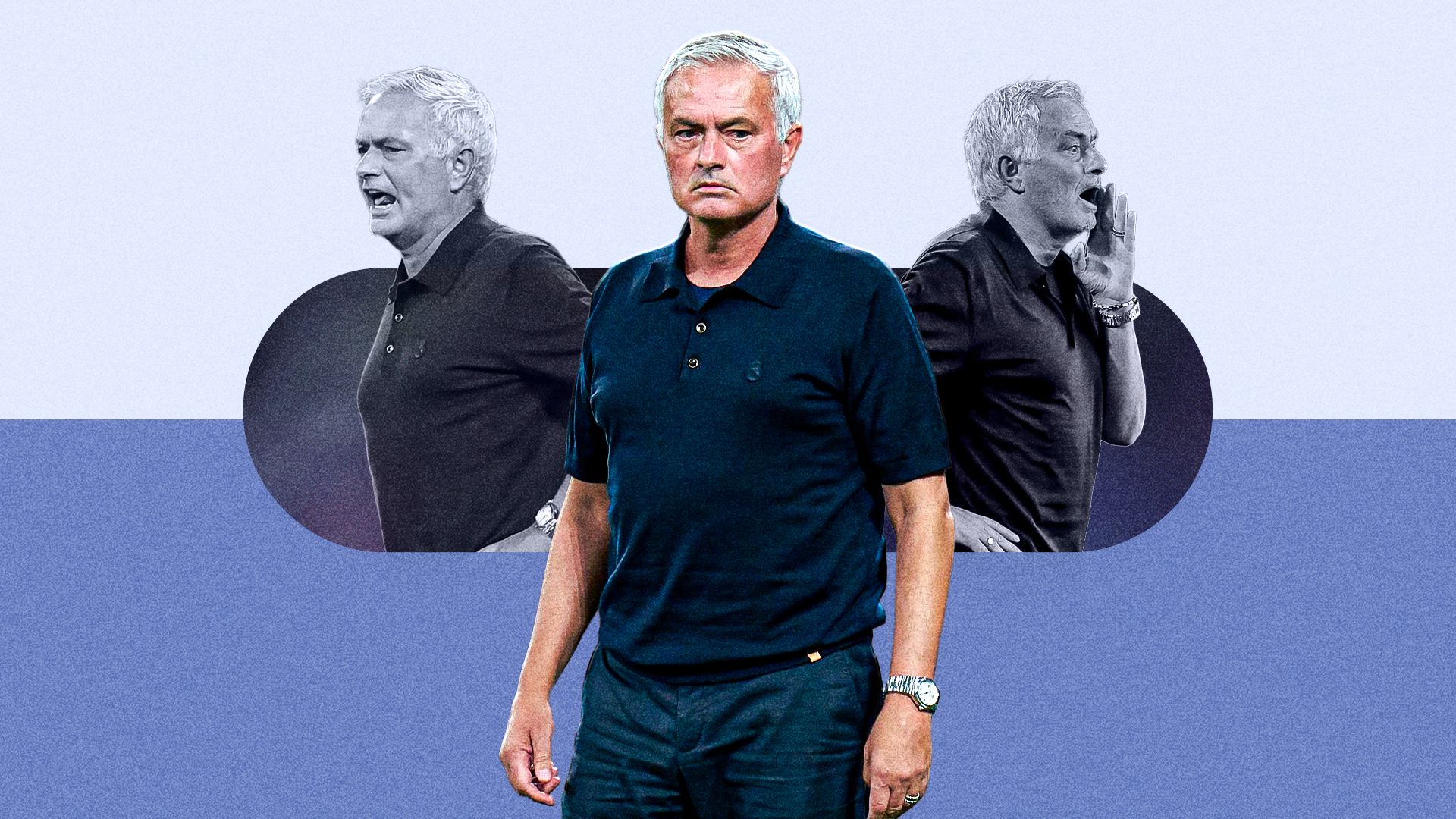

Mourinho imposes his will: how has the balance of power shifted at Real Madrid?
Vinícius pays the price and Valverde becomes a secret weapon!
Beating Barcelona at the Camp Nou gave Real Madrid three precious La Liga points, but the win carried something far larger: proof of the transformation Jose Mourinho has driven since returning to the Royal club's helm. The Portuguese has reshuffled the cards inside the dressing room and found tactical answers to a string of problems that had dogged the team in recent weeks.
That 2-1 Clasico win on Sunday could prove a genuine turning point in Mourinho's second spell at the Santiago Bernabeu. Real went into the game facing difficult challenges, with Barcelona in strong form and most expecting the Catalans to confirm their superiority and keep their run going.
Mourinho flipped the equation. He did it through the result, yes, but also through the way he managed the match, the harmony between his players, and a run of technical decisions over recent weeks that have given Real Madrid a clearer, more balanced identity.
According to "The Athletic", Mourinho's success stretches well beyond a single Clasico win. It takes in a set of crucial calls: redeploying Federico Valverde, handing Arda Guler a more influential role, and his clever handling of the Vinicius Junior situation and the big personalities inside the dressing room.
Valverde: sacrificing his preferred position for the good of Real Madrid
Federico Valverde was always likely to find himself back at right-back, even though the Uruguayan dislikes the role and feels far more comfortable in midfield.
Carlo Ancelotti had explored the same option in his final spell at the club. Valverde started 15 matches at right-back during the 2024-2025 season, until the position became one of the Italian's key tactical tools.
Xabi Alonso tried the same idea during his short time with the team in the first half of the following season, but he could not convince the player it was worthwhile, especially with Valverde reluctant to move away from his natural role. Last September, the player made his feelings plain: "The coach knows I don't like playing at full-back".
When Alvaro Arbeloa took over following Alonso's sacking in January, he moved Valverde back to midfield. Mourinho took the same approach at first, having insisted in August: "Right-back? I don't like that; for me, he is a midfielder".
Then the team's needs forced the Portuguese to rethink. Valverde gradually returned to right-back, playing there in the second half against Villarreal, then away to Roma in the Champions League, before starting in the position against Sevilla, Leipzig and Barcelona.
The striking part is that Real won all five of those matches, hardening the coaching staff's belief in the role the Uruguayan performs there.
Sources close to Valverde say the player appreciates the way Mourinho handles him, even when assigned roles outside his preferred position. It marks a clear contrast with how some previous coaches managed him.
The benefit runs deeper than Valverde's defensive qualities. His presence gives Real greater balance on the right, extra attacking depth, room for a more creative player in the midfield pairing, and scope to involve further attacking options, particularly when Arda Guler takes charge of playmaking from deep.
There is a downside, and it concerns the specialist right-backs. Chief among them are Trent Alexander-Arnold, who arrived from Liverpool in the summer of 2025, and Denzel Dumfries, who joined from Inter Milan in July for 20 million euros.
With Valverde occupying the position, the pair often find themselves out of the starting line-up, despite the high expectations that greeted their arrival.
Even so, sources close to Alexander-Arnold say the player is focused on succeeding at Real Madrid and has no thoughts of leaving, especially after returning to Thomas Tuchel's England reckoning during the September international break.
Guler: the Turkish talent who found his way to brilliance
One of Mourinho's most striking technical wins has been recovering the best version of Arda Guler. The Turkish player has shown he deserves a place in Real Madrid's strongest side.
The Portuguese believes the right side of the attacking three, within a 4-2-3-1, is the ideal spot to get the most from the 21-year-old.
Since the season began, Mourinho has never stopped praising Guler's remarkable vision and his knack for making play and creating attacking solutions. The trick was fitting those qualities into the system without upsetting the collective balance.
Over recent weeks, the picture has sharpened. Valverde's switch to right-back, plus reliance on new arrival Yan Diomande on the left wing, has handed Guler the space and the conditions to show his true ability.
Barcelona offered one of the clearest examples of his worth. The Turkish player became one of Real's most dangerous and influential presences in the final third.
His early burst and a shot that flew just over the bar were a first warning to Barcelona. He then whipped in a well-struck cross with the outside of his boot that teed up Kylian Mbappe to shoot.
Guler's influence did not end there. He played a key part in the winner, threading a precise pass to Eduardo Camavinga, whose ball paved the way for Mbappe to settle the match.
The Turkish player finished the Clasico with more shots on target than any Real Madrid team-mate, taking three in total, and he also topped the chance-creation chart with two.
Guler grows in importance when he gets more room to drift into deeper areas, particularly alongside another playmaker such as Bernardo Silva in midfield. That gives Real varied options in building attacks and makes the team less reliant on individual solutions.
Vinicius: how did Mourinho succeed in controlling the most sensitive file?
Handling Vinicius Junior may be one of the biggest tests Mourinho has passed since returning. The Brazilian's relationship with Xabi Alonso had turned tense and became one of the former coach's most prominent problems before his exit.
Unlike Alonso, who regularly benched Vinicius and hauled him off early in some games, Mourinho gave the player huge confidence from the start and treated him as a cornerstone of his new project.
Before the season began, the Portuguese publicly backed renewing the Brazilian winger's contract, even with other clubs, Arsenal among them, keen to sign him.
Mourinho kept in close contact with the player until Real extended the deal until 2032, at the start of August, with Vinicius holding his place in the starting line-up early in the campaign.
The coach did not drop his public support even as the player's form dipped, in both finishing and creating, with Vinicius managing just one goal and three assists in his first 11 matches.
But Mourinho refused to let the slump damage the team. From September, he began adjusting his handling of the player, cutting his minutes when he was not adding enough.
Against Elche, Atletico Madrid, after Dean Huijsen's red card, and Roma, the coach took Vinicius off before the hour or shortly after it.
He also left him on the bench against Villarreal, Real's first game after the international break, before using him as the first substitute against Leipzig, even though the player was suspended for the Clasico four days later.
All this unfolded as the Bernabeu crowd kept jeering him, frustrated by his dip in form and his failure to deliver.
Even so, Mourinho managed the situation without a direct confrontation, drawing on the confidence he had shown early on and the positive results the team kept picking up in the player's absence.
Leaving Vinicius out of the starting line-up became a decision backed across the club, the dressing room and the stands. That is a huge shift from Alonso's time, when the player sparked a clear crisis after being substituted in a Clasico.
Yan Diomande's emergence on the left wing, Vinicius's favoured position, added a fresh attacking option for Mourinho and sharpened the competition for the shirt.
On the other side, Vinicius and his support team know he has not hit his best this season. They are taking a realistic view, hoping the work pays off and his usual level returns.
For Mourinho, benching Vinicius was never part of the original plan. He knew that getting the Brazilian and Mbappe to click was one of his biggest tactical challenges. But the drop in form pushed him into different decisions, all without sacrificing the team's stability.
The Clasico victory: has Real Madrid found a more sustainable path to winning?
The value of beating Barcelona lay not only in the result but in how it was won, a point Mourinho was keen to stress afterwards.
The Portuguese said: "The way in which we won is also important. You can win thanks to luck or through heavy reliance on defence, but we won calmly and completely deservedly".
Mourinho wanted it understood that his team did not win through defensive grit alone, or by waiting for a freak moment in the closing stages, but by sticking to the plan he had drawn up beforehand.
Throughout the match, Real looked more cohesive. The players executed their jobs despite Barcelona's push to get back into it after Raphinha's equaliser on 60 minutes.
Mbappe's goal on 87 minutes settled the contest. It was more than a late winner for three points. It confirmed Real's ability to handle big games in a calmer, more disciplined way.
No late comeback was needed, no flash of individual brilliance to rescue the night. The team imposed its character on the opponent and looked firmly in control of the rhythm.
For Real's supporters, that may matter most of all. The team needs a style that holds up against major opponents, rather than leaning again and again on individual moments and fightbacks from behind.
Even so, it is too soon to claim Mourinho has solved everything. The real verdict on whether this approach lasts rests on the players repeating the same performance in the matches to come.
The dressing room: Mourinho's word has become more influential
Among the clearest differences between Real under Mourinho and the earlier period is the relationship between coach and players, and how firmly the squad buys into the instructions.
Sceptics about the scale of the change might argue that Barcelona were below their best in the Clasico, and that their players' flagging energy helped Real over the line.
Another counterpoint: Alonso himself won his first Clasico last season by the same 2-1 scoreline.
But that game, played in Madrid 12 months ago, stayed tied to the controversial scene of Vinicius Junior furiously protesting his substitution, an incident that exposed just how hard Alonso found handling the strong personalities in the dressing room.
Under Mourinho, the mood looks entirely different. The 63-year-old commands huge respect among the players, drawing on his forceful personality and a career packed with honours.
That showed clearly against Barcelona. Every player stuck to the plan, and stars Kylian Mbappe and Jude Bellingham worked hard for the collective rather than their own game.
Eduardo Camavinga, too, delivered an influential display despite a tough few weeks, proof that Mourinho is extracting the best from several players who had been falling short.
His biggest challenge now is keeping that collective spirit alive and stopping commitment from slipping when the team faces lesser games or weaker opponents than Barcelona.
Sunday's trip to Racing Santander will be a real test in that respect. The opponents sit thirteenth, and the fixture carries far less glamour than a Clasico.
Even so, delivering the same focus and discipline in games like that will be the truest measure of whether Mourinho's project is working.
The signs of recent weeks all point one way: the Portuguese coach's return has brought tangible change at Real Madrid. Redeploying Valverde, freeing Guler to create, handling the Vinicius situation with care, imposing discipline, strengthening the collective spirit, it all adds up.
Mourinho has given Real Madrid sharper features, but the real test is yet to come. Beating Barcelona may be the starting point. Sustaining this level and turning it into a lasting culture is the challenge that will define his second spell.