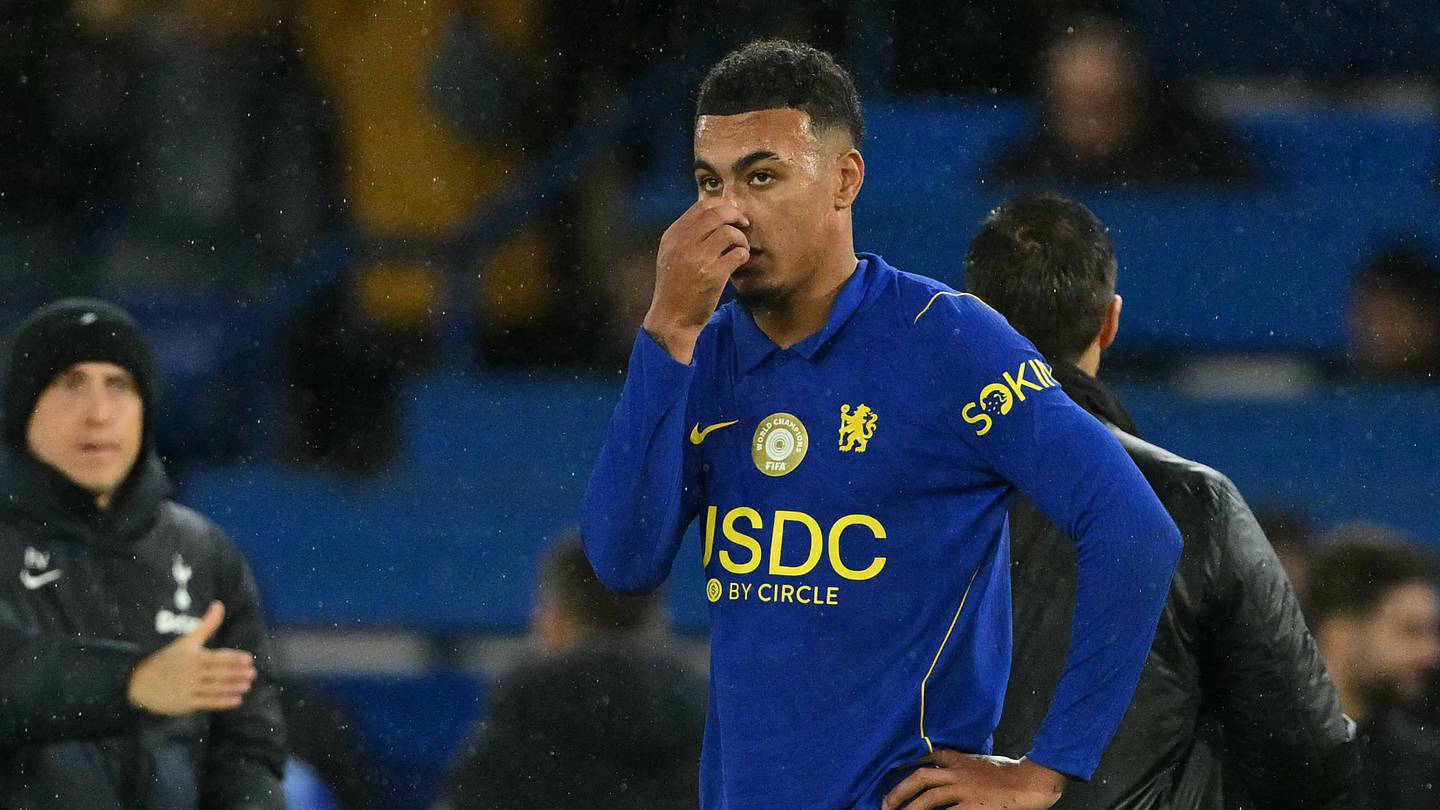

3 things that went terribly wrong in Chelsea's defeat to Tottenham
Chelsea would have entered their Premier League clash with Tottenham hoping to extend their impressive record against their London rivals.
However, goals from Mathys Tel and a Mike Penders own goal condemned the Blues to a 2-0 defeat, handing Spurs just their second away victory at Stamford Bridge in their past 41 meetings.
There was little chance of sunshine in London, but Chelsea somehow managed to make the afternoon even bleaker, delivering a dismal performance that left their supporters with plenty to be gloomy about.
We look at three things (yep, just three) that went terribly wrong for Chelsea on the night.
Playing without a striker
Starting without a recognised striker was always likely to raise eyebrows among Chelsea fans following the news that Joao Pedro was unavailable, and the decision ultimately proved costly.
Morgan Rogers operated too deep in a no-man’s-land position, allowing the opposition defence to enjoy comfortable spells of possession while giving the midfield pairing of Fernandes and Tonali an easy passing outlet. Even when Chelsea pressed effectively and tried to cut off space to prevent them from playing through the press, Rogers’ positioning made it easier for the opposition to escape.
Going forward, Rogers offered little threat, failing to register a shot that troubled Kinsky. Chelsea’s decision not to introduce a recognised striker until the 88th minute only reinforced how misguided the initial selection had been.
The pressing
Jordan Henderson and Moises Caicedo pressed with far too much energy in the first half, particularly during the opening 20 minutes. Their intensity was difficult to sustain, and both appeared to run out of steam as the game progressed.
After being put under pressure to test his technique and passing ability, Matheus Fernandes came through the challenge alongside Sandro Tonali, with the Portuguese playmaker eventually controlling the game.
Where Alonso went wrong was in failing to include a reliable presser in his front three. Quenda rarely pressed with any real intent, while Cole Palmer offered little intensity off the ball.
Chelsea needed a coordinated pressing unit up front, with all three attackers working together to close down the opposition and force play towards the midfield pairing. Instead, the lack of cohesion allowed Fernandes and Tonali to find their rhythm and dictate proceedings.
Aggression too late
Chelsea should have set the tone with a strong, well-timed challenge in the opening 10 minutes. Instead, that aggression only emerged in response to Tottenham raising the intensity.
When it finally arrived, it felt misplaced and driven more by frustration than any clear tactical purpose. Chelsea were struggling to impose themselves, while Tottenham repeatedly disrupted their rhythm. Cole Palmer’s first yellow card was a clear example of that frustration boiling over.
Whether Chelsea’s lack of intensity was down to their tactical approach, the miserable weather or simply having an off day, we may never know. What is clear, however, is that they failed to bring the right aggression at the right time.