
Mobile phones are ruining the enjoyment of football: Borussia Dortmund devise an unexpected solution to save their fans
When the stands become a film studio!
Going to a football stadium no longer guarantees ninety minutes of excitement and suspense, nor the chance to soak up the atmosphere of the stands and share the joy of goals and the agony of defeat with the crowd. As the players chase the ball across the green rectangle, more and more fans are glued to their phone screens, hunting for a shot to film, a comment to post or a statistic to follow. Some of the moments that deserve to be savoured in full now slip past their eyes unnoticed.
Things have taken an unexpected turn. One of Europe's biggest clubs has decided to reward supporters for keeping their phones in their pockets during matches, hoping to restore the essence of the football experience and drag attention back to the pitch rather than the screens.
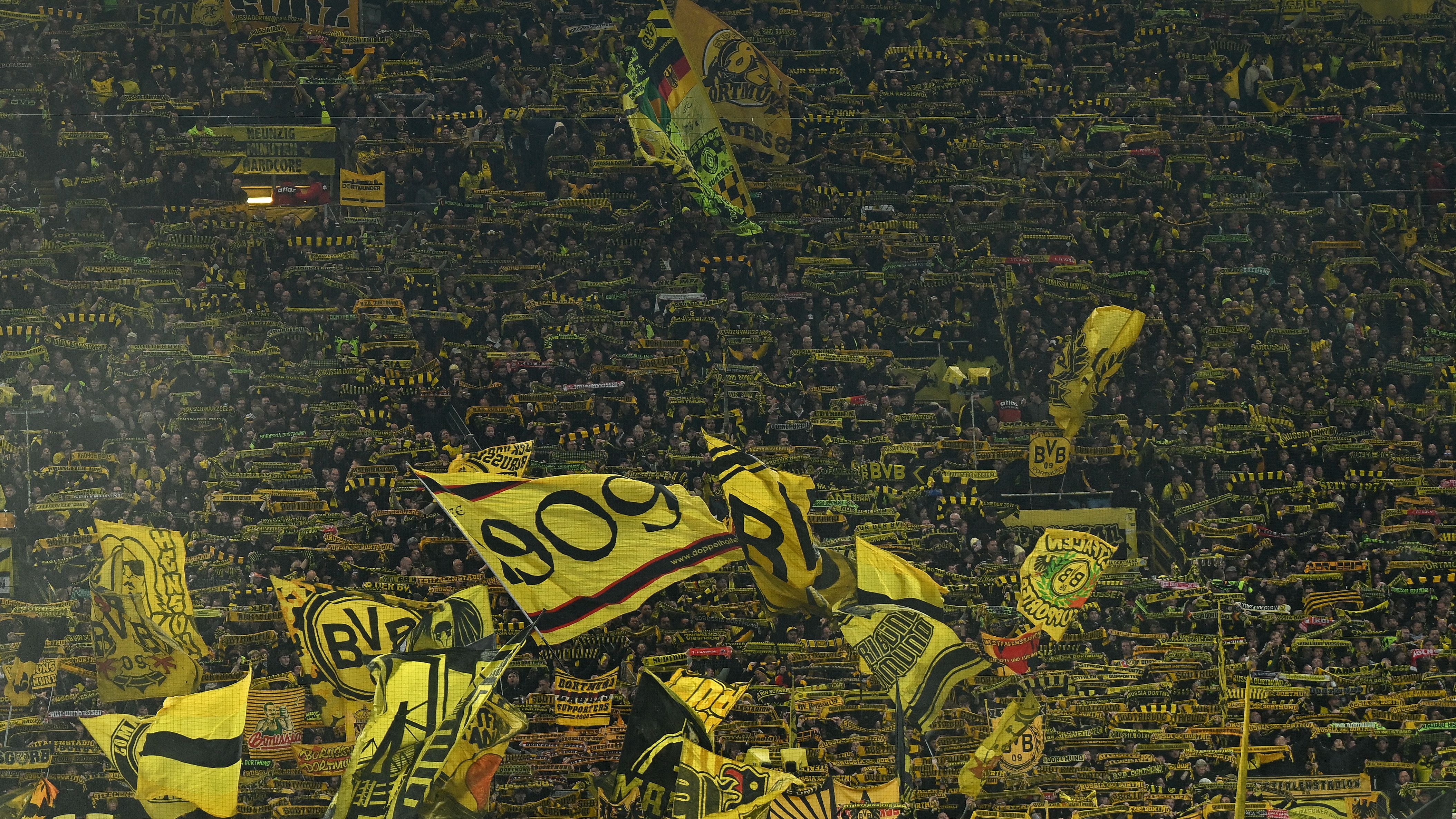
That club is Germany's Borussia Dortmund, home to one of the most passionate fanbases on the continent. Their initiative encourages supporters to set their phones aside and focus on the game, with prizes and rewards on offer in return.
Spanish newspaper "AS" has shed light on the phenomenon, throwing open the debate about how mobile phones and social media are reshaping the game, and how far the stands have shifted from a space for enjoyment and passion into platforms for documenting moments and chasing views.
Borussia Dortmund declares war on mobile phones!
For years, going to a football stadium was an experience complete in itself. Fans waited eagerly for the opening whistle, living every attack as if it were the last, celebrating goals amid embraces and shouting, while controversial refereeing decisions turned into heated debates between neighbouring supporters.
Nobody needed to film every moment to prove they were there. The value of the match had nothing to do with how many photos and clips you could post afterwards. The experience itself was the reward, and the memories stayed in the mind long before they found their way to social media.
That scene has changed strikingly in recent years. Mobile phones have become an essential part of the matchday experience, and hundreds of raised screens now light up the stands to capture goals and celebrations, or film the players walking out, or even track the reactions of the coaching staff and the substitutes.
Stranger still, some fans now prefer to watch the big moments through their phone screens rather than follow what is unfolding right in front of them. They seem to come to the stadium to record the match rather than enjoy it.
This shift prompted Borussia Dortmund to take an unconventional step. The club trade on their reputation for the atmosphere at Signal Iduna Park, where supporters create one of the most thrilling fan experiences in European football.
Dortmund did not simply call on supporters to use their phones less. They decided to offer real incentives to fans who manage to stay off them during matches, among them signed shirts and vouchers for the club's official store.
Simple on the surface, the idea carries a clear significance. One of Europe's most prominent clubs has found itself rewarding fans for doing something that should come naturally: focusing on the match they paid to watch.
Van Modus: rewards in exchange for switching off the phone!
Van Modus is the name, and it's a joint effort between Borussia Dortmund and Vodafone. It launched on 24 October, during the team's clash with Eintracht Frankfurt.
The whole thing runs through the club's official app. Fans activate the system, then rack up points for every minute they spend away from their phones during the match.
Cut your phone use and the points pile up. That boosts your chances of landing the prizes the club is dishing out, among them signed shirts and vouchers to spend in the official store.
Supporters aren't left high and dry either. They can check their phones during the half-time break without losing any of the points they banked in the first half.
Behind the campaign sits a Vodafone poll from 2023, which quizzed a thousand fans who attend matches regularly. Its findings showed 63% of them use their mobile phones regularly in the stands.
Nearly two-thirds also admitted to checking their phones while at sporting events. That lays bare just how deeply mobile devices have crept into the fan experience, even when it comes to watching their favourite teams from inside the stadium.
Those figures beg a big question. Has football become less able to grab the crowd's attention, or have mobile phones simply hijacked the fans' focus away from the main event?
The documentation obsession: the fan turns into a photographer!
The problem goes beyond checking messages or scrolling social media during the match. It now feeds a growing urge to document every detail, however small.
The moment a fan walks into the stadium, out come the phones. They film the stands, record the national anthem, capture the warm-ups and wait for the players to emerge before the crowd. Then they turn to the reactions of the coaches and substitutes, and the flashpoints.
For some, a match isn't complete without a string of photos and video clips posted online, as if the whole point of being in the stands has become proving you were there rather than enjoying the game itself.
Some fans chase every detail and rush to post it. Others bury themselves in the comments and opinions doing the rounds, hunt for player statistics, or pick fights over the referee's decisions before the television replay has even finished.
The phone has become an extra window onto the match, yet at the same time a constant source of distraction. The fan now follows what's happening inside the stadium and what's going on outside it in the very same moment.
Rather than waiting for the analysis after the final whistle, the crowd can read hundreds of opinions within seconds and join heated debates while play rolls on.
So the match is no longer a collective experience confined to those in the stands. It has become a rolling digital event where live viewing tangles with virtual interaction.
90 minutes or 60 seconds? Highlights are stealing matchday audiences!
The mobile phone's impact hasn't stopped at the boundaries of the stands. It has reshaped the way the public consumes football altogether.
Fans once awaited kick-off, set aside time to watch in full and lived every detail from the first minute to the final whistle. Today you can learn almost everything that happened in a clip no longer than a minute.
Goals, dangerous chances, cards and decisive moments all fit into a quick summary. It hands the viewer a general idea of the result and the key events, with no need to sit through the full ninety minutes.
For a section of the public, this suits a fast-paced lifestyle. There are so many matches and tournaments, and finding long hours to follow everything in the football world is hard.
The problem is that highlights, however good the quality, can't convey the full experience of a match. Football isn't made of goals alone. It's built on the details that create its value: the tension before a dangerous chance, the sustained pressure in the closing minutes, the tactical switches that tip the balance, the attacks that produce no goal yet reveal how the play is developing on the pitch.
A survey published by the Bango company in June 2026 showed that 47% of participants aged between 18 and 24 said match highlights had become a substitute for full broadcasts in how they follow sport.
Money matters too. Watching some tournaments means subscribing to paid services, and a fan may need more than one platform to cover the various competitions.
Goals, highlights and standout clips, by contrast, are free online. That makes them an attractive option for anyone without the time or the money to watch full matches.
Competition is no longer confined to clubs and tournaments. There's now a second contest between the full match and the quick content that squeezes it into seconds.
Football turns into showmanship: has the aim become proving one's presence?
This phenomenon has another dimension, every bit as important, and it relates to the urge to flaunt personal experiences on social media.
For some fans, a trip to the stadium is no longer just a chance to watch their favourite team. It has become an occasion to snap distinctive photographs and post them on Instagram, to document the atmosphere in the stands, to prove they were part of a major sporting event.
Sometimes, landing the perfect photograph or a standout video clip seems to matter just as much as the match itself. That raises a question about the relationship now binding supporters to football: does the fan go to the stadium to enjoy the game, or to tell everyone else they were there?
A 2024 Deloitte study on the use of technology at live sporting events backs up these concerns. It found that nearly a quarter of fans use their phones to post on social media during matches.
The same study revealed that 68% of attendees felt they were spending more time than they should on their phones at sporting events.
Here lies the paradox. Some fans already know they are overusing their devices, yet they struggle to put them down, driven by a constant urge to document, interact and follow everything happening online.
Influencers in the stands: passion or a hunt for views?
Football's changing stands aren't just about the ordinary supporter any more. Content creators and influencers have muscled into the picture too, becoming part of the marketing machine for clubs and brands.
Clubs and companies now routinely invite these influencers to matches, hand them exclusive experiences inside stadiums and usher them into VIP boxes. They throw in shirts and products stamped with club logos. In return, the influencers push promotional content through their personal accounts.
Not everyone is impressed. Fans have taken aim at the phenomenon, particularly when an account celebrates one club's colours one week, then promotes a bitter rival the next. The relationship starts to look less like sporting allegiance and more like an advertising contract.
Think about the contrast. Some supporters can barely afford a ticket, or wait years for the chance to attend a big match. Others land invitations and once-in-a-lifetime experiences simply because of their follower count and their knack for churning out content.
None of this means every influencer is faking their love of the game. A big social media audience doesn't strip anyone of the right to enjoy a match.
The trouble starts elsewhere. It begins when the game becomes nothing more than a backdrop for an advertising campaign, when the post that drops after the final whistle matters more than anything that happened on the pitch.
So here's the real question. What should come first inside the stands: love of the club and a sense of belonging, or the hunt for views and engagement online?
What phones can't capture: the true magic of football
For all the leaps in technology, some things still can't be captured by a mobile phone or a video clip.
Watching a goal through a screen is not the same as celebrating it among thousands of fans. Following a penalty on a television broadcast cannot convey the silence and anticipation that grips the stands before the kick is taken.
Some emotions simply won't fit into a short clip. The tension before the final whistle. The anxiety of every dangerous attack. The collective explosion of joy when a decisive goal goes in, or embracing a complete stranger because the team you both support has just won.
These details separate a day at the stadium from a night in front of the television, and they give football much of its magic and its power to bring people together around a shared passion.
Highlights can tell you the result. Your phone can keep a picture of the goal. Social media can beam reactions out to millions. None of them can reproduce the moment with all its emotion and detail.
What makes Borussia Dortmund's initiative so intriguing is that it doesn't call for banning mobile phones, nor does it ask fans to give up social media. Instead it offers an incentive that nudges them to choose, for themselves, to stay away from screens during the match.
The German club understands how technology expands football's fan base and reaches new supporters. Yet it also seems determined to protect the thing that makes a trip to the stadium different from following the match at home.
Here lies the paradox. The sport that screens helped carry to millions of fans around the world must now invent new ways to persuade those same fans to look up from their screens once they are inside the ground.
Clubs everywhere are racing to develop their apps and boost online engagement. Borussia Dortmund have gone the other way, rewarding the fans who give the match their full attention.
One question lingers above all. How did football go from a game where supporters paid for a ticket to drink in every detail and enjoy ninety minutes of excitement, to one where a European giant has to hand out prizes just to persuade its fans to put down their phones and watch what is unfolding in front of them?