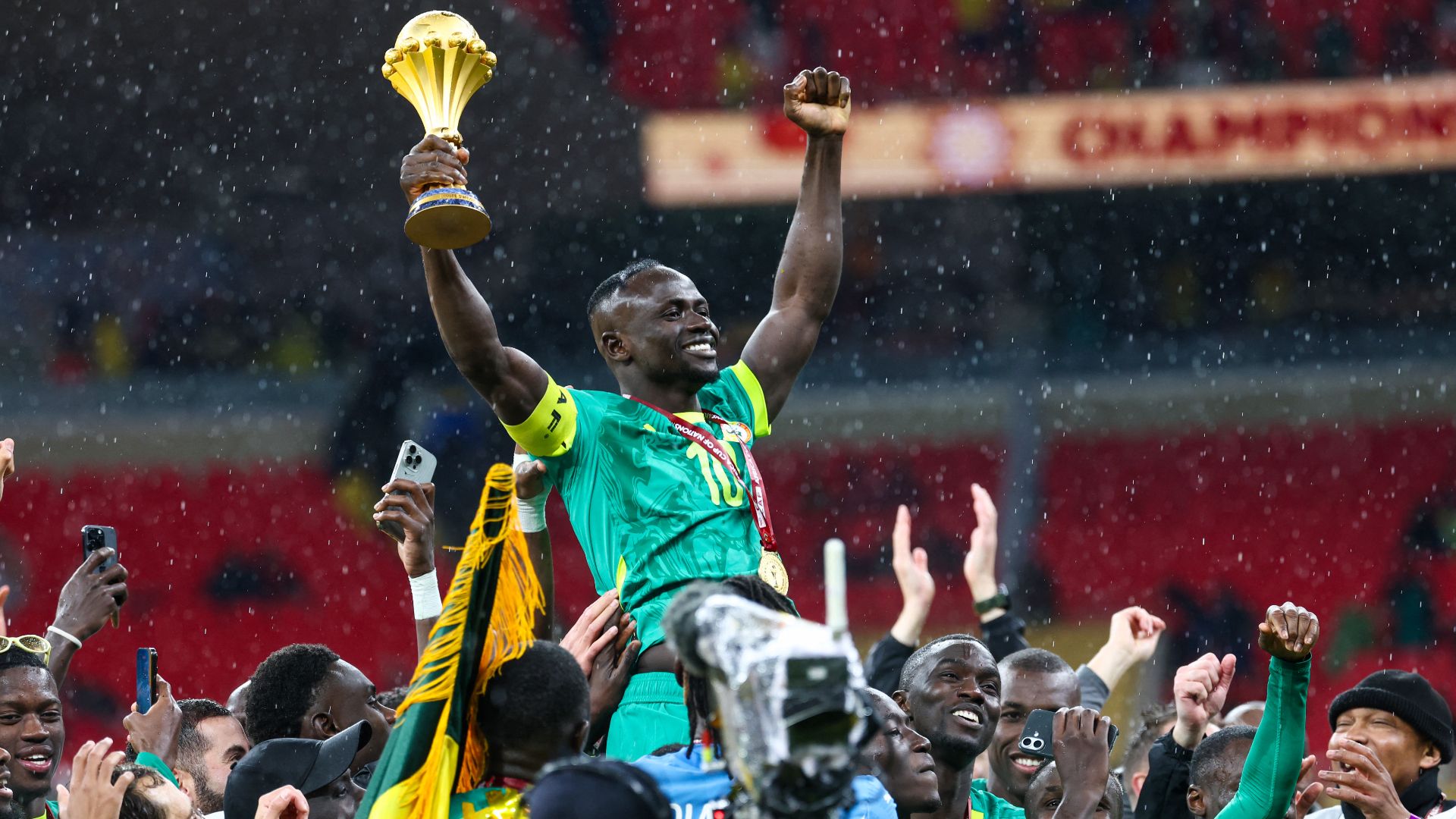

Senegal's lawyer reveals the inside story of legal victory over Morocco
Swiss lawyer Serge Vittoz, who represents the Senegalese Football Federation, has revealed the key legal arguments Senegal relied on in their battle before the Court of Arbitration for Sport, which ended with a ruling that returned the Africa Cup of Nations title to Senegal at Morocco's expense.
In an interview carried by Senegalese website Seneweb, Vittoz explained the legal grounds behind the defence team's case and why he felt confident in the Senegalese Football Federation's position before the verdict. He also tackled Morocco's arguments and the possibility that they could turn to the Swiss Federal Supreme Court to challenge the sports court's decision.
Law 5: the cornerstone of Senegal's defence
Senegal's defence rested mainly on Law 5 of the Laws of the Game, Vittoz explained. It gives the referee full authority over the running of a match and over decisions about what happens on the pitch.
The pivotal point, according to the Swiss lawyer, was that the referee in the final chose to resume the match and bring it to a conclusion. The defence argued this fell within his powers to manage the game. It wasn't a decision that could be overturned simply because one side objected to what happened in the match.
That legal basis proved vital, Vittoz said, in countering Morocco's attempt to use the Africa Cup of Nations regulations to prove they were entitled to the result of the match.
The Senegalese defence felt confident after the hearing on 8 October, he noted. The ruling itself brought huge relief to the Senegalese Football Federation after a complex legal fight to defend their position.
Why did Senegal's defence reject the case built on Articles 82 and 84?
Morocco, the lawyer explained, based their case on a literal reading of Articles 82 and 84 of the Africa Cup of Nations regulations.
Those two articles cover matches that don't start or aren't completed, including when one of the teams leaves the pitch for good. They exist to determine the result of incomplete matches under the provisions set out in the regulations.
Vittoz argued those provisions don't apply the way Morocco tried to present them, particularly as the referee had decided to resume the match and bring it to a conclusion.
So the legal dispute centred on how to characterise what happened in the final. Did it fall within the cases that allow the sanctions in Articles 82 and 84 to be applied? Or do the referee's decisions on resuming play and ending the match remain within his authority under Law 5 of the Laws of the Game?
That clash over how to read the regulations became one of the main points of contention in the dispute that reached the Court of Arbitration for Sport.
South Africa v Senegal: why it differs from Morocco's final
Vittoz also recalled the famous precedent of the 2016 match between South Africa and Senegal. That game was replayed after Ghanaian referee Joseph Lamptey was found to have been involved in manipulating its result, and he was banned for life.
That case, the lawyer explained, was completely different from the dispute over the Africa Cup of Nations final between Morocco and Senegal. The earlier case involved proven refereeing corruption, which provided an exceptional basis for intervening in the result.
In his view, reviewing a result can be justified in exceptional circumstances, such as proven corruption or manipulation. Nothing comparable exists in the case of the final that would allow it to be treated the same way.
Vittoz also separated the sanctions the Confederation of African Football imposed on some members of the Senegal squad from the dispute over determining the result of the match.
CAF suspended coach Pape Thiaw for five matches and banned Ismaila Sarr and Iliman Ndiaye for one match each. The Senegalese Football Federation were fined too.
The lawyer stressed that those sanctions don't settle whether the match had legally reached its conclusion, saying: "But this has nothing to do with determining whether or not the match reached its conclusion."
Brahim Diaz and the Federal Supreme Court: an admission and legal calculations
Vittoz made one striking admission: Senegal could have lost the final on the pitch had Brahim Diaz scored the penalty awarded to Morocco during the match.
But he drew a line between what might have happened in sporting terms on the pitch and the legal battle the two sides fought before the Court of Arbitration for Sport.
He also pointed out that a strict interpretation of Articles 82 and 84 of the tournament regulations could have changed the outcome of the case before the court. How those texts were interpreted and applied to the events of the final mattered enormously.
As for Morocco's next move, Vittoz explained that the Swiss Federal Supreme Court is the only route available to challenge the Court of Arbitration for Sport's decision.
He played down their chances, though, describing them as very limited. The Federal Supreme Court doesn't re-examine the details of the sporting case or reassess the facts. Its review is limited to specific legal and procedural grounds relating to the soundness of the ruling.
Simply disagreeing with how the Court of Arbitration for Sport interpreted the regulations won't be enough on its own for Morocco to overturn the decision. They would need to present a legal ground that falls within the scope of the Federal Supreme Court's review.
Vittoz's comments reflect the view of the legal team who represented Senegal and offer an insight into the main arguments they relied on during the dispute. Any potential appeal before the Federal Supreme Court remains a separate legal process, governed by its own rules.