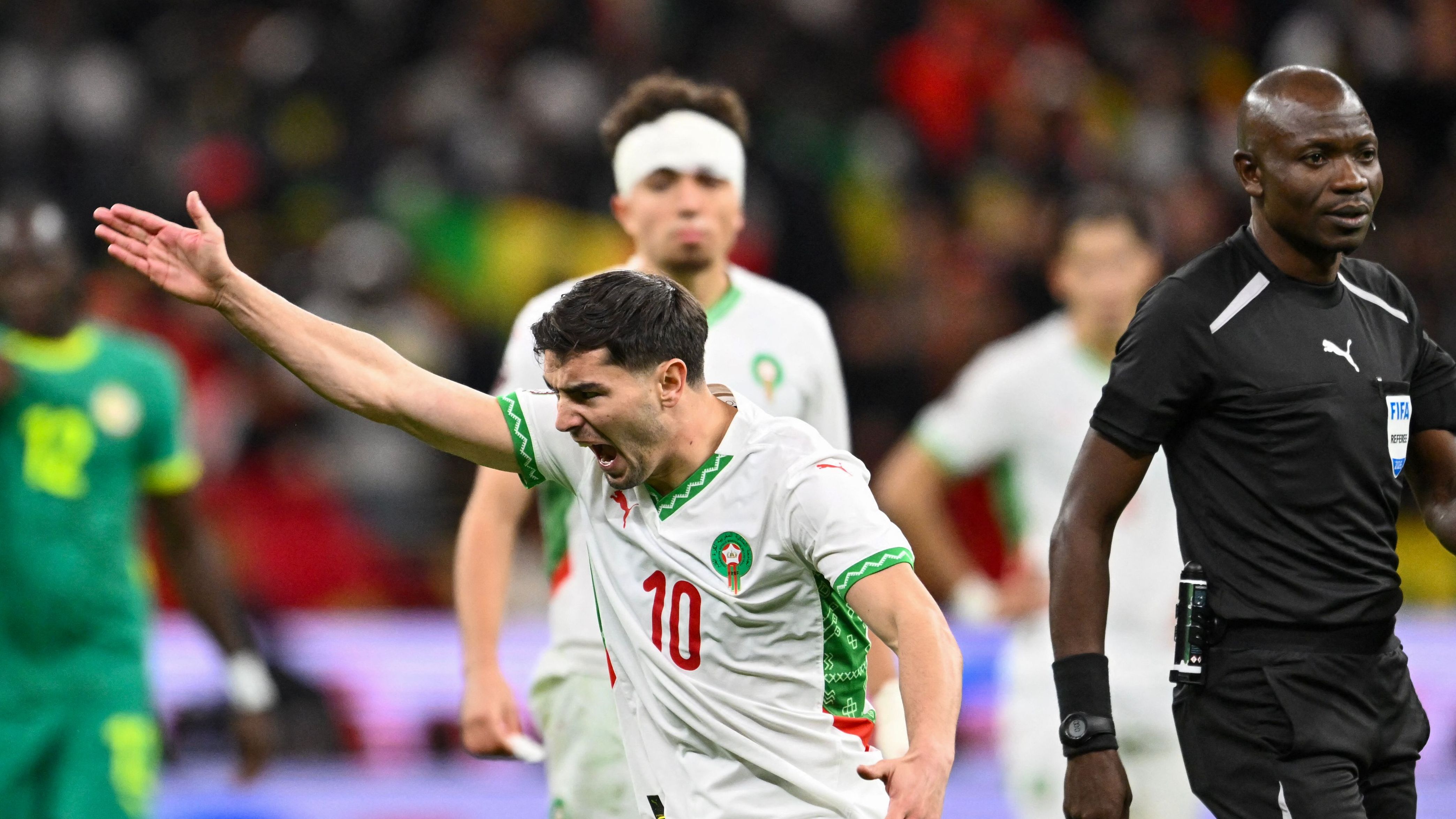

New leaks: Morocco accuses an official of influencing the referee and Senegal alleges corruption
Thrilling behind-the-scenes details from the CAS hearing on the 2025 Africa final case
The leaks keep coming from the Court of Arbitration for Sport (CAS) hearing between Morocco and Senegal over the title of the 2025 Africa Cup of Nations.
According to the latest Senegalese reports, Morocco pressed hard at Thursday's hearing for the application of Articles 82 and 84 of the Confederation of African Football (CAF) regulations. Senegal's defence, by contrast, leaned on the authority of the referee on the pitch and the finality of his decisions.
As revealed by the Senegalese website "Senenews", the Royal Moroccan Football Federation built its case in the closed hearing around those two articles, which govern cases of a team leaving the pitch or refusing to finish a match.
Morocco argue that Senegal temporarily walking off, after a penalty was awarded to Morocco in stoppage time of the final, should have brought the match to a definitive end.
Morocco speaks of influence on the referee's decisions
The Moroccan federation's lawyers went further still, the Senegalese source says. They floated a theory that the referee was swayed by the intervention of Olivier Savari, head of CAF's referees' committee, and that this is why the final was not called off the moment Senegal left.
Backing this up, Morocco pointed to images they claim show Savari giving instructions to the referee.
That argument sits alongside the matter of the second refereeing report, which Morocco had already raised in the hearing according to earlier leaks. The African confederation's defence rejected it.
None of this means the Court of Arbitration for Sport has accepted any of it. The points remain Morocco's arguments as laid out in the report, nothing more.
Senegal holds to the authority of the referee and the completion of the match
Senegal, in turn, built their case on the principle of the referee's authority on the pitch. Their lawyers cited Law Five of the Laws of the Game issued by the International Football Association Board (IFAB), which sets out the referee's powers and decisions during a match.
The Senegalese defence also leaned on Article Nine of FIFA's disciplinary code, according to the report, to argue the match ran its full course. Senegal's players returned to the pitch, then beat Morocco 1-0 in extra time.
Because the referee chose to resume the game and manage it to the final whistle, Senegal argue, that decision should settle the dispute. No party, in their view, can rewrite the result of a match played to its end.
Senegal challenges the procedures and raises suspicions of corruption
Senegal's arguments stretch well beyond what happened on the pitch. They also target the procedures leading up to the decision of CAF's appeals committee on 17 March 2026, which deemed Senegal to have lost 3-0 by withdrawal.
Senegal's lawyers alleged procedural flaws surrounding that decision, the report says, and spoke of suspicions of corruption. The source lays out those accusations within the detail of the legal battle, without suggesting they are proven.
With both sides done, the decision now rests with the arbitration panel. The court's administration has promised a reasoned ruling as soon as possible after the hearing.