The Sandpapergate Civil War: Recap, Who Said What, and What It Means for Australian Cricket
 Akarshak Roy

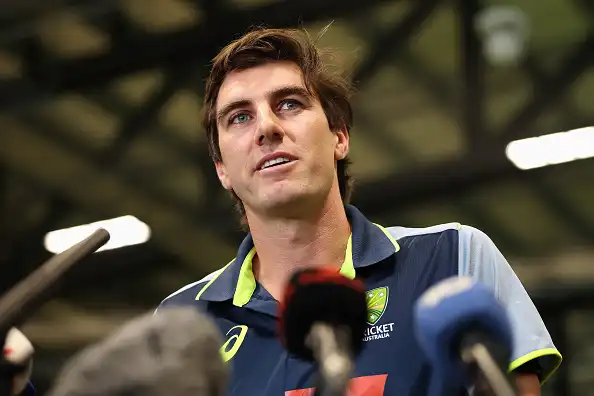
The test series defeat in South Africa, followed by continued ODI woes in the losses versus England, seem distant memories as the Sandpapergate casts a pale shadow on Australian cricket. Once again.
The ball-tampering episode that rocked the entire cricket fraternity has been mopping up the back page headlines in the last two weeks. All beneficiaries involved have lifted the lid once more to reiterate their respective stance.
That included, and began with the catalyst Usman Khawaja, who set the ball rolling before it snowballed itself to a messy back-and-forth between opposing versions of truth.
Here's everything and beyond you need to know about the Sandpapergate and what it could mean for all parties moving forward.
The Recap
The 2017-18 tour of South Africa was evenly poised at 1-1 heading into Cape Town. Australia trailed in the first innings after the Proteas posted 311 on the board in the third Test match, and on day three, the cameras trapped Cameron Bancroft using a foreign substance on the ball.
He initially batted away the questions, labelling it as a piece of tape, but then-skipper Steve Smith ushered the truth after the day's play. The batter conceded to ball-tampering, while also claiming that it was a decision taken by the 'leadership group' at lunch.
What followed then left a bitter taste to Australian cricket, which as recent events go by, have still not been gulped or swallowed.
Smith, Bancroft and then-vice-captain David Warner were sent back home. Tim Paine took over the reins that would later go on to be assumed by Pat Cummins. While Bancroft was suspended for nine moths, both Smith and Warner received 12-month bans. The latter was also eliminated from any leadership position within the team.
Ghosts from the past
It remained an interesting question at the time if the punishments were justified, or whether they were too harsh. The wonderful game of cricket is no stranger to cheating scandals in the past.
Pakistan fast bowler Waqar Younis was caught tampering the ball and banned for one match, as was his compatriot Shoaib Akhtar, who received an 'official warning'. India's Rahul Dravid was seen by the cameras rubbing a cough lozenge on the shiny side of the ball, while a Test match was forfeited in 2006 between England and Pakistan for tampering by Inzamam-Ul-Haq.
South African players Faf du Plessis and Vernon Philander have been docked 50% and 75% of their match fees, respectively as well.
So, why is Australia's ball-tampering scandal as controversial?
Well, the excerpts from Khawaja's biography and the players' personal verdicts signal there was much more to it. Or, maybe Cricket Australia maintained standards to such a level that it doesn't reoccur or tarnish the game.
Resurface of the Sandpapergate and words from everyone
Khawaja blew the lid open in his autobiography, Sabr, stating that it was the entire team responsible for the incident. The timing of it seemed all too perfect. Right after a Test series for the first time in eight years on South African soil, just before the hefty summer schedule.
David Warner then took to social media on November 9th to confirm all of Khawaja's accusations, also going beyond to pin-point that CA's investigation at the time was botched.
Former head coach Darren Lehmann rubbished the claims, though, but added that ball-tampering was generally widespread in Test cricket.
Mitchell Starc stuck to his statement from 2018, strongly voicing out that the bowlers were unaware. Meanwhile, Mitchell Marsh, who was captaining Australia in the ODI series versus England, remain tight-lipped, emphasizing the focus on the match instead.
A 68-minute press conference held by Pat Cummins on November 12th made headlines when he stood on the other side of the shore.
"When he says we all knew, if by that he means that we knew sandpaper was going out on the field, he's 100% wrong," the 33-year-old said.
"I've said that consistently for the last eight years, I did not know that was happening. He says that I and others were architects of a scheme to ball-tamper with sandpaper. That's complete and utter nonsense. I was genuinely shocked this week when I found out that Usman admitted that he told Cam (Bancroft) to be careful when using sandpaper."
Then came a 4500-word piece from Bancroft for the West Australian. Admitting that he withheld information during CA's investigation, he said:
"It was freeing to hear on a personal level the truth of the chronology of events finally out there. A burden I have carried all these years. But the final straw for me to write this account was Australian cricket captain Pat Cummins' press conference. It made me feel angry, betrayed and alone."
All this while, CA kept true to their original statement.
The present-day scenario, and the future
Warner further intensified the situation by deeming it as a cover-up, while Josh Hazlewood backed his skipper.
"I want to back Pat and everything he said in his press conference last week, everything he's done for the last five or six years in particular as captain. If we turned up for the first Test and he wasn't the captain and it was someone else, honestly, I don't know how that would go."
The support for Cummins from the board remains. He is slated to don the blazer in the first Test against New Zealand.
Cummins has done enough to restore order and revitalize the setup in Australia. Stripping him of the captaincy would be fraught with complications, especially when other skippers have escaped with far lighter penalties for vastly more egregious misconduct - even assuming Cummins bears some culpability.
This will once again raise questions around Australian cricket's honesty, especially since it surrounds not just the crime, but the truths, lies and everything in between.
On the field, there's much to do for Australia. There is a serious dearth of ODI fixtures in a Test-heavy calendar despite the World Cup in 11 months' time, while the losses in South Africa compounded arguments over the team's resistance to blood youth into the line-up.
Sandpapergate, after all, is a past incident that struck a ripple effect on the lives of many, and not just the three players punished.
Has Steve Smith saved Australian cricket?
While Lehmann and the fast bowlers stay rooted to their words, Bancroft's statement threw a spanner in the works, making it hard to believe that the bowlers would not have any form of awareness of the ball's condition.
If Bancroft's words are to be considered true, there's another piece of information he shared that holds relevance.
"Captain Steve Smith came into the conversation and, as I remember it, made it clear that he wanted no part in it before distancing himself," he noted.
Smith was casted out of South Africa and faced the music everywhere he went. Ever since, he has kept his silence on the details, even as he accepted full accountability for the squad’s lapse in integrity.
He came back with a record-breaking Ashes series, and chose not to call anyone else out from the incidents of the past. Rightly so, he continues to demonstrate the leader and team-man he was and is.